FG-021
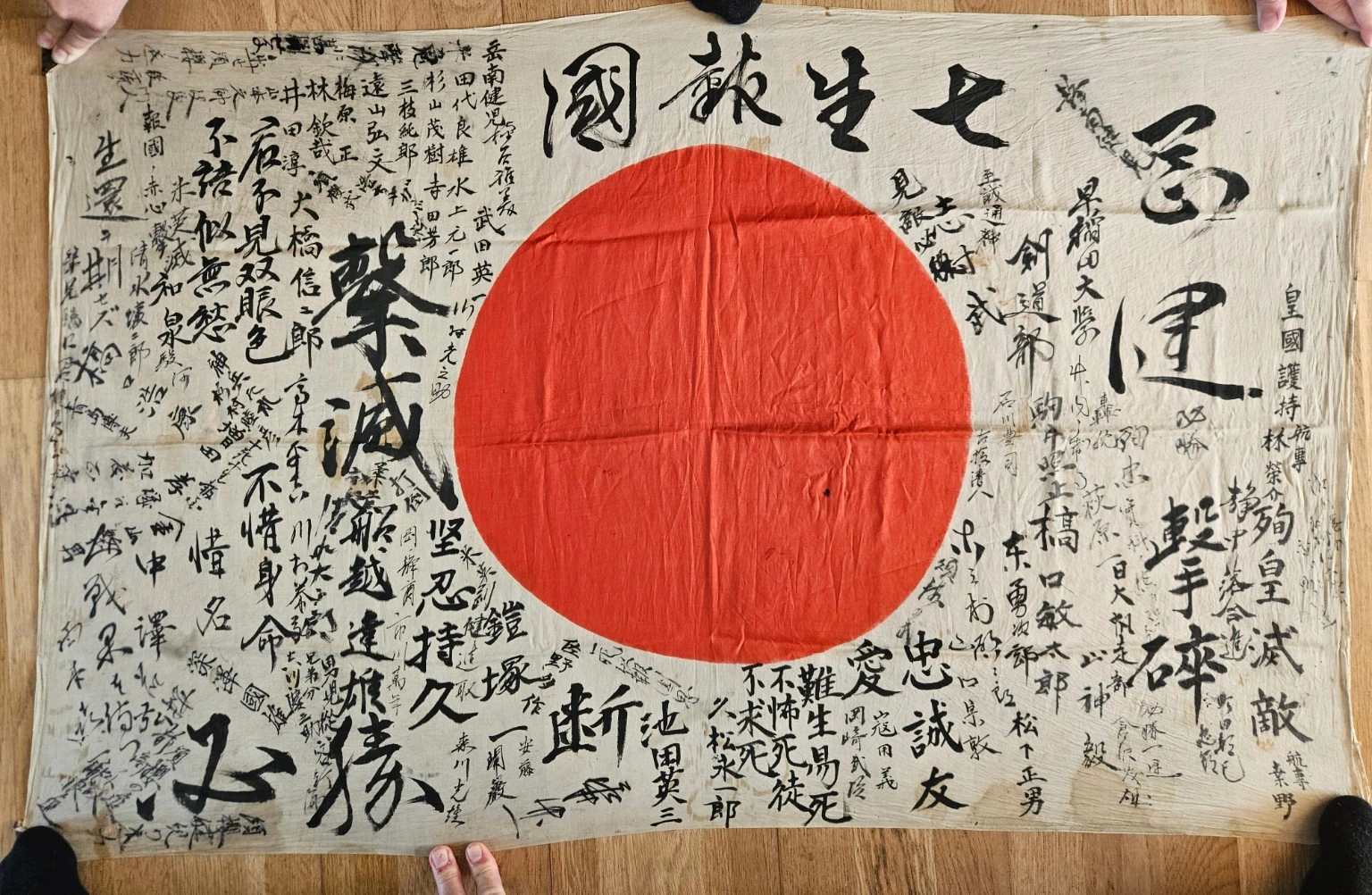
Signed Japanese Good Luck flag
Japan · WWII and Occupation
Unknown
Markings: Multiple inscriptions (30+ names)
Signed by soldiers, includes "Seven Lives for the Nation"
Japan / Good luck flag
Signed Japanese Good Luck flag
FG-021
Japan · WWII and Occupation
Unknown
Markings: Multiple inscriptions (30+ names)
Signed by soldiers, includes "Seven Lives for the Nation"
Flag ID: FG-021
This type of flag, known as a Yosegaki Hinomaru (寄せ書き日の丸), was traditionally presented to a Japanese soldier heading off to war. Friends, family, classmates, or military comrades would inscribe patriotic slogans, personal messages, and blessings for safety and victory. These flags were often carried into battle as talismans.
Based on the presence of the phrase “Waseda University Kendo Club” (早稲田大学剣道部), it is highly likely the recipient of this flag was a member of that club. His name does not appear on the flag, but the context suggests a pre-deployment gift from peers.
The Yosegaki Hinomaru (寄せ書き日の丸) – “Good Luck Flag” – was a deeply personal and symbolic item presented to Japanese servicemen before their deployment, particularly during the Second Sino-Japanese War (1937–1945) and World War II. The practice drew on earlier cultural traditions of writing messages on banners for spiritual support and collective encouragement.
Friends, family, neighbors, classmates, and coworkers would gather and inscribe handwritten messages, often patriotic or spiritual in nature, on a national flag. These inscriptions could include phrases such as “certain victory,” “loyalty until death,” or personal wishes for safety and honor. Religious blessings and Buddhist references were common.
Most soldiers would fold or roll the flag and carry it tucked inside their uniform as a senjafuda-like talisman. The flag served both as a morale booster and as a physical reminder of home, loyalty, and the emperor. In the final stages of the war, some soldiers carried them into kamikaze missions, making surviving examples rare and historically significant today.
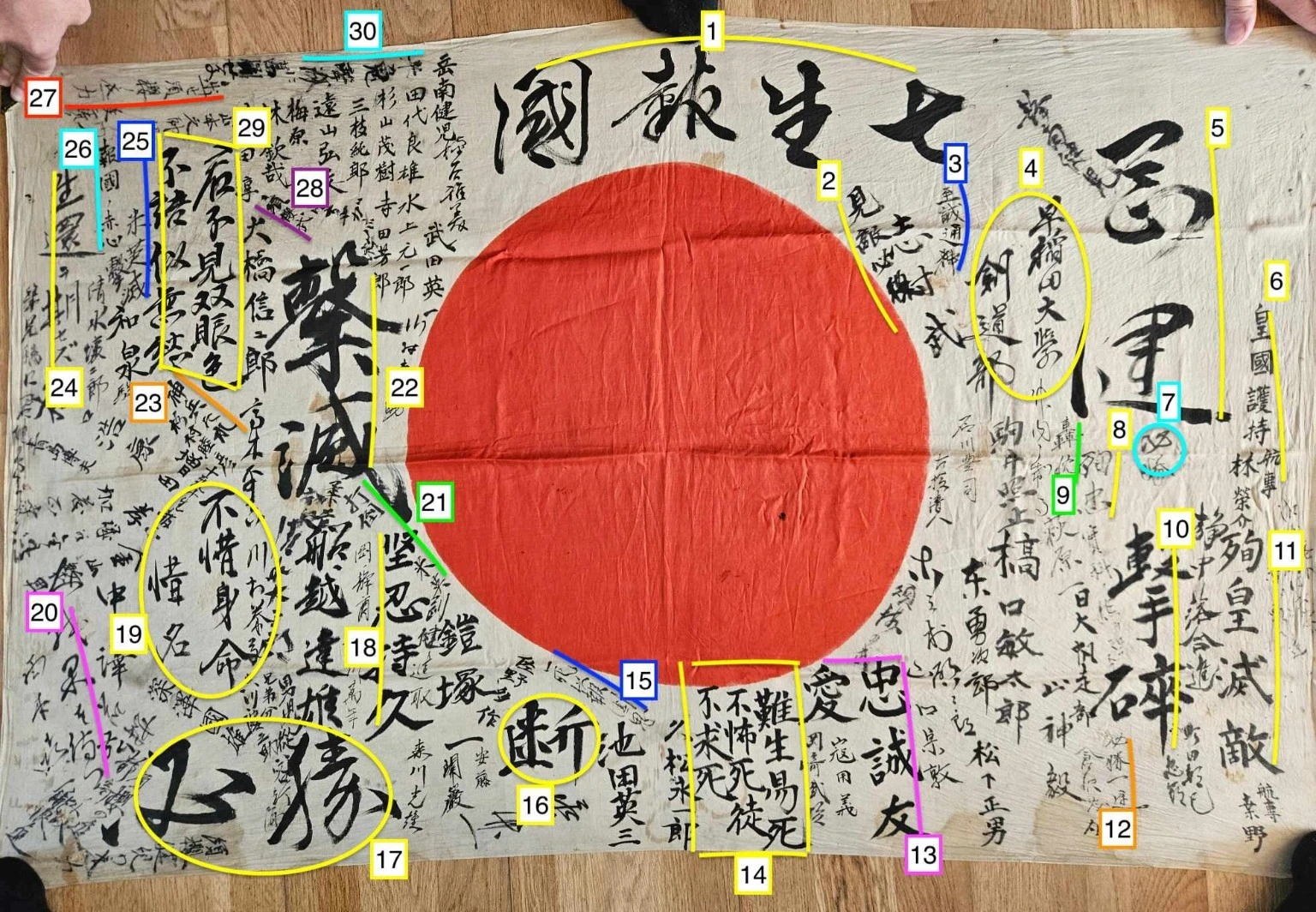
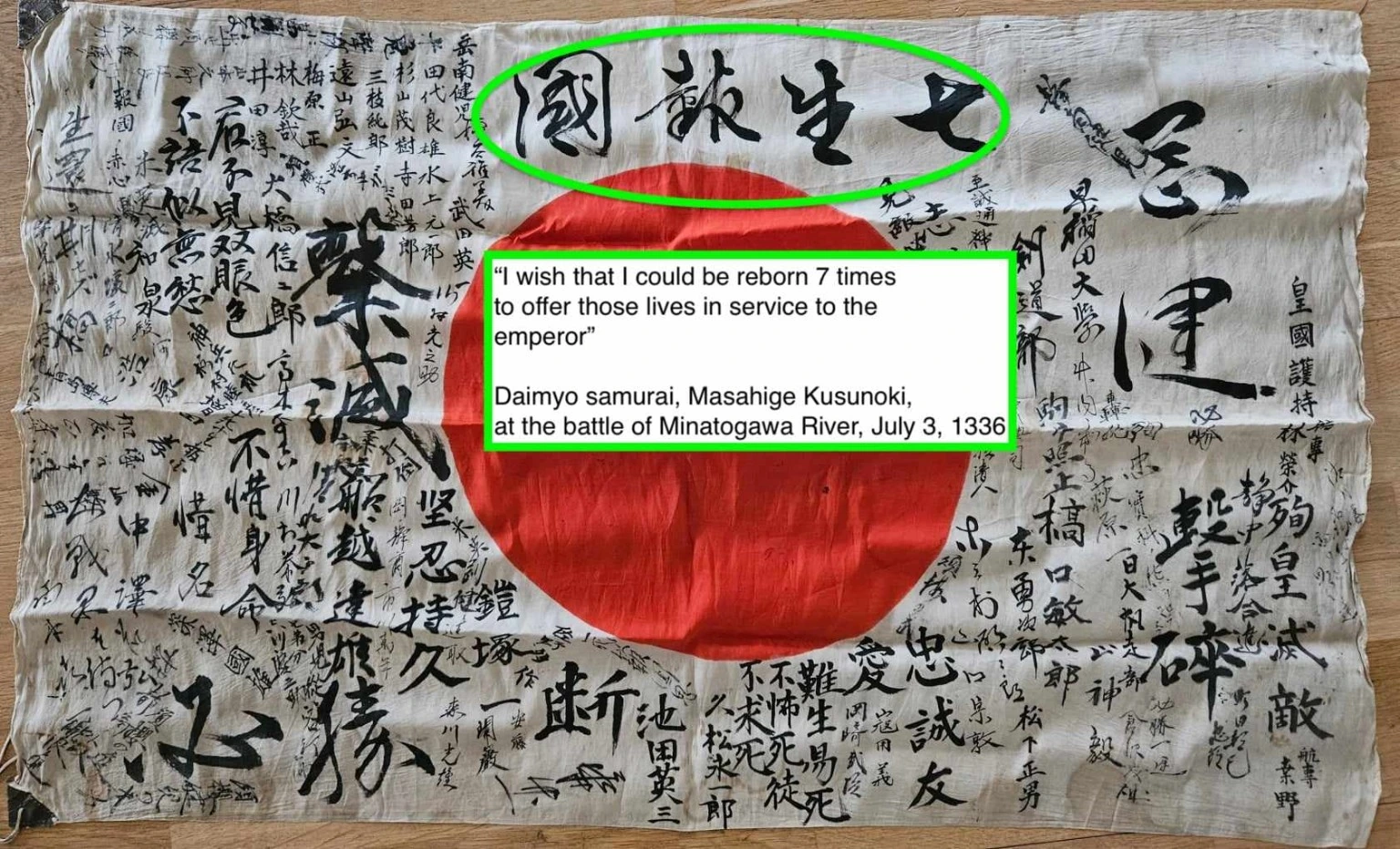
The phrase “Shichishō Hōkoku” (七生報国) – “Seven lives for the nation” – comes from Kusunoki Masashige, a loyalist daimyo who died in the Battle of Minatogawa on July 3, 1336. Knowing the mission was hopeless, he obeyed the Emperor’s direct command and led his men into death. Before the battle, he reportedly said:
“If I had seven lives, I would give them all to defend the Emperor.”
This expression became a military motto in Imperial Japan, symbolizing unwavering loyalty. His legacy is revered, and a statue of Masashige still stands outside the Imperial Palace in Tokyo.
As historian Dan King noted, this episode was seen as the Japanese version of the Battle of the Alamo – a noble last stand in service of a higher cause.
Dan King – noted expert on Japanese WWII flags and calligraphy.
© 2025 FlagGeek / Kenny Ytrup – Licensed under CC BY-NC 4.0 .
Non-commercial sharing with attribution permitted. Commercial use requires permission.
External photographs remain under the rights of their respective holders and are reproduced here solely for scholarly research and documentation under quotation/fair use provisions.
Original FlagGeek publication · Source status: LIVE. Research text and evidence retained from the Blogger export.
FlagGeek · https://flaggeek-v2.pages.dev/archive/signed-japanese-good-luck-flag/