FG-018
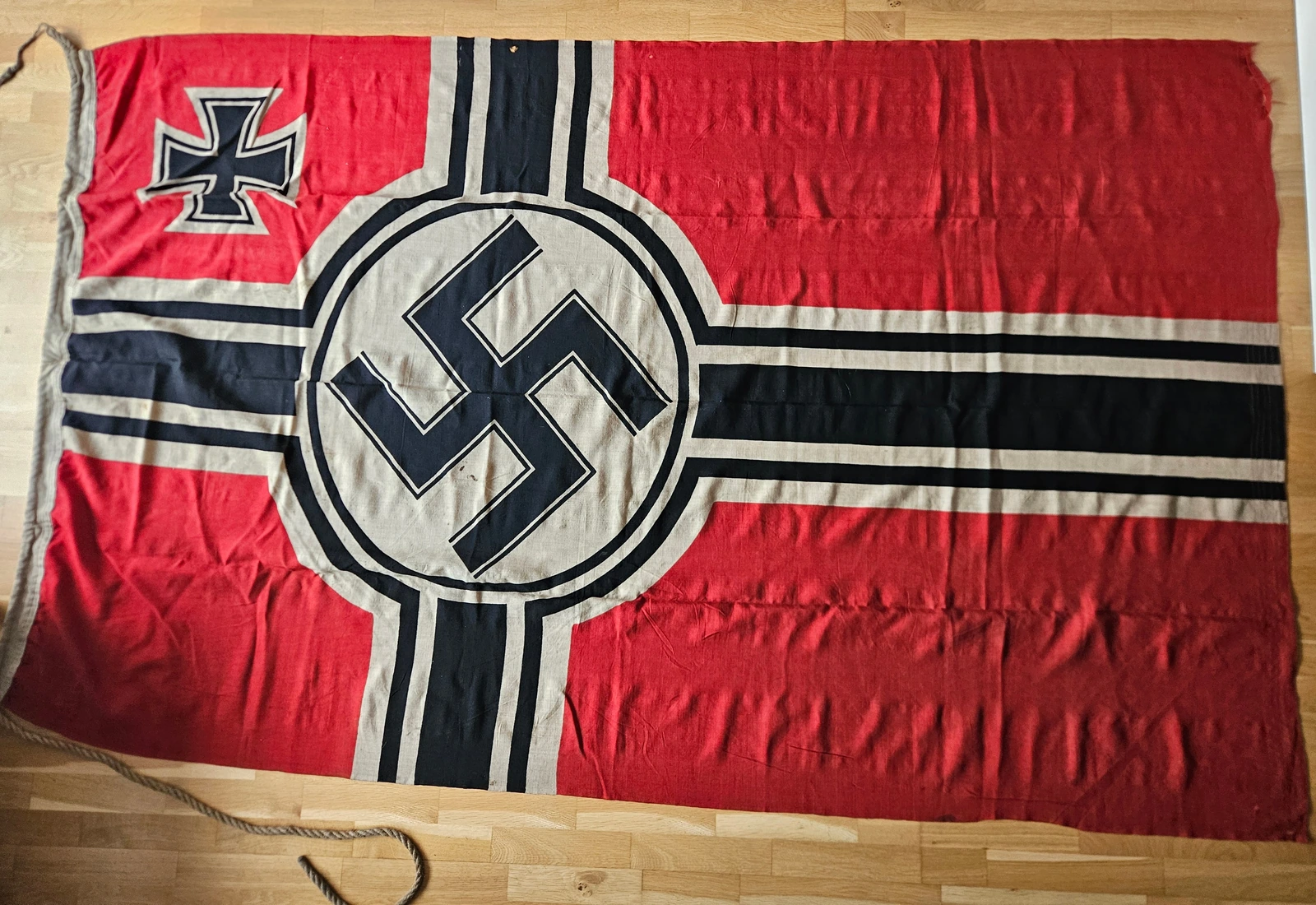
Kriegsmarine Reichskriegsflagge – Captured in Middelburg
Germany · Nazi Period (1933–1945)
150 × 250 cm
Markings: “Reichskriegsflg. 1,5 × 2,5”
Captured in Middelburg, Netherlands
Germany / 2nd pattern war/battle Flag
Kriegsmarine Reichskriegsflagge – Captured in Middelburg
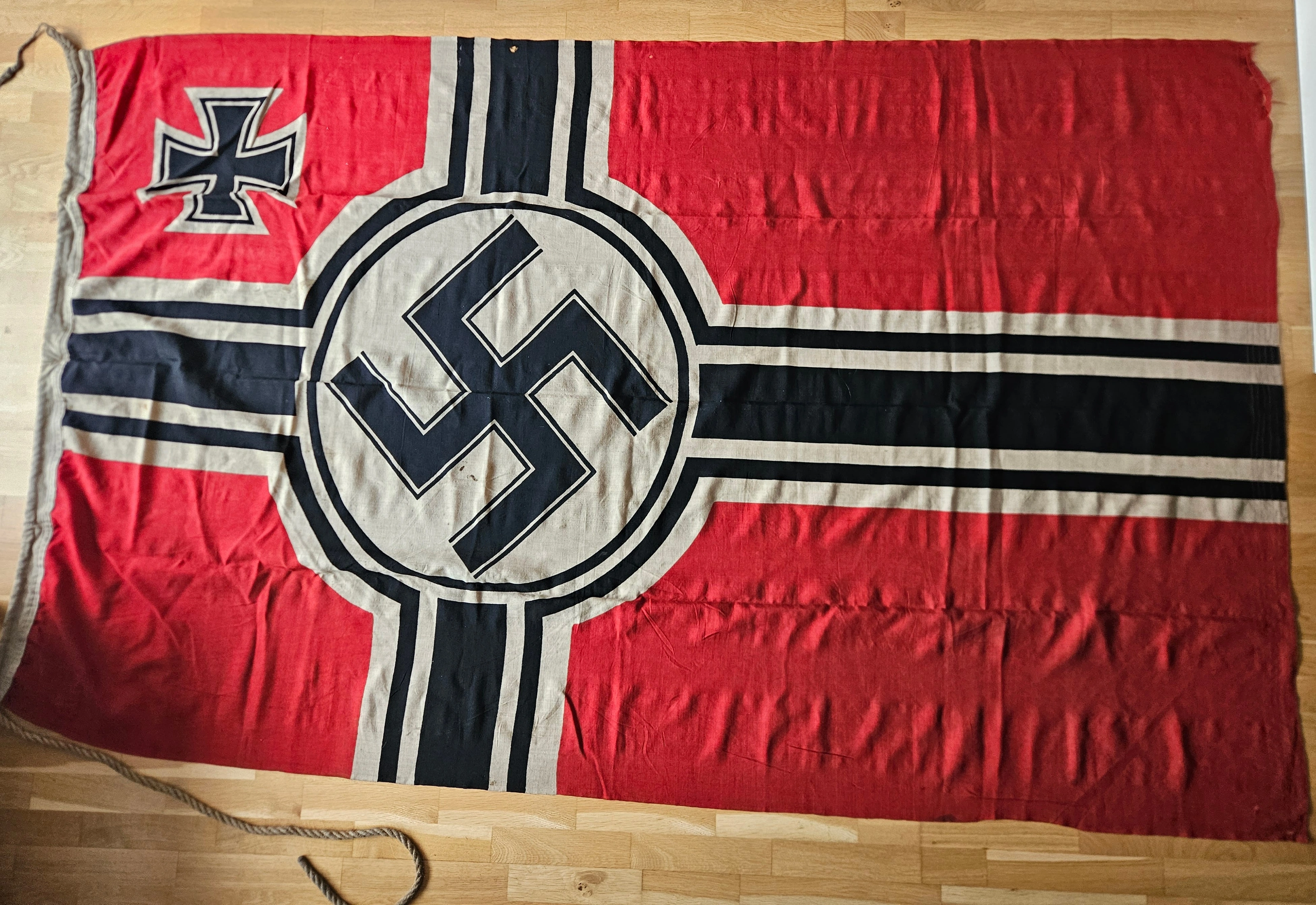
FG-018
Germany · Nazi Period (1933–1945)
150 × 250 cm
Markings: “Reichskriegsflg. 1,5 × 2,5”
Captured in Middelburg, Netherlands
Flag ID: FG-018
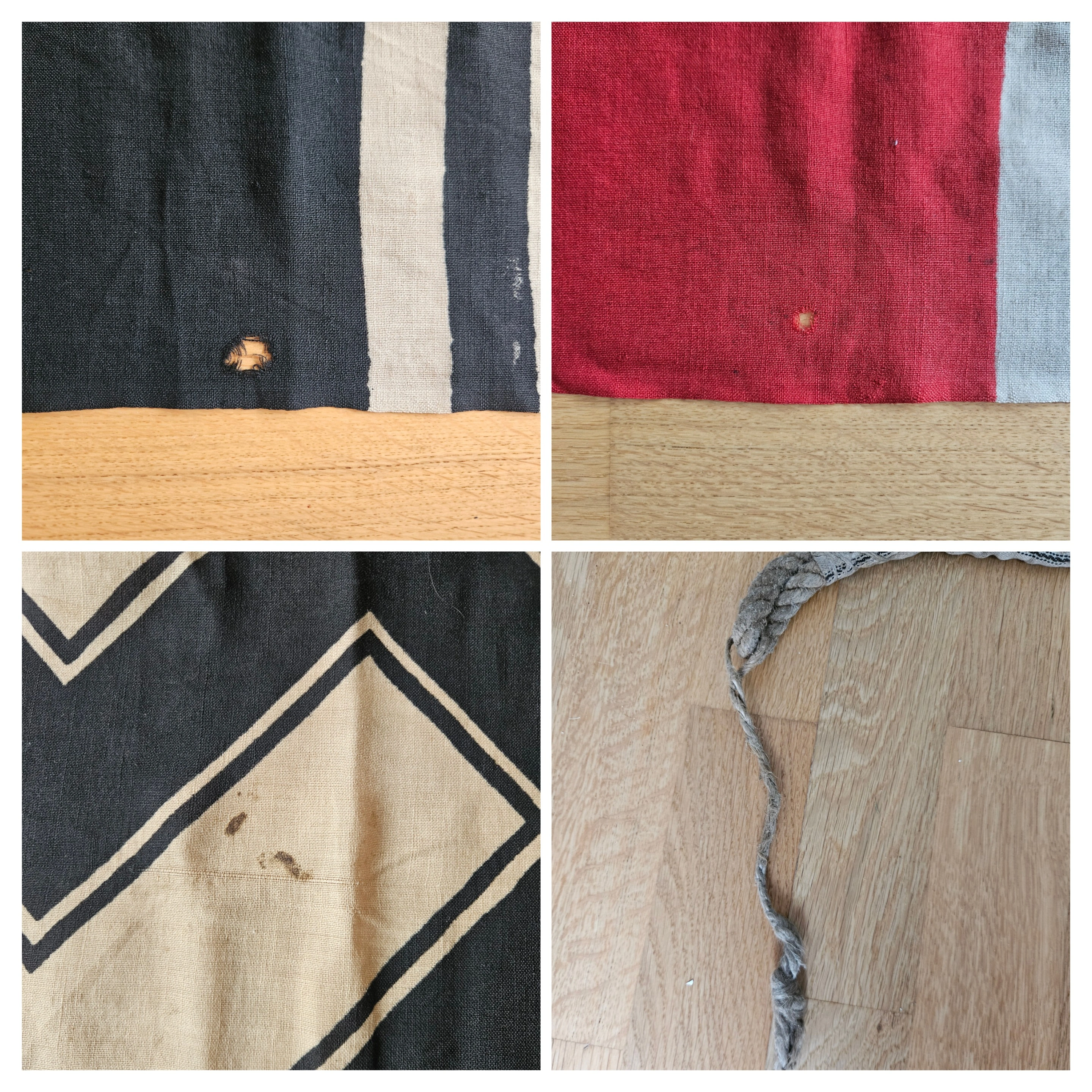
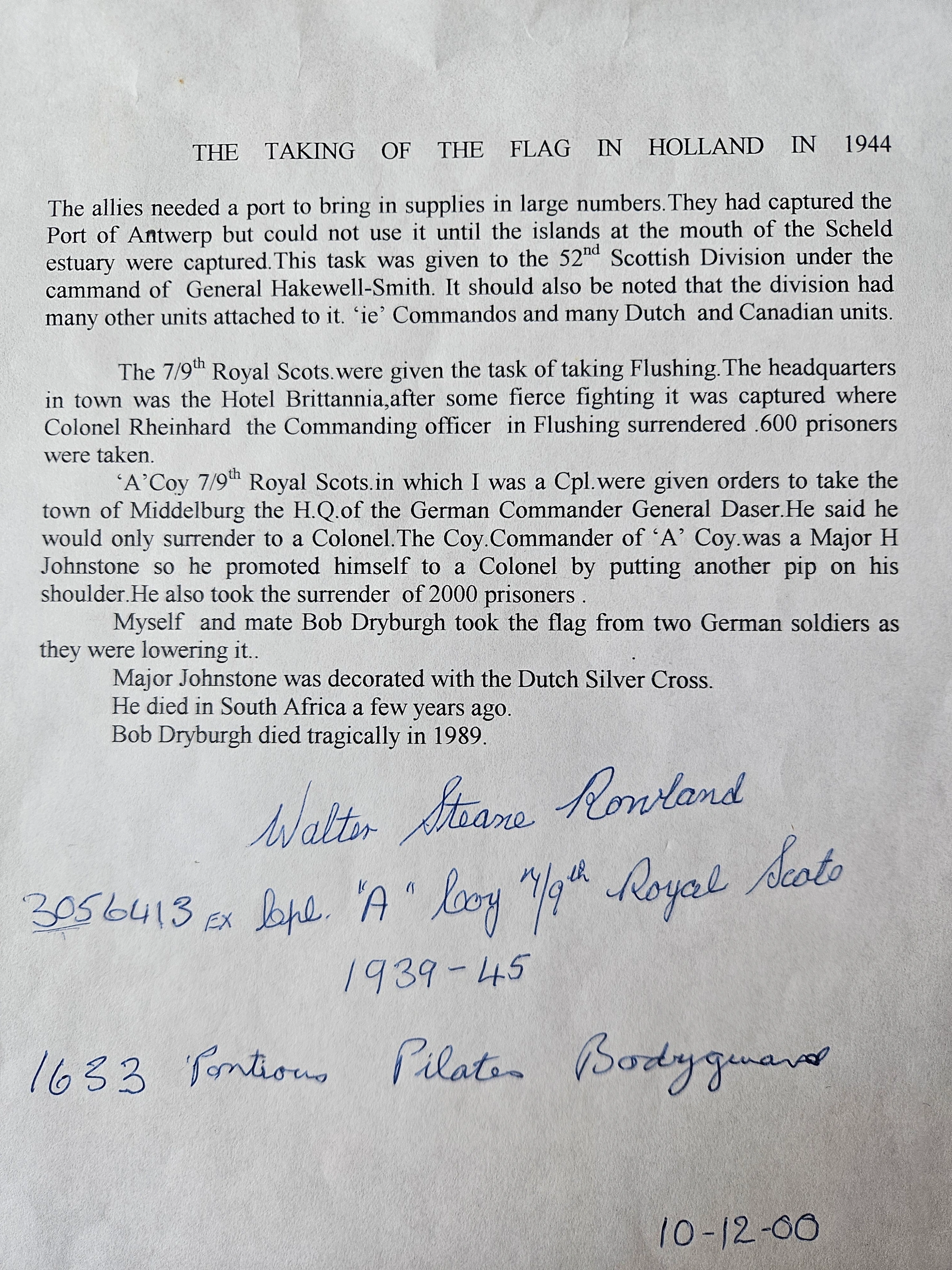
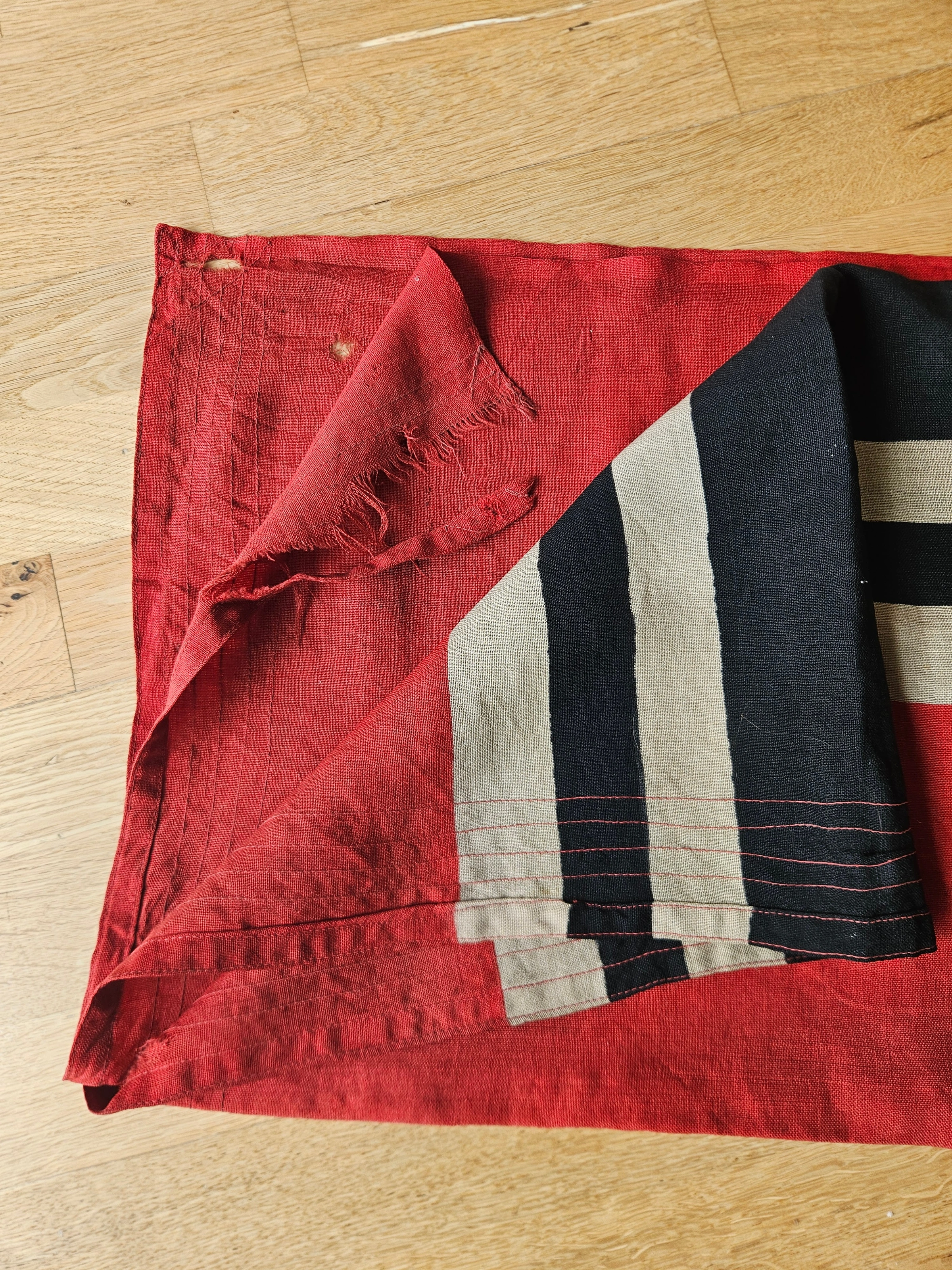
This naval war flag was captured in the Dutch town of Middelburg on 7 November 1944, during Operation Infatuate. The 7/9th Royal Scots, part of the 52nd (Lowland) Division, accepted the unconditional surrender of German General Wilhelm Daser. The flag was taken down from Daser’s headquarters by Walter Steane Rowland and Bob Dryburgh. Its identity is fully confirmed by matching damage visible in a 2000 photograph and again in 2025, along with Rowland’s signed statement.
By October 1944, the Allied advance across Western Europe had outrun its supply lines. Antwerp had been liberated, but the Germans still controlled the Scheldt Estuary – the vital waterway leading to the port. Without it, the Allies could not receive fuel, ammunition, or reinforcements in bulk.
The Dutch island of Walcheren was the key. Its flooded interior and heavy German defenses created a deadly bottleneck. General Wilhelm Daser commanded the island’s defense with artillery covering the estuary. Operation Infatuate – an amphibious assault by British and Canadian forces – was launched to break that hold.
On 7 November 1944, Daser unconditionally surrendered in Middelburg. This act unlocked the estuary and allowed Allied ships to begin using Antwerp just three weeks later – shifting the momentum of the war. The supply crisis was broken.
The Reichskriegsflagge shown here was taken down on that very day – 7 November 1944 – from General Daser’s headquarters by Corperal Walter Steane Rowland and Bob Dryburgh of the 7/9th Royal Scots. It is directly linked to the surrender that opened Antwerp.
The flag is documented through a signed statement, photos taken in 2000 and 2025, and physical damage matching those images. With that, it becomes more than a captured relic – it is a singular surviving witness to a turning point in European history.
Few original war flags can be so precisely traced to a named general, a strategic surrender, and two known Allied soldiers. This makes the Middelburg flag one of the most historically significant German flags to survive the Second World War.
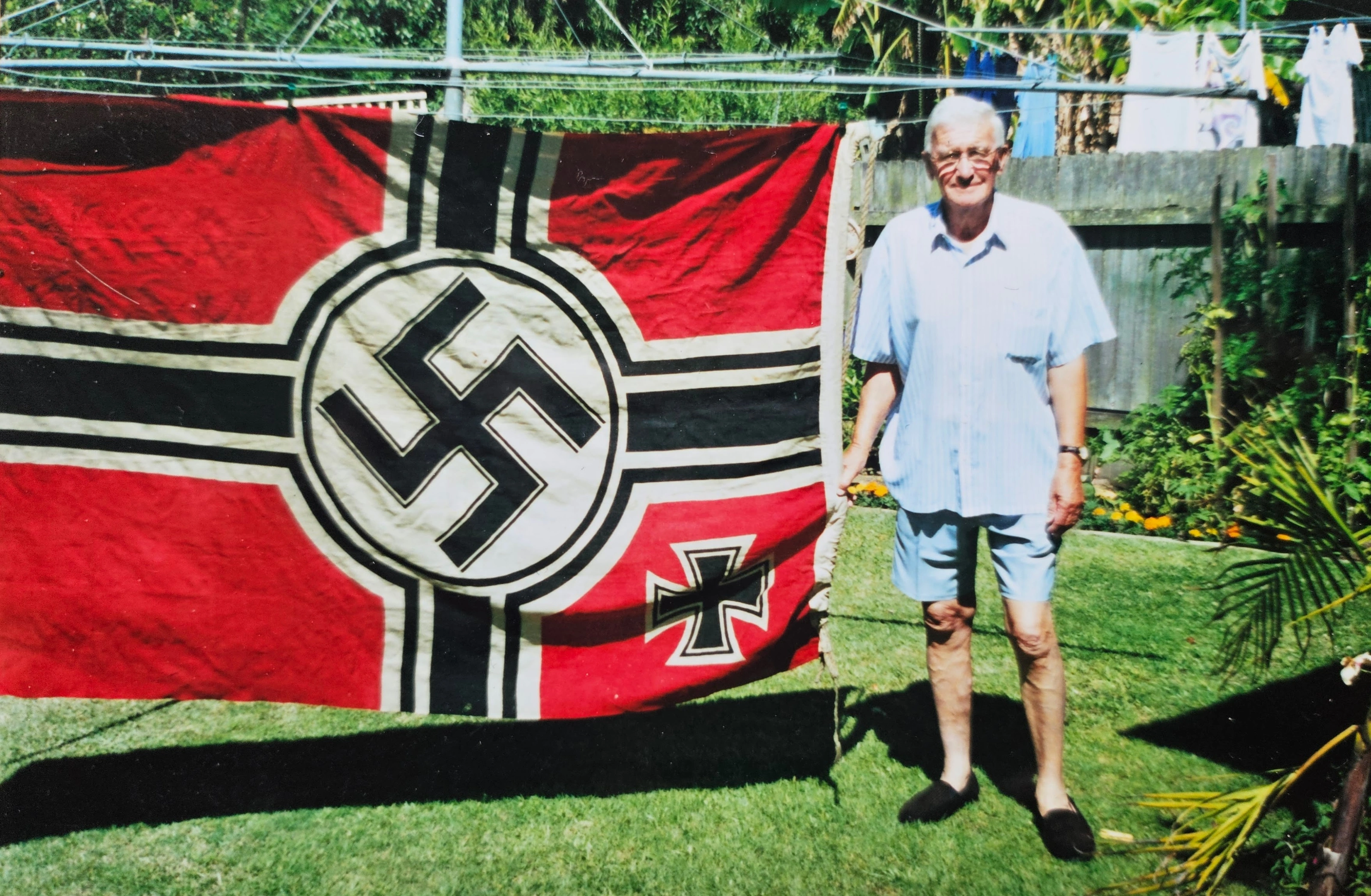
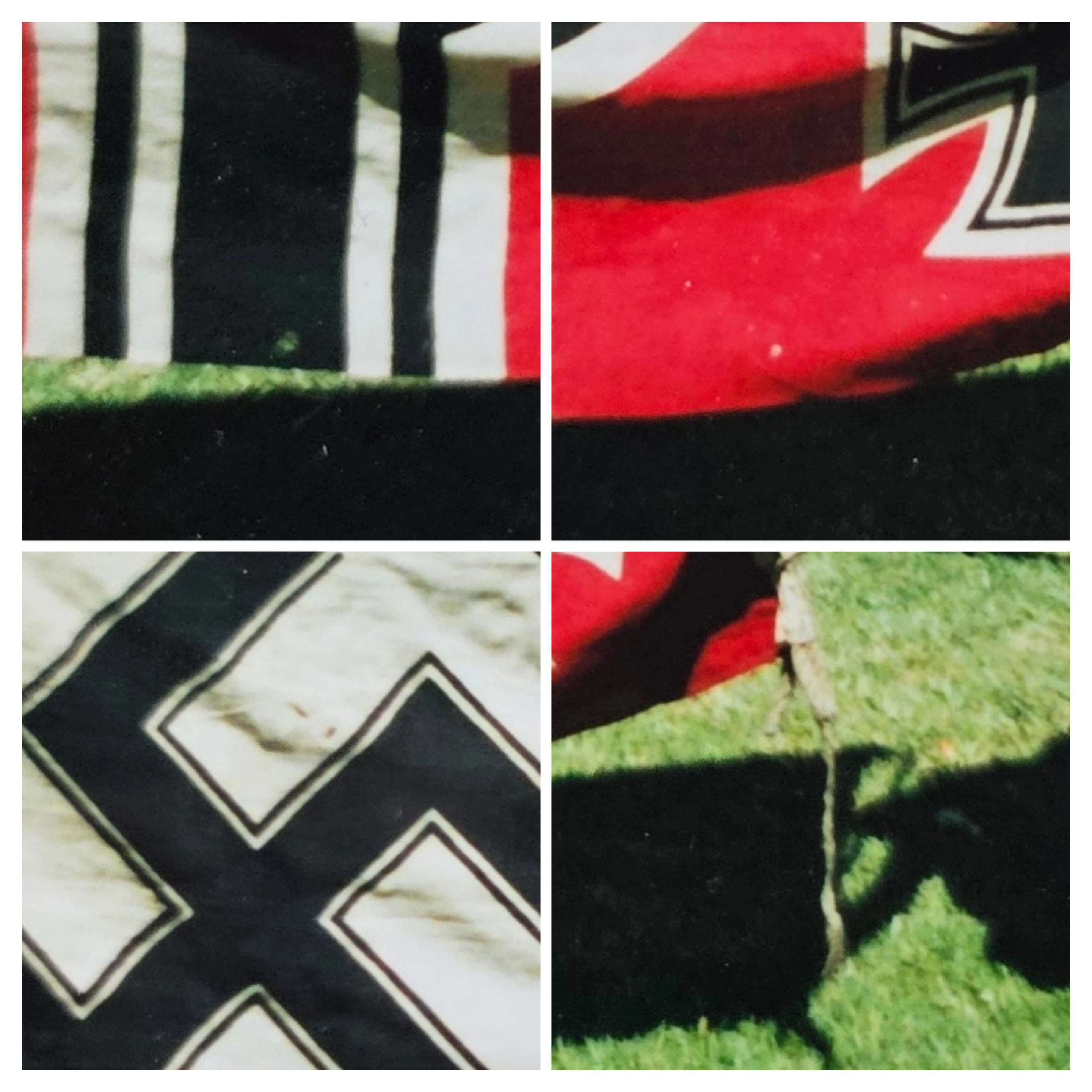
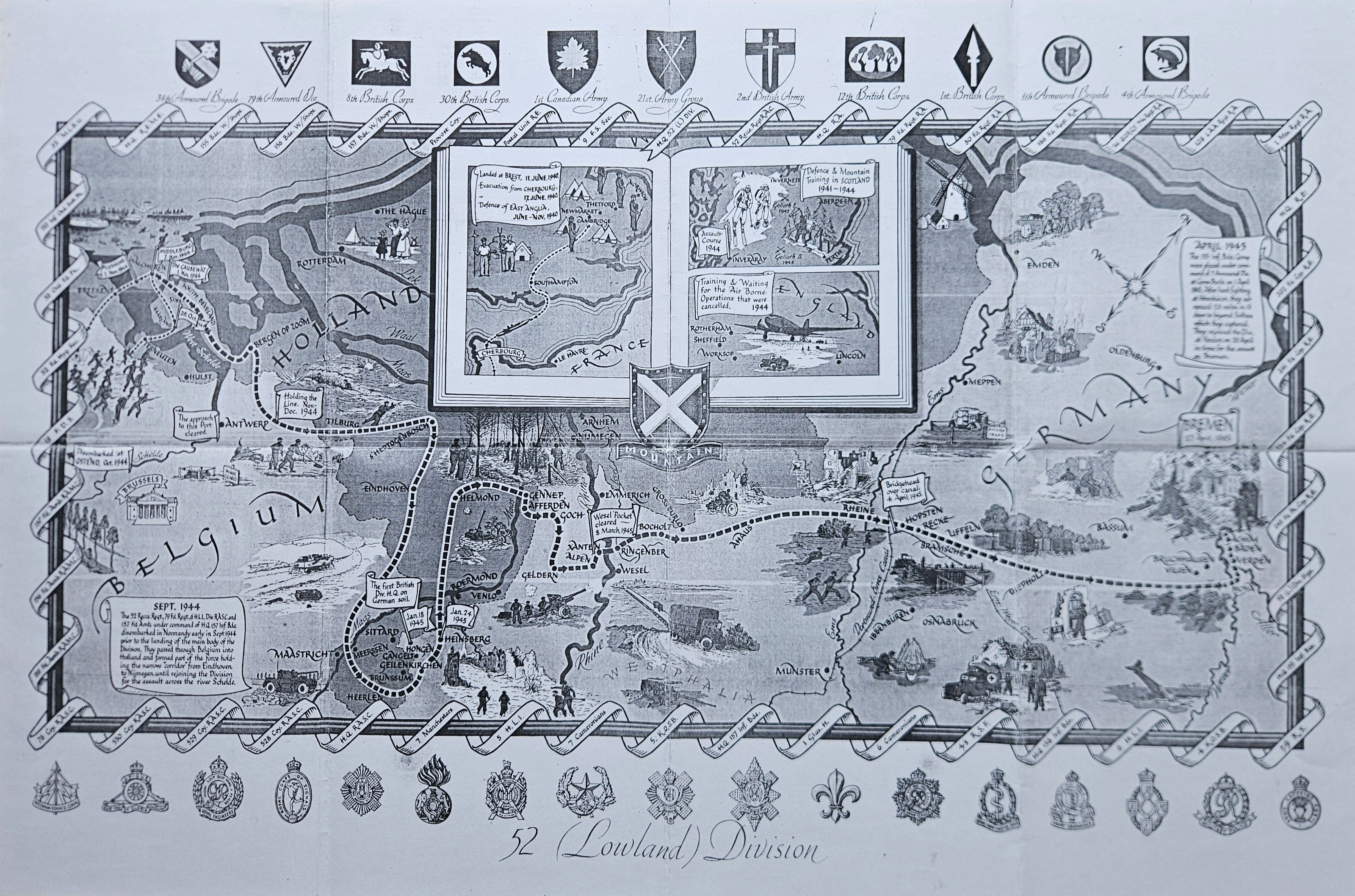
A commemorative PDF booklet titled “Assault on Flushing”, published in 1969 for the 25th anniversary of the operation, provides additional veteran accounts and context.
📄 View PDF: Assault on Flushing
Wilhelm Daser (17 June 1884 – 14 April 1968) was a German officer who served in the Imperial Army, the Reichswehr, and later the Wehrmacht. He was born in Günzburg, Bavaria, and began his military career in 1902. Daser served during the First World War and remained in the armed forces during the Weimar Republic.
During the Second World War, Daser held various infantry commands. In 1944, he was appointed commander of German forces on Walcheren Island, tasked with defending the Scheldt Estuary, including the key towns of Middelburg and Flushing. He led the German resistance during Operation Infatuate, a critical Allied operation to clear the waterway leading to the port of Antwerp.
On 7 November 1944, facing overwhelming amphibious assault and after extensive flooding of the island by Allied bombing, Daser surrendered unconditionally in Middelburg to the 7/9th Royal Scots. Approximately 2,000 soldiers and 50 officers laid down arms.
After his capture, Daser was sent to Trent Park, a British POW facility for high-ranking German officers. He was released from captivity in 1947 and lived the remainder of his life in Utting am Ammersee, Bavaria, where he died on 14 April 1968.
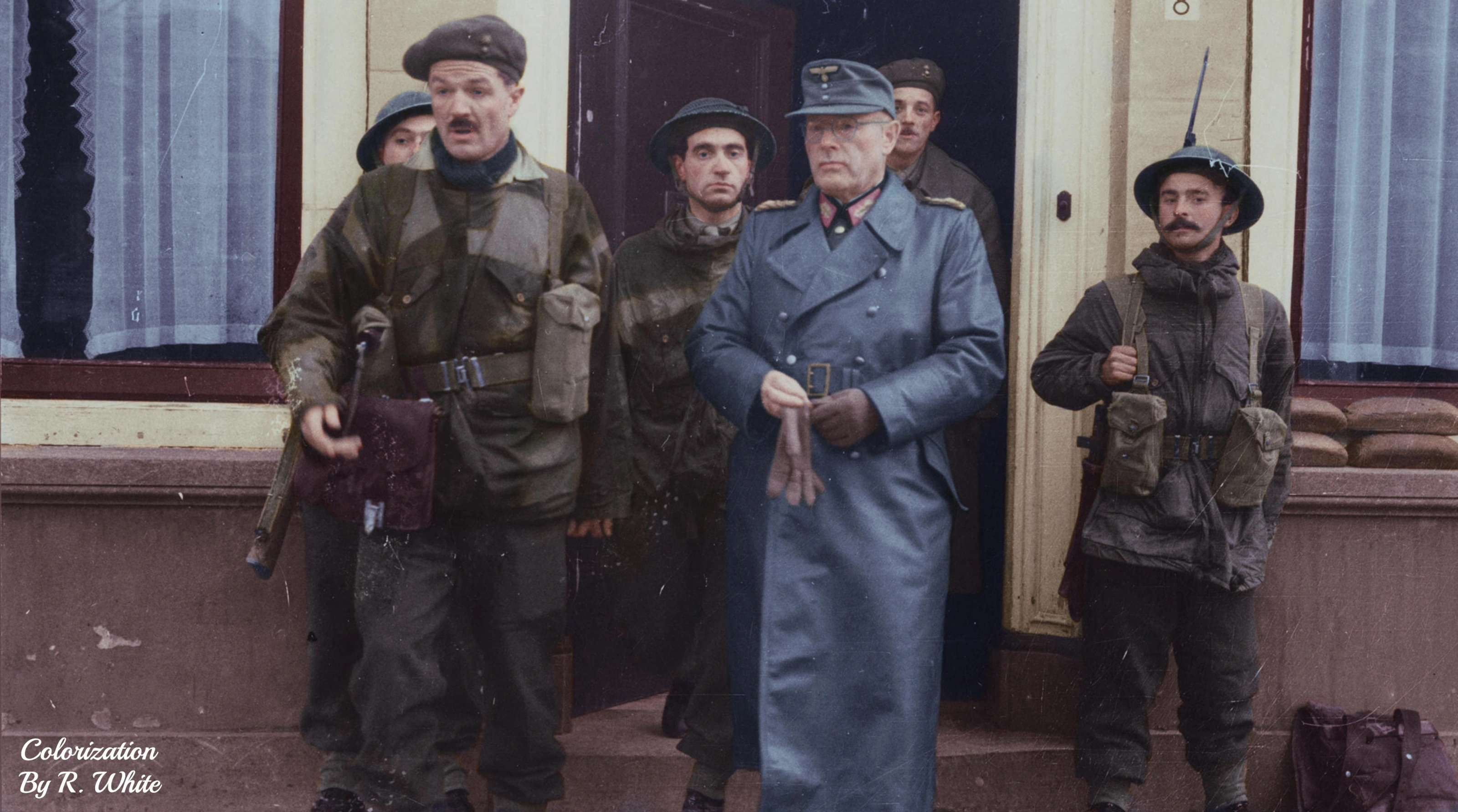
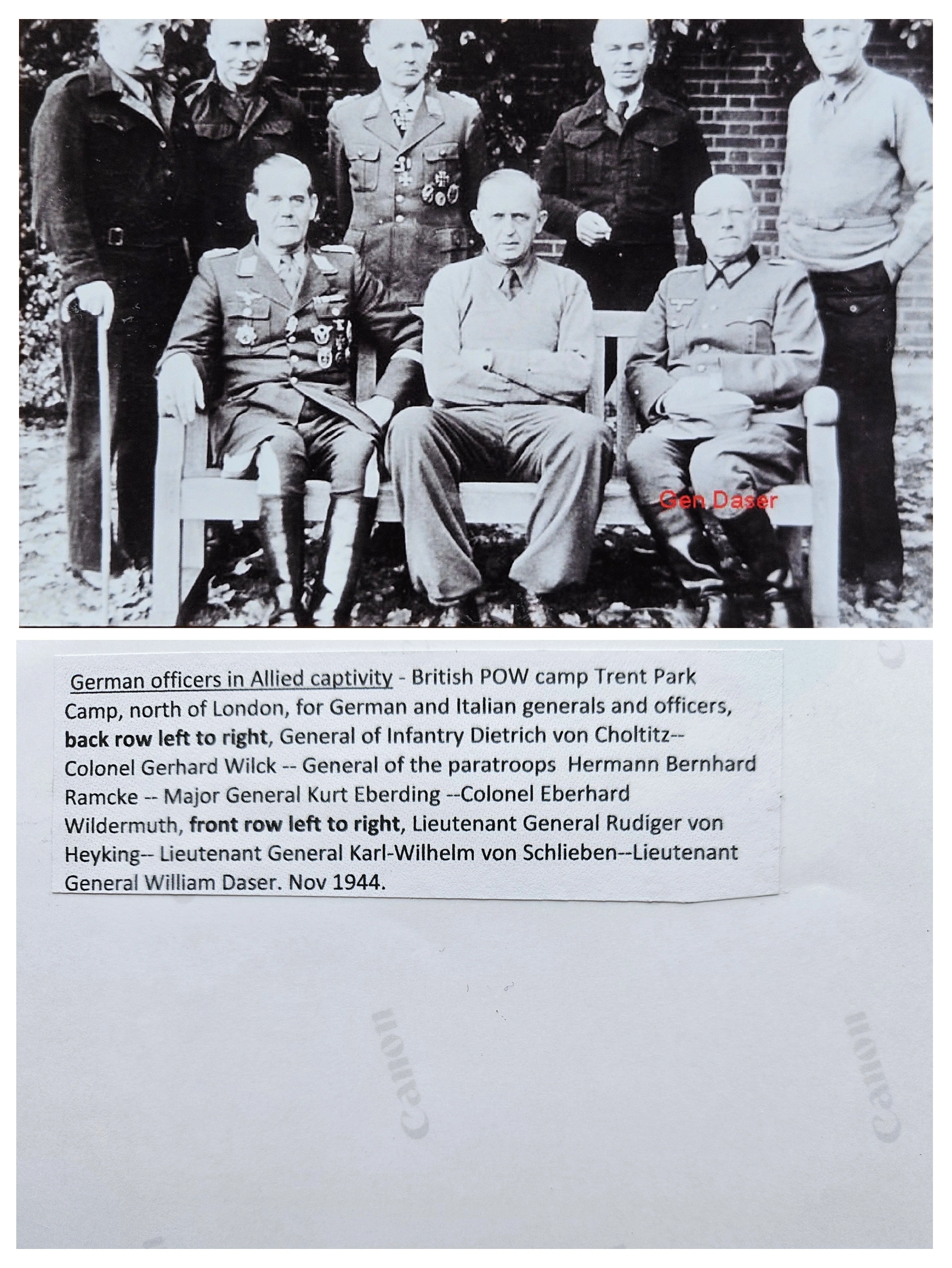
Note: Some sources refer to 6 November 1944 as the start of surrender activity in Middelburg. However, General Wilhelm Daser's formal and unconditional surrender—including the flag captured by Walter Rowland—took place on 7 November 1944 at Dam 8. This date is confirmed by contemporary accounts and photographs.
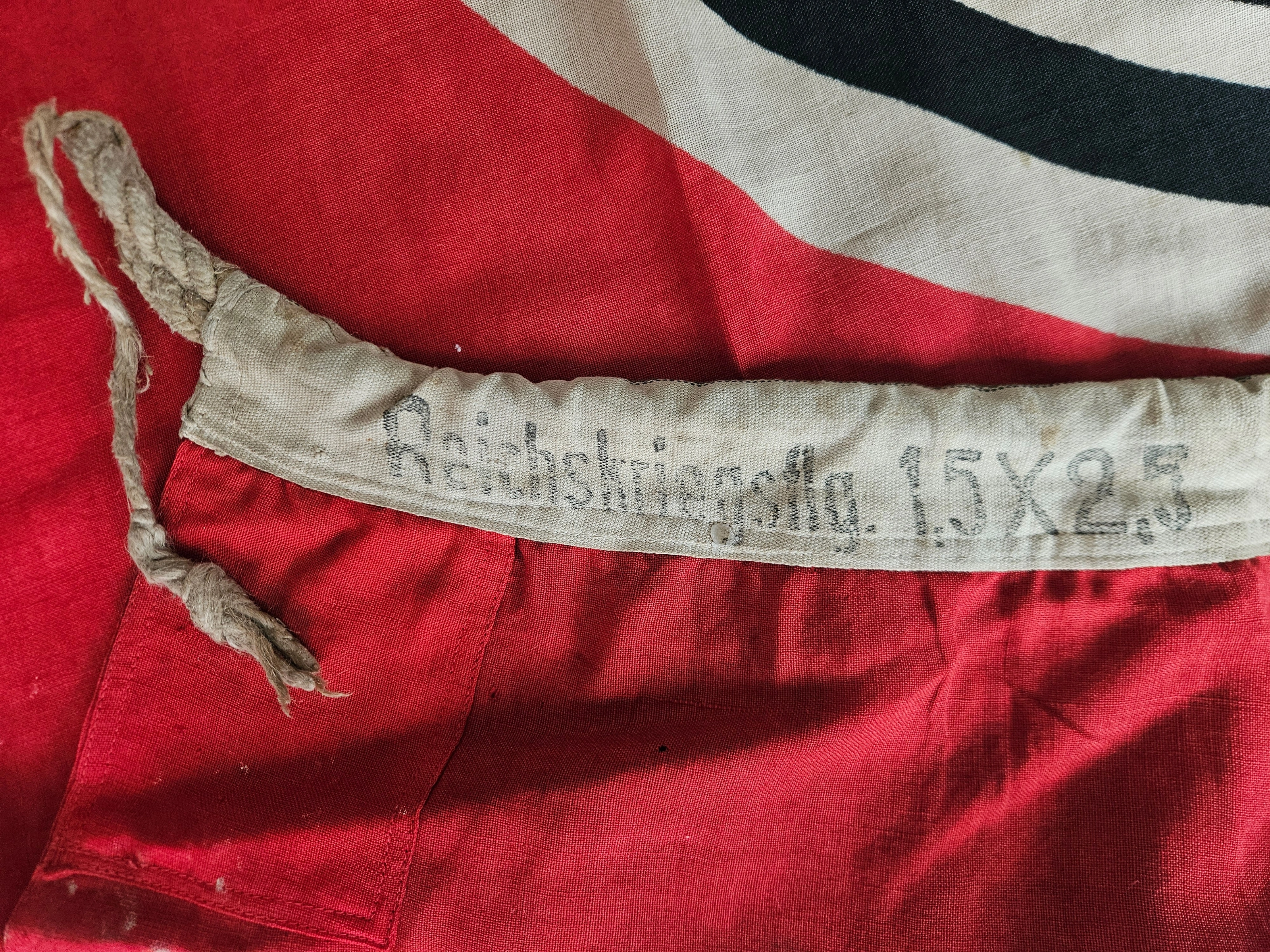
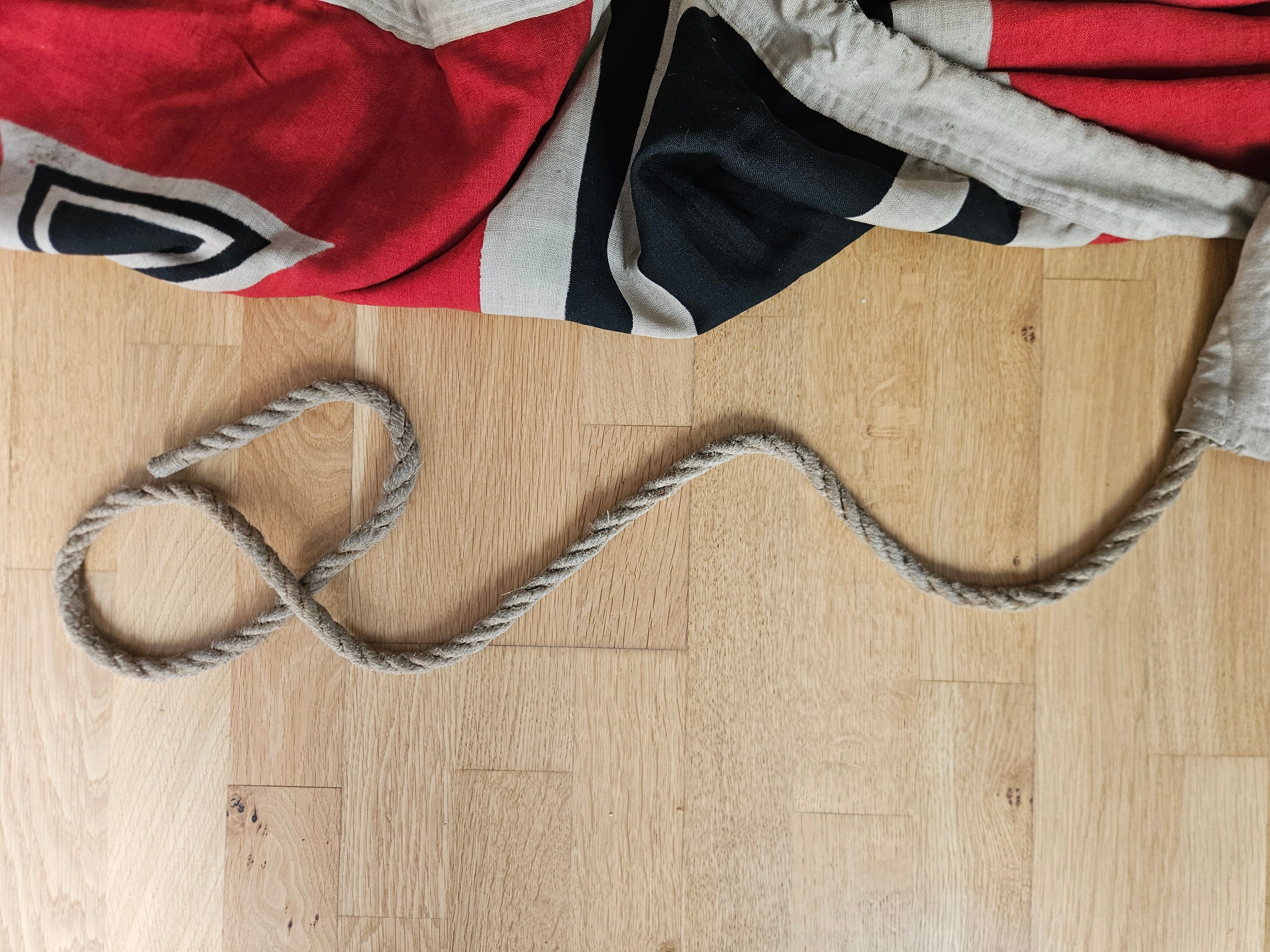
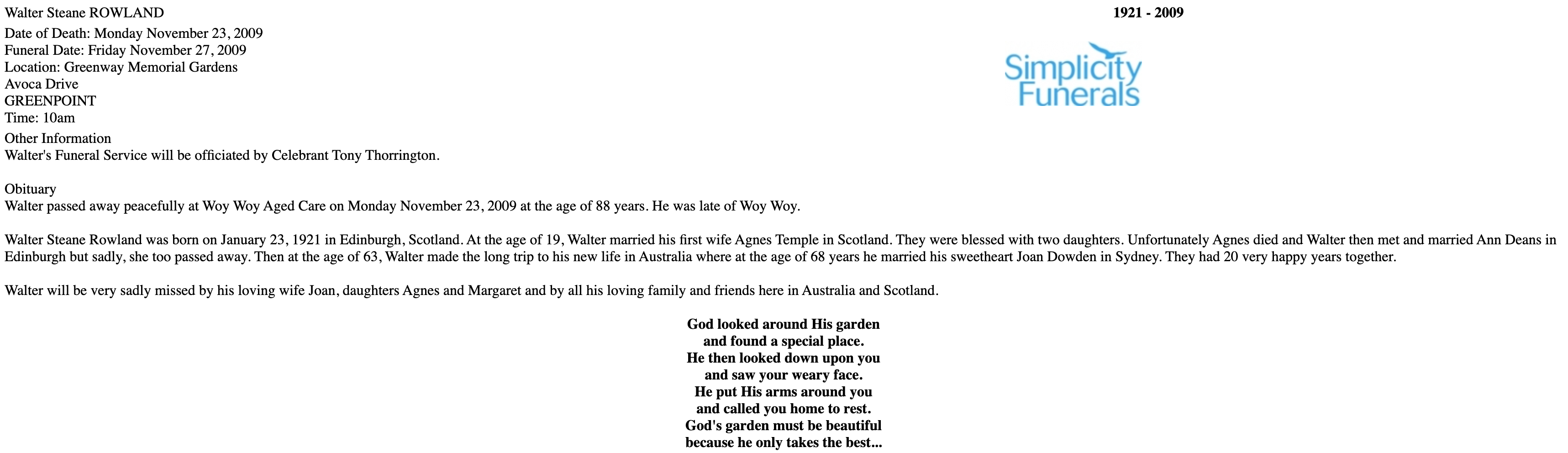
Walter was born in Edinburgh in 1921 and served in the 7/9th Royal Scots during WWII. After the war, he emigrated to Australia, where he passed away in 2009. He is buried in Greenway Memorial Gardens, NSW.
© 2025 FlagGeek / Kenny Ytrup – Licensed under CC BY-NC 4.0 .
Non-commercial sharing with attribution permitted. Commercial use requires permission.
External photographs remain under the rights of their respective holders and are reproduced here solely for scholarly research and documentation under quotation/fair use provisions.
Original FlagGeek publication · Source status: LIVE. Research text and evidence retained from the Blogger export.
FlagGeek · https://flaggeek-v2.pages.dev/archive/kriegsmarine-reichskriegsflagge/