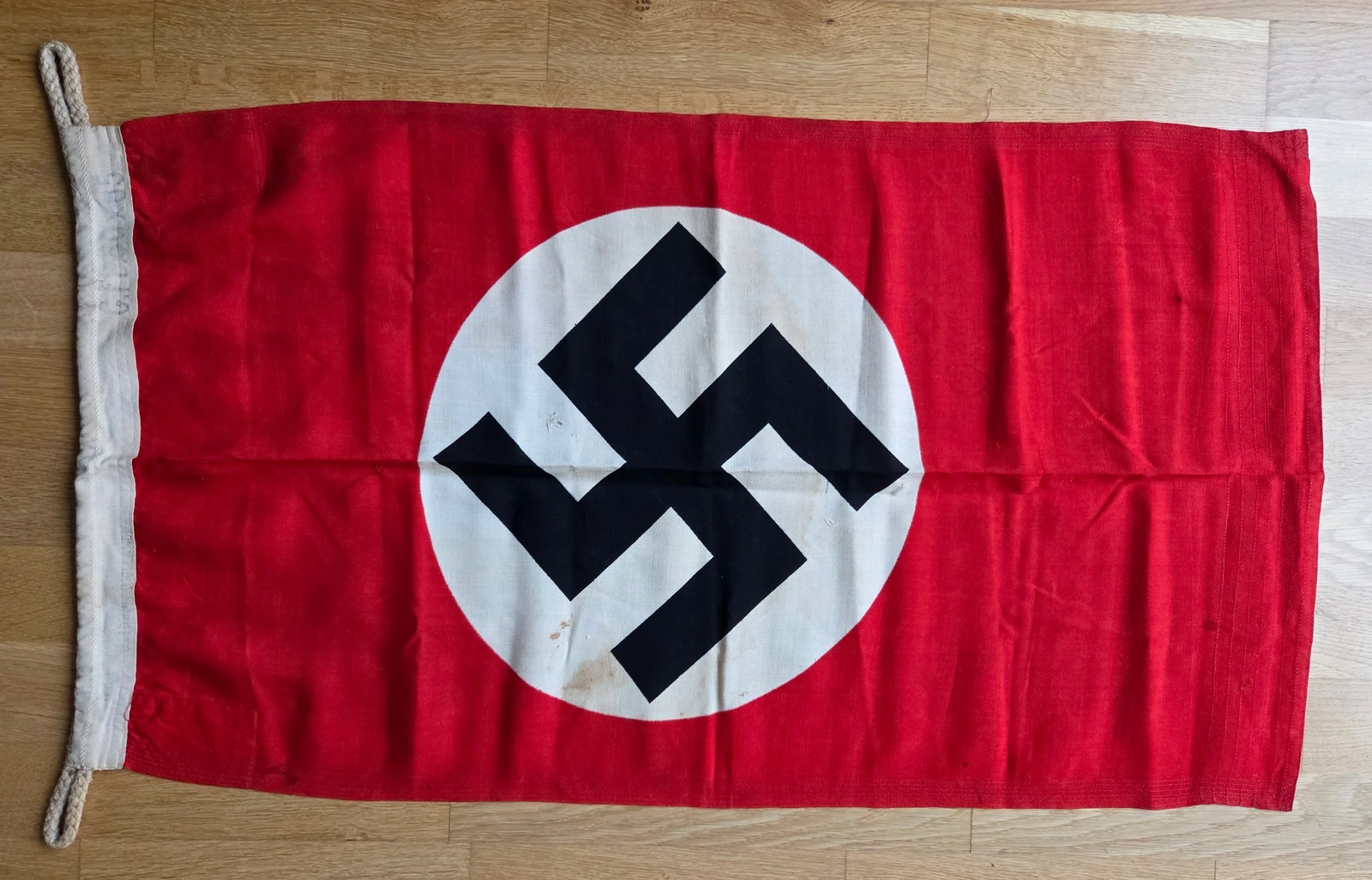
FG-012
German Jack (Gösch) G. Fl. 50×85 cm
Germany · Nazi Period (1933–1945)
50 × 85 cm
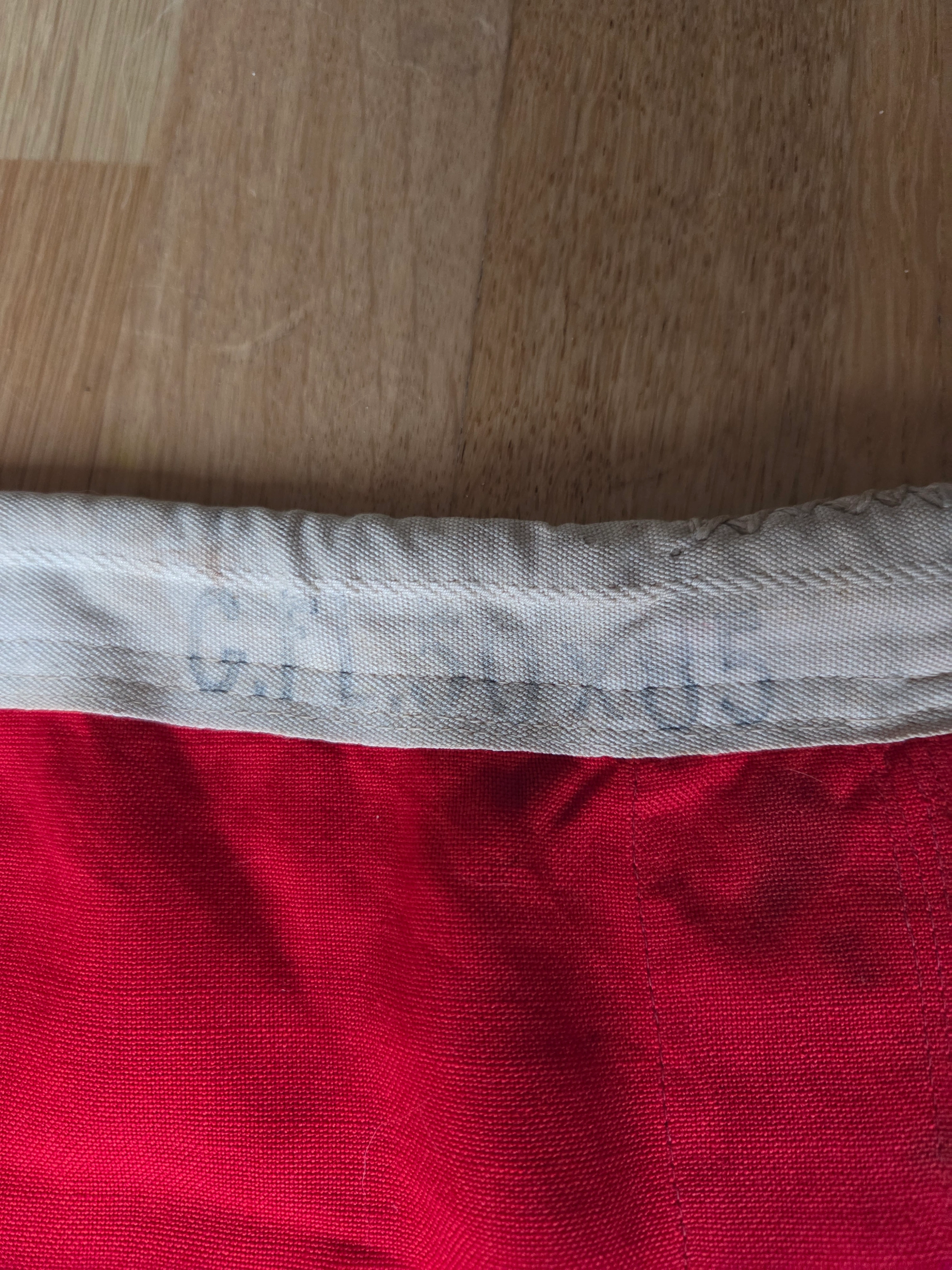
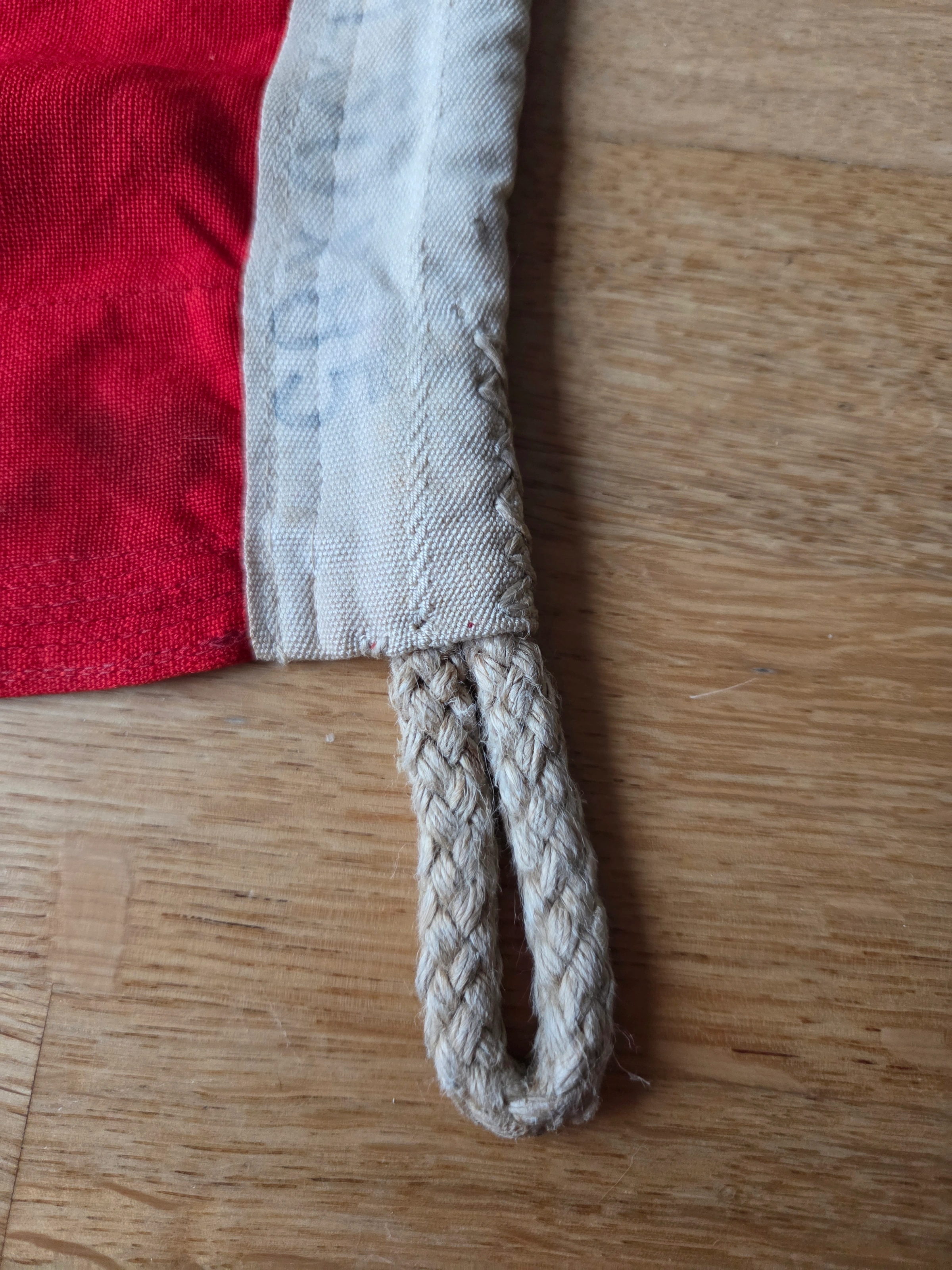
Markings: "G.Fl.50 × 85”, "N.V.P.F. v. Vlissingen & Co’s Katoenfabr. Helmond (Holland)"
Possibly Kriegsmarine depot or Dutch contractor stock
Germany / Naval jack (bow flag)
German Jack (Gösch) G. Fl. 50×85 cm
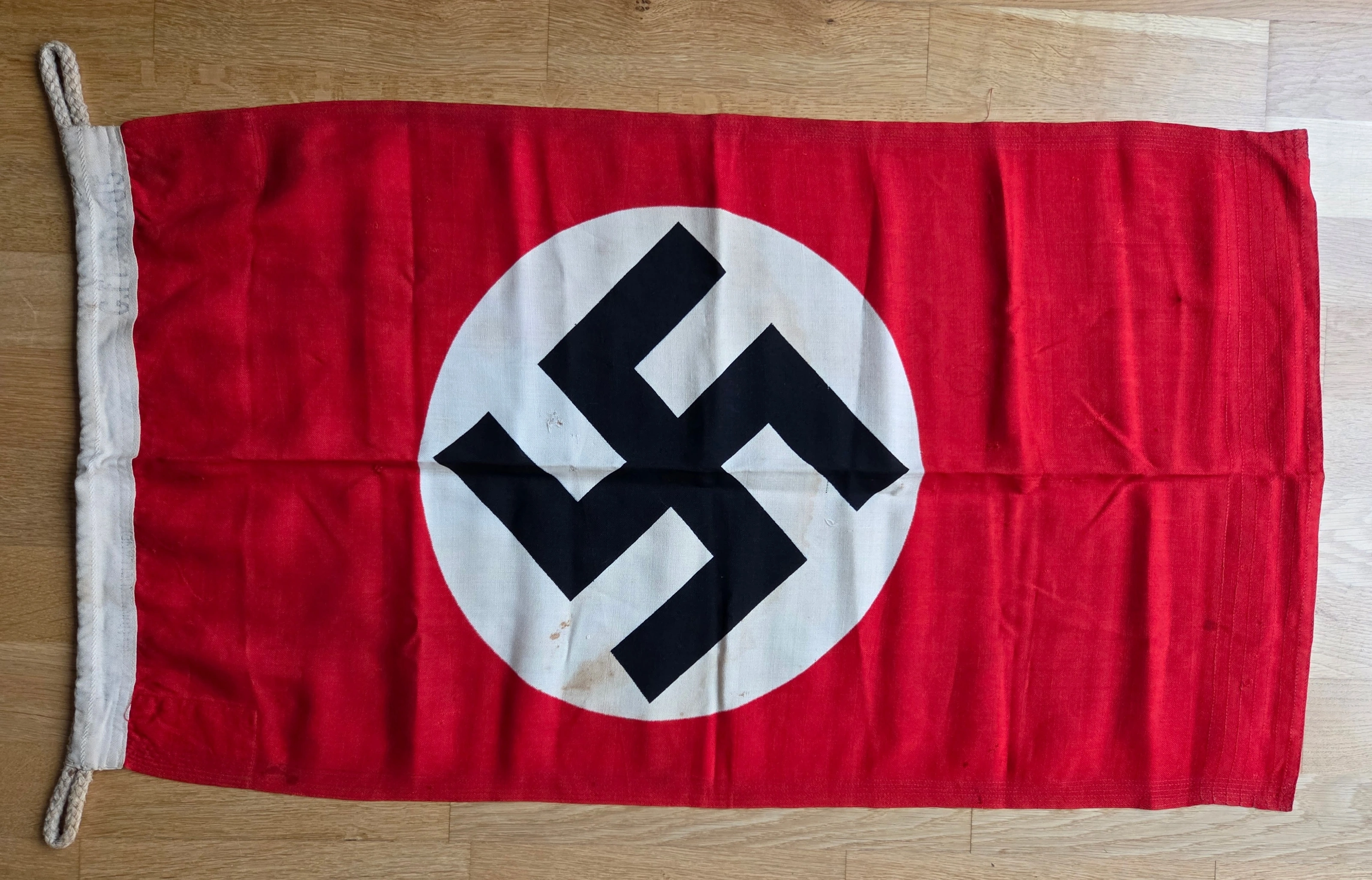
FG-012
Germany · Nazi Period (1933–1945)
50 × 85 cm
Markings: "G.Fl.50 × 85”, "N.V.P.F. v. Vlissingen & Co’s Katoenfabr. Helmond (Holland)"
Possibly Kriegsmarine depot or Dutch contractor stock
Flag ID: FG-012
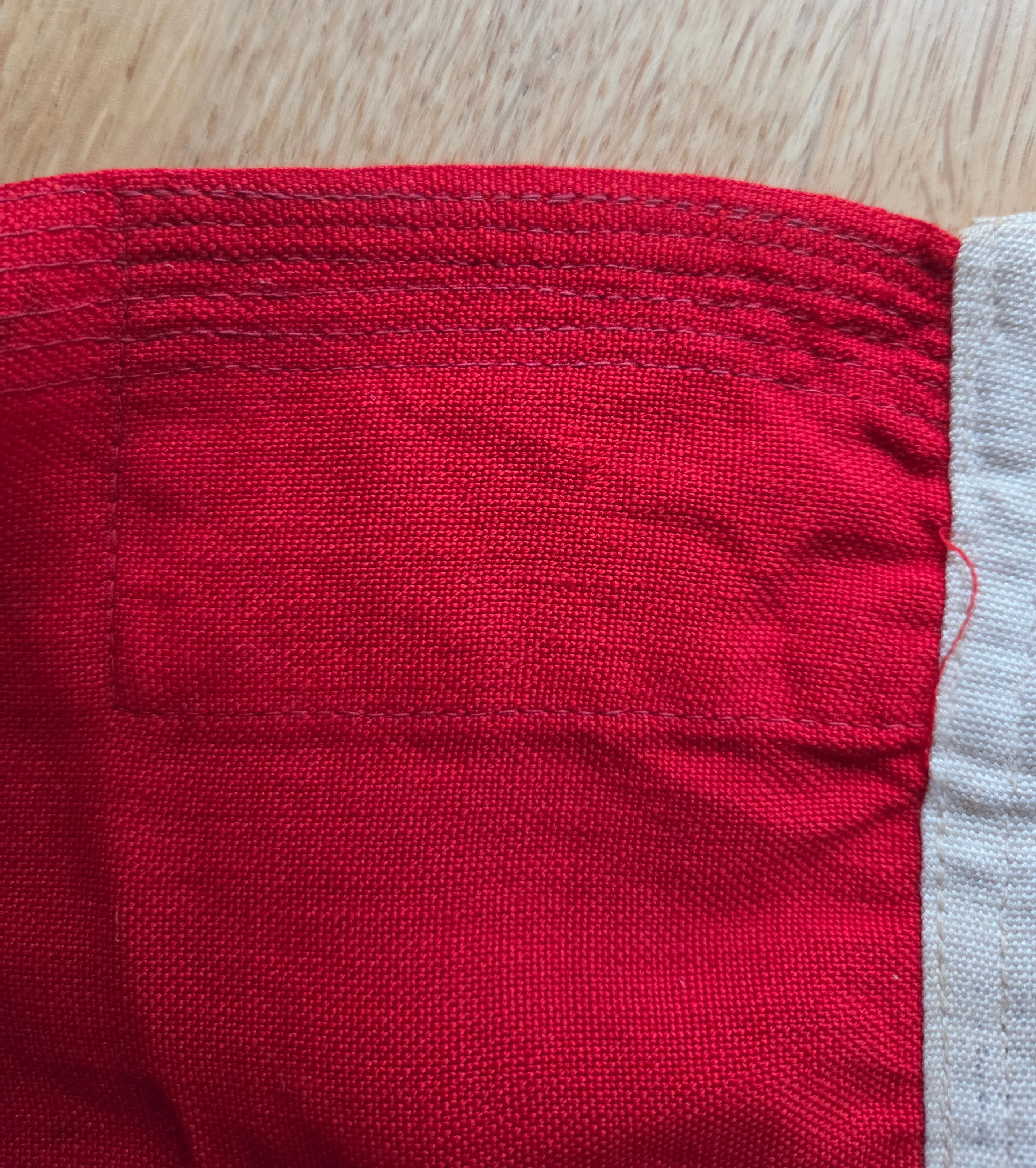
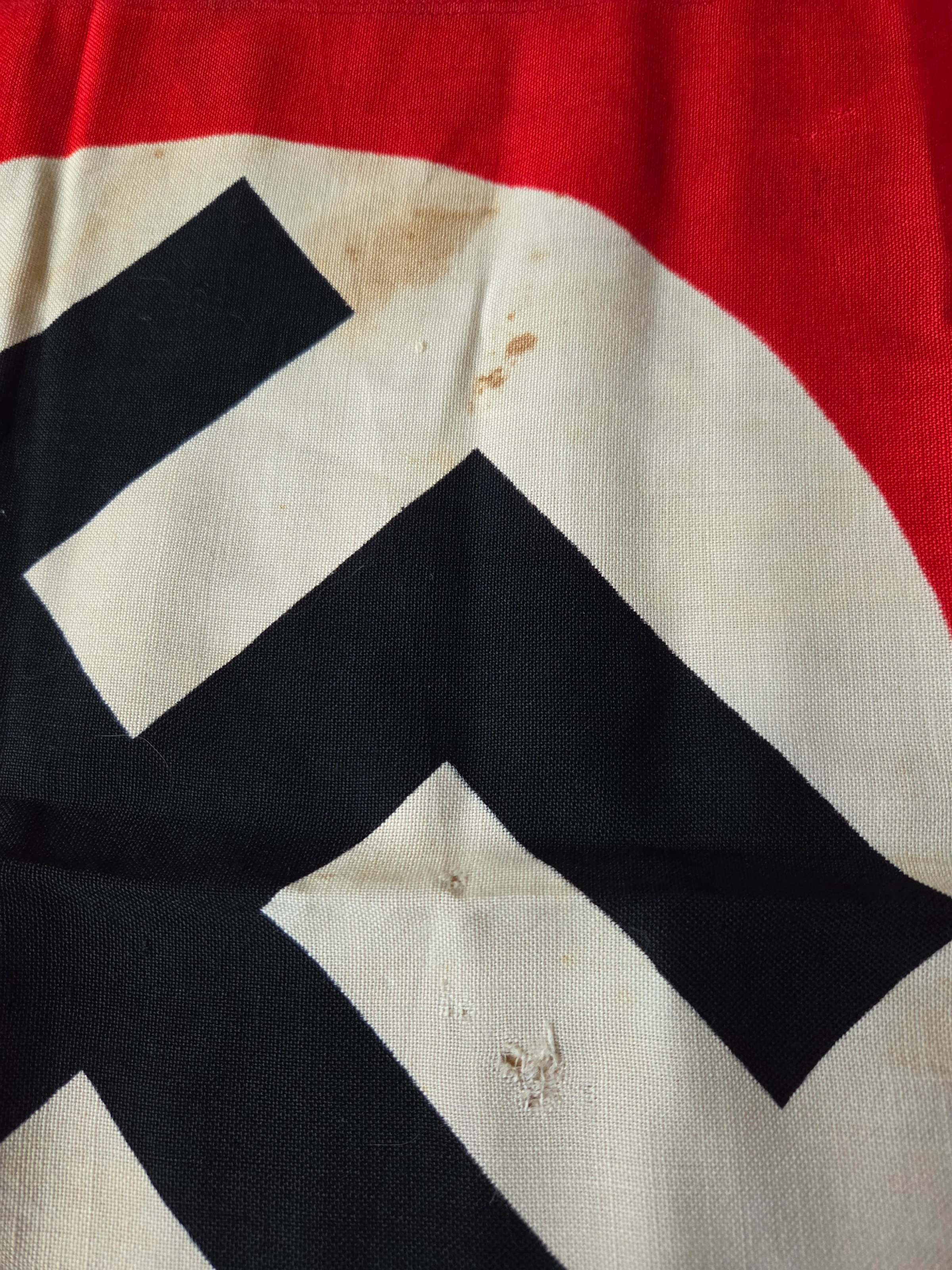
The Gösch (jack) was flown at the bow when a vessel was anchored, moored, or alongside, and was normally struck at sea except for specific ceremonies. The 50 × 85 cm class corresponds to small craft—harbour launches, tugs, patrol craft, and tenders—while larger vessels employed proportionally larger jacks. The hoist-offset swastika-in-disc motif is a deliberate element of the period jack specification and improves visual balance at the bow.
The maker line refers to Pieter Fentener van Vlissingen & Co’s cotton factory in Helmond (North Brabant), later known as Vlisco. Textile histories place the firm’s establishment in 1846 by Pieter Fentener van Vlissingen and note adoption of the shortened brand name “Vlisco” within the textile trade in 1927 (a contraction of “Vlissingen & Co”). Corporate/stock-certificate sources emphasize prominent use of the Vlisco name from 1970, reflecting later formal branding on corporate instruments. Both are compatible: the brand circulated earlier in the textile world, while the legal/corporate style evolved more slowly. The stamp’s “N.V.P.F.” thus belongs to the company’s legal form and expands to Naamlooze Vennootschap (public limited company; joint-stock company) P. Fentener van Vlissingen & Co’s Katoenfabriek. Surviving examples with Helmond maker lines and G. Fl. designations align with controlled wartime output in occupied Netherlands and with German naval specifications.
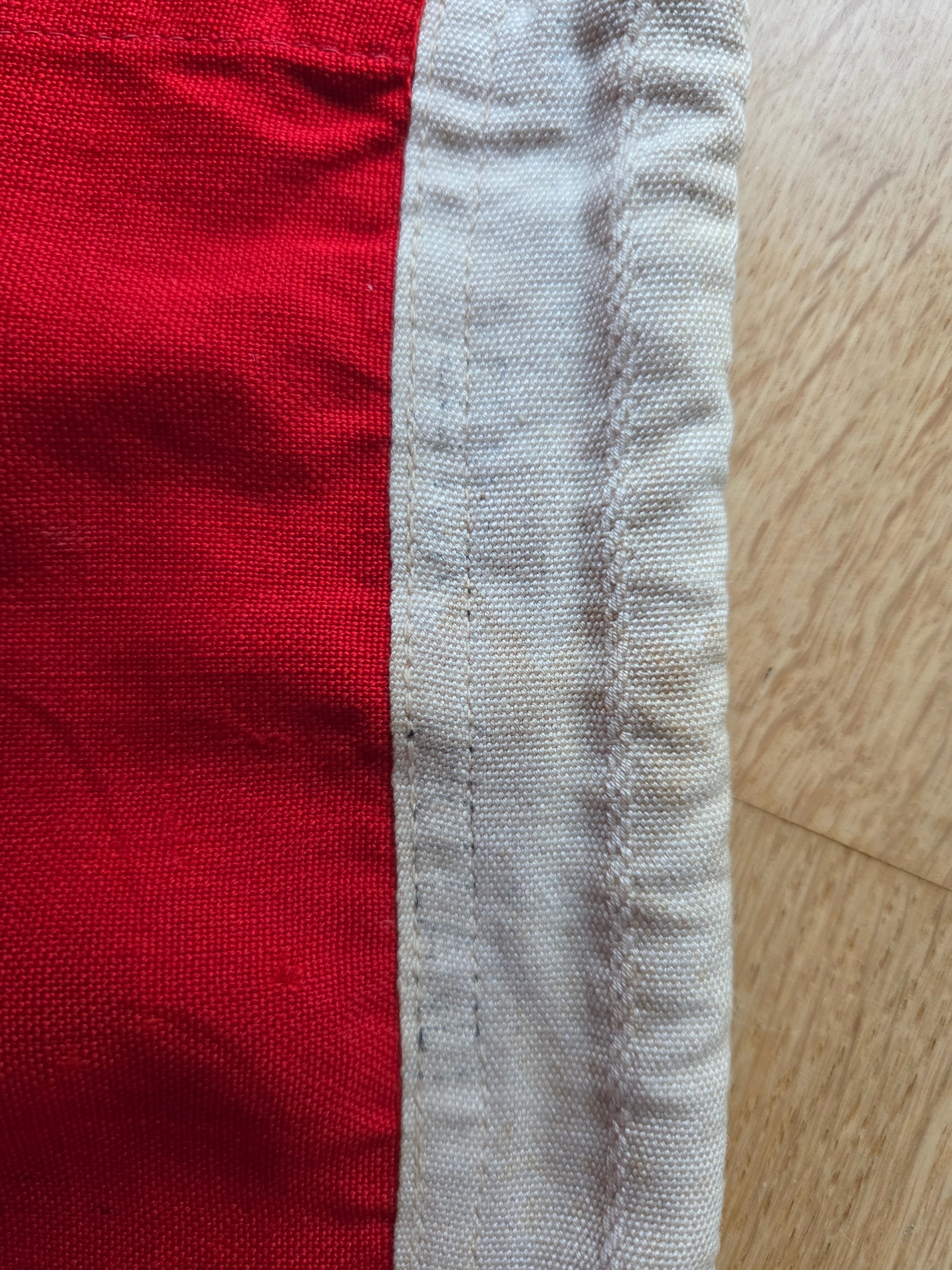
Small jack sizes like this were commonly printed single-reverse rather than appliquéd. In single-reverse printing the design is applied to one face and the dyes penetrate the cloth, so the reverse reads as a mirror image and usually appears slightly lighter—this is normal. Multi-piece (appliqué) construction uses separate panels on both sides (often with a liner), so the motif reads correctly on obverse and reverse; it is heavier, slower, and costlier to produce. Wartime priorities of speed, weight, and economy favoured printed jacks for small craft.
No Kriegsmarine acceptance stamp is visible on this specimen. For a jack that is noteworthy. Plausible explanations include an extremely faint stamp absorbed by the wool, procurement through auxiliary or occupied-industry channels with inconsistent over-stamping, or a depot/replacement item that never received—or retained—the acceptance mark. The jack layout and G. Fl. 50×85 stamp remain consistent with naval specification.
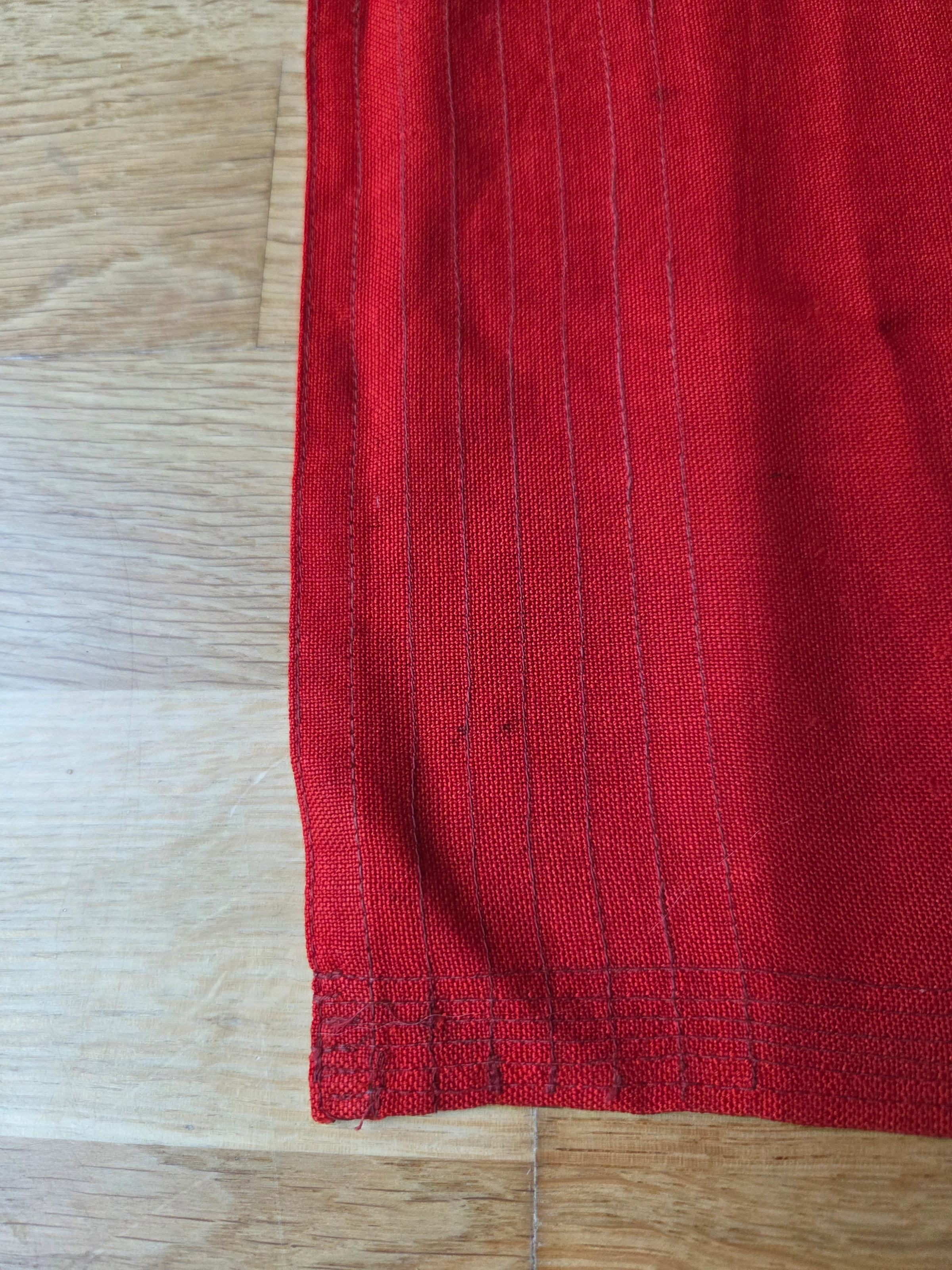
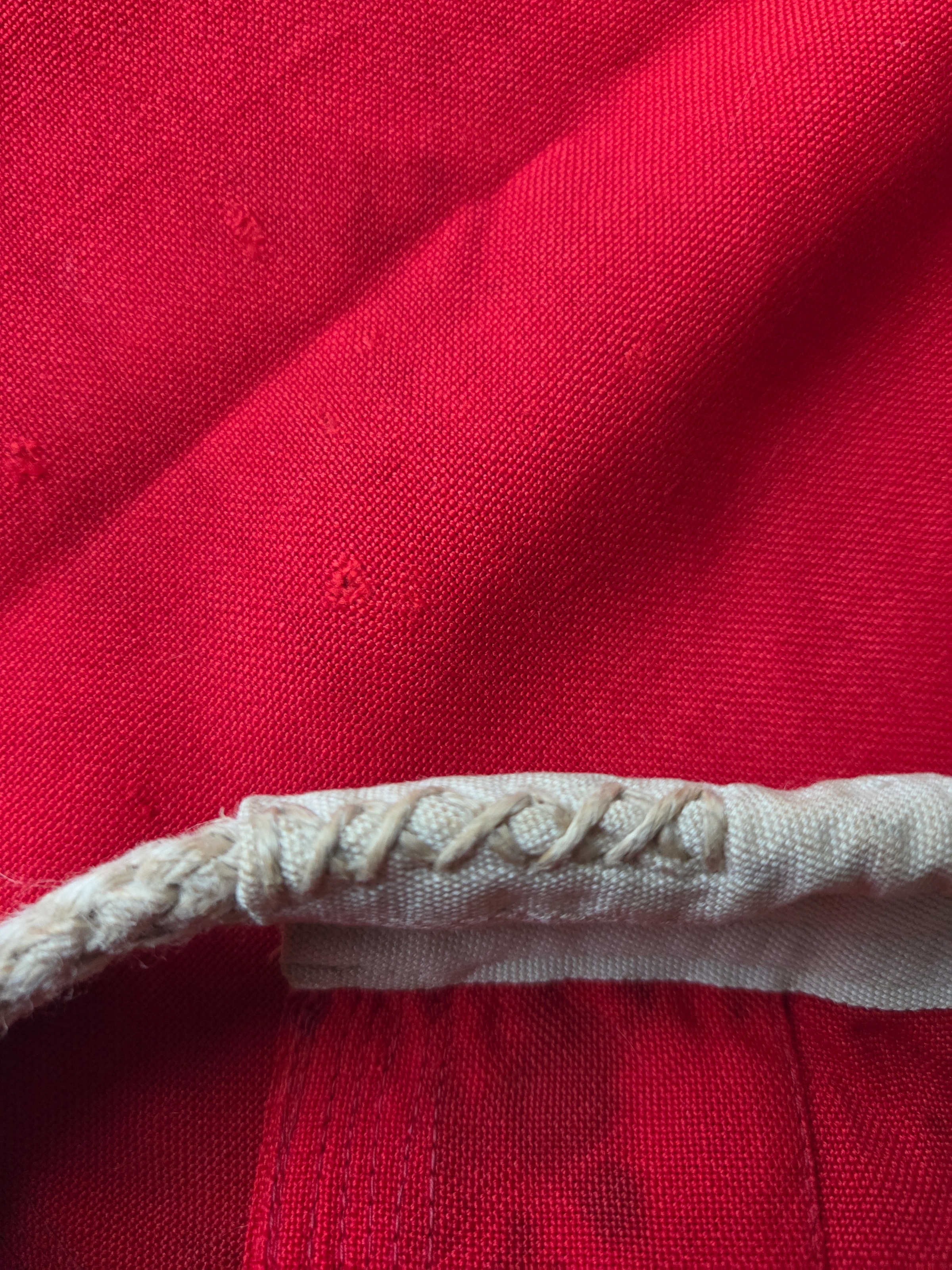
A specific production year is not asserted. Stamp style, materials, construction and the Helmond maker line best fit late 1930s to early 1940s. The flag is near-mint with no fly-edge fray. The single small hole and localized smudge/staining are characteristic of storage wear, not sea service.
© 2025 FlagGeek / Kenny Ytrup – Licensed under CC BY-NC 4.0. Non-commercial sharing with attribution permitted. Commercial use requires permission.
Original FlagGeek publication · Source status: LIVE. Research text and evidence retained from the Blogger export.
FlagGeek · https://flaggeek-v2.pages.dev/archive/kriegsmarine-gosch-50-85-cm/