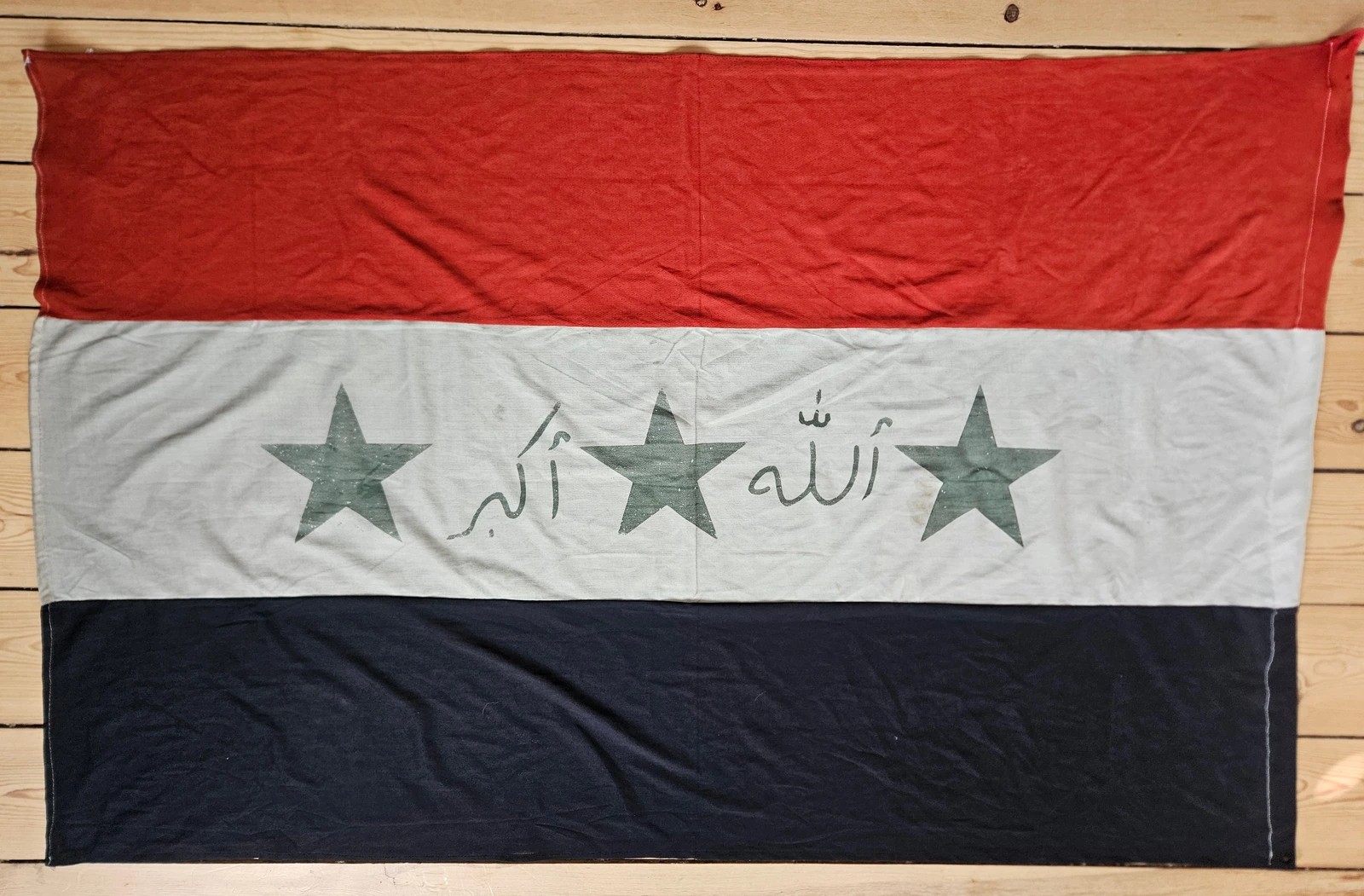
FG-033
Iraqi Ba'athist Flag (Gulf War, ca. 1991–2003)
Iraq · Saddam Hussein Period (post-1990)
75 × 116 cm
Markings: None
Reportedly sourced from Baghdad during wartime
Iraq / Propaganda or field use
Iraqi Ba'athist Flag (Gulf War, ca. 1991–2003)
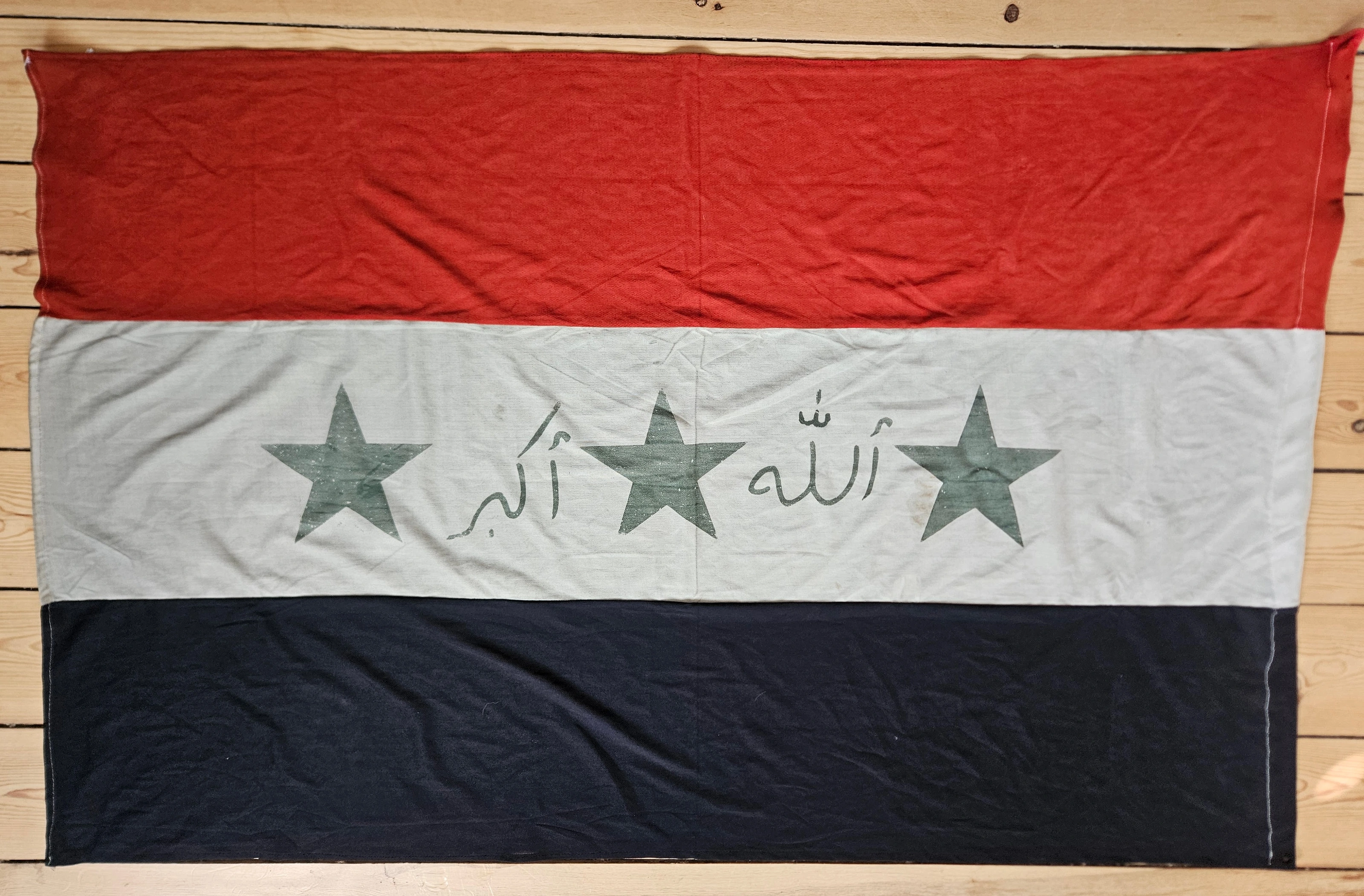
FG-033
Iraq · Saddam Hussein Period (post-1990)
75 × 116 cm
Markings: None
Reportedly sourced from Baghdad during wartime
Flag ID: FG-033
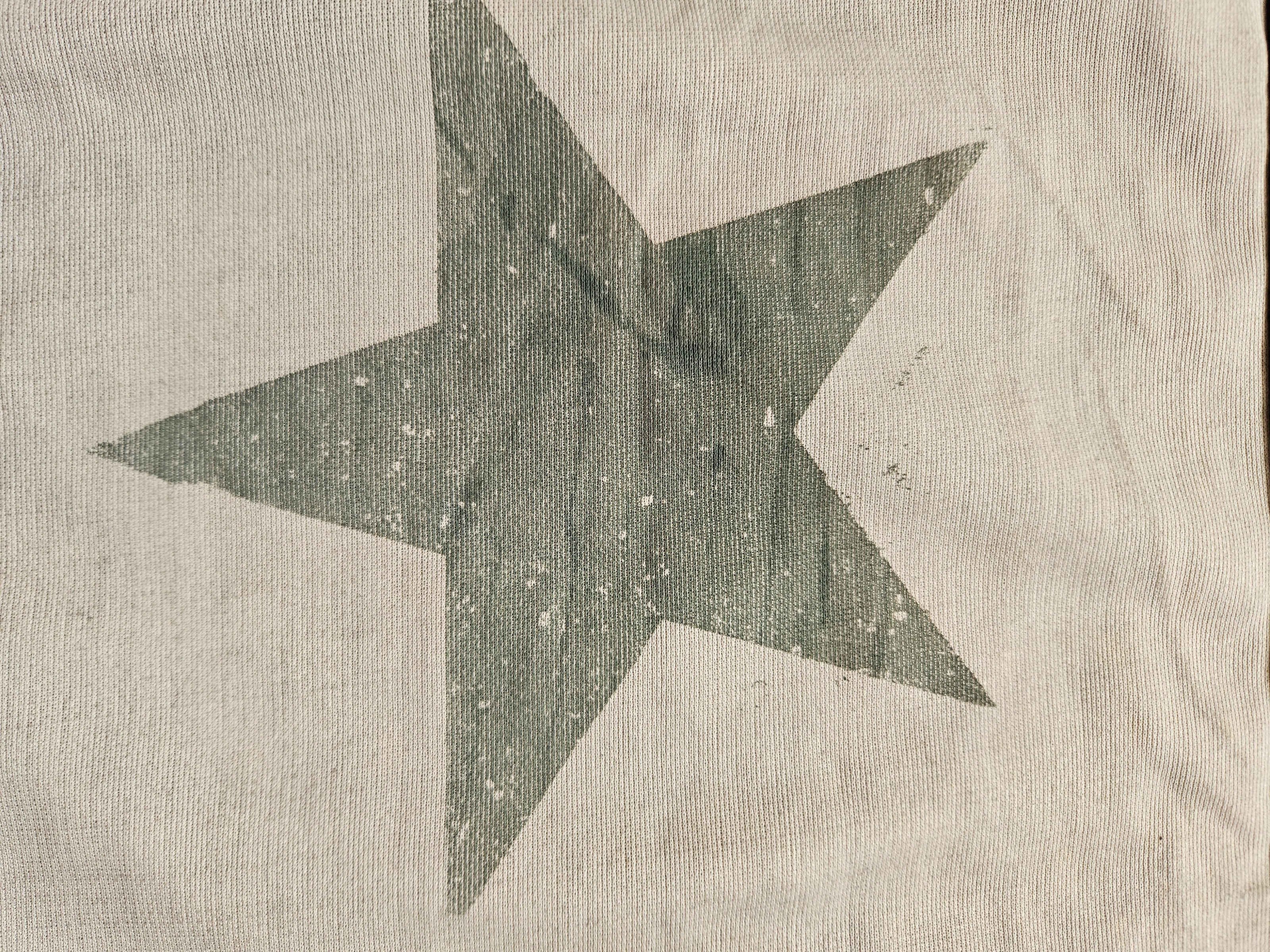
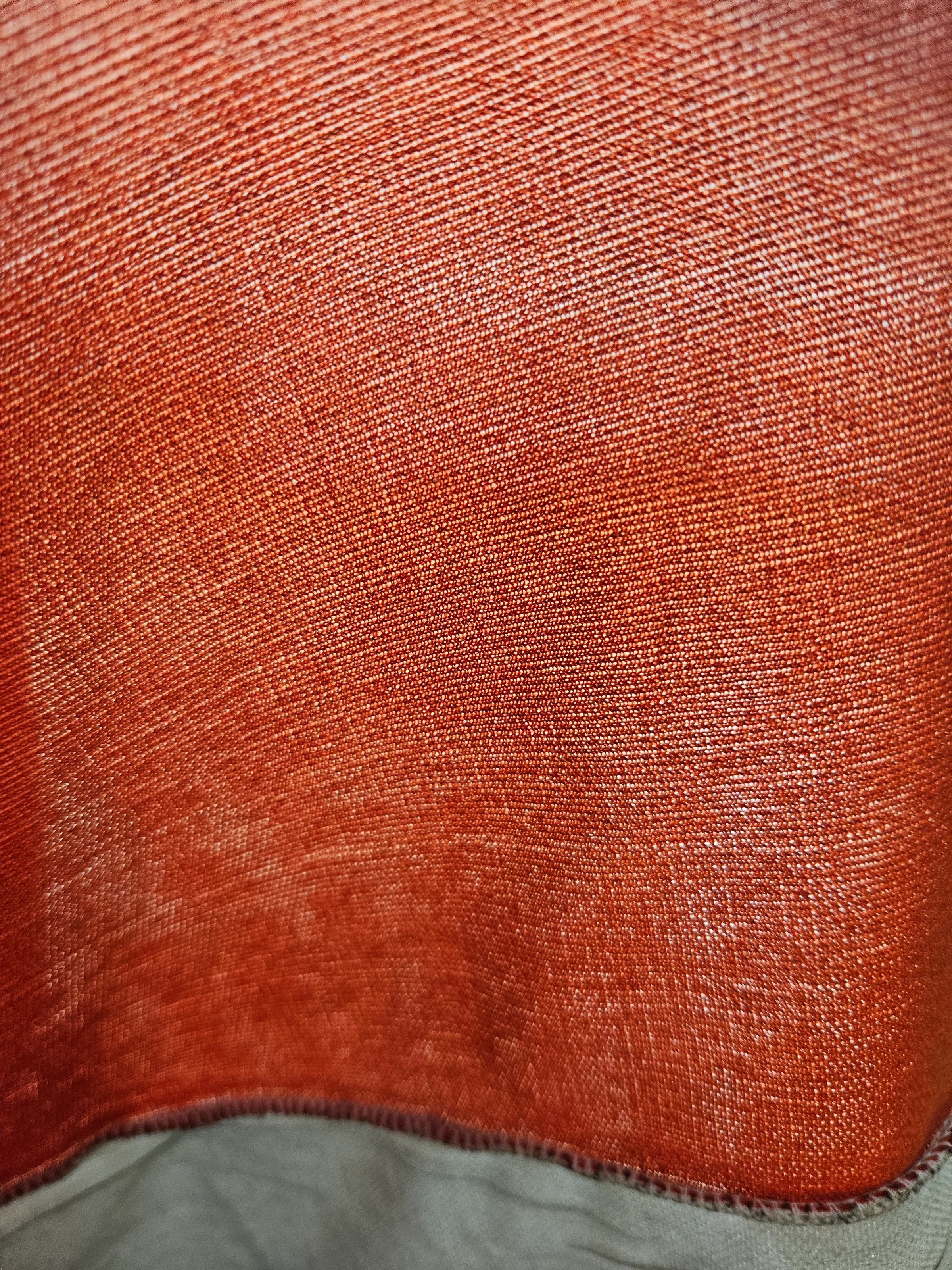
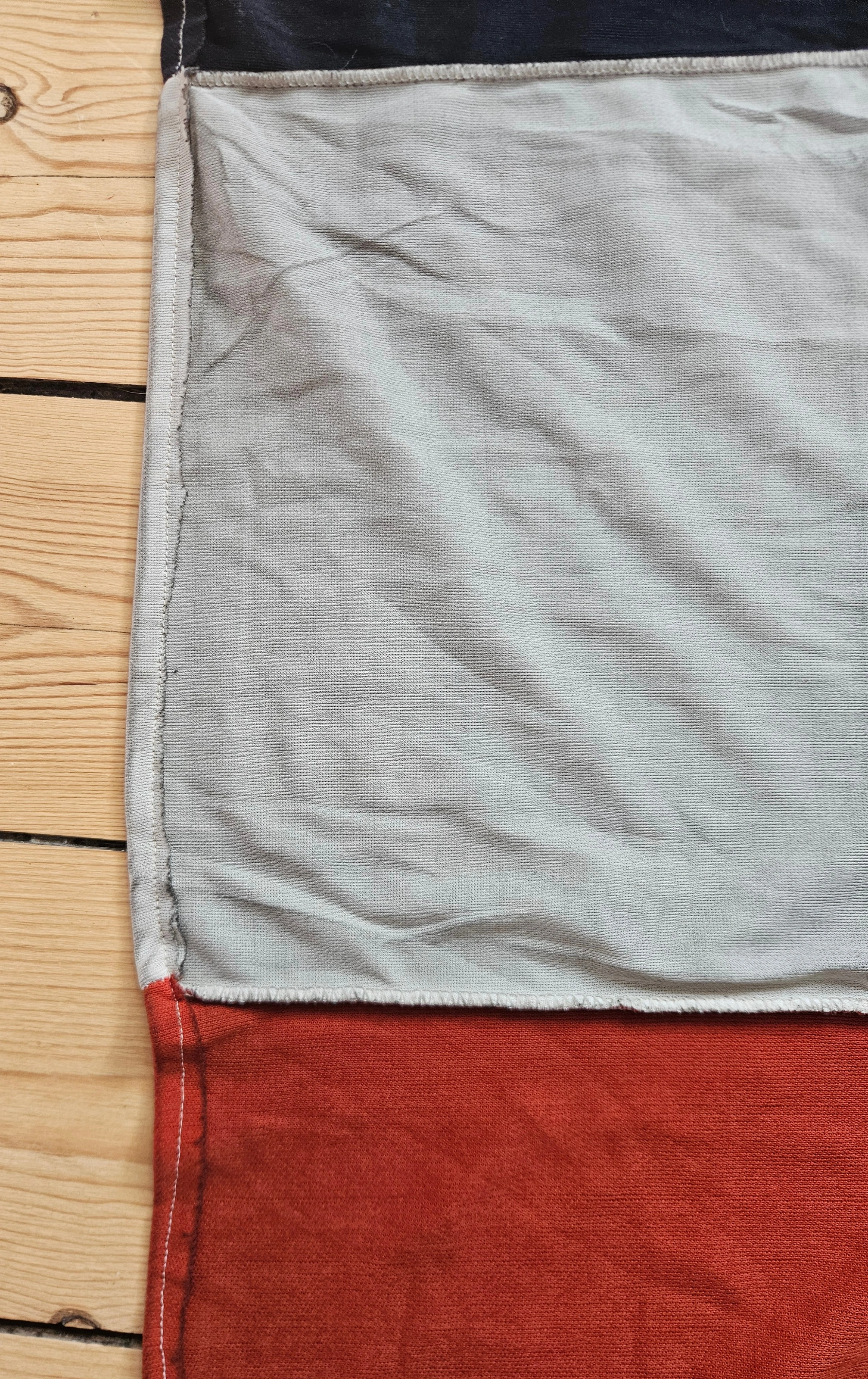
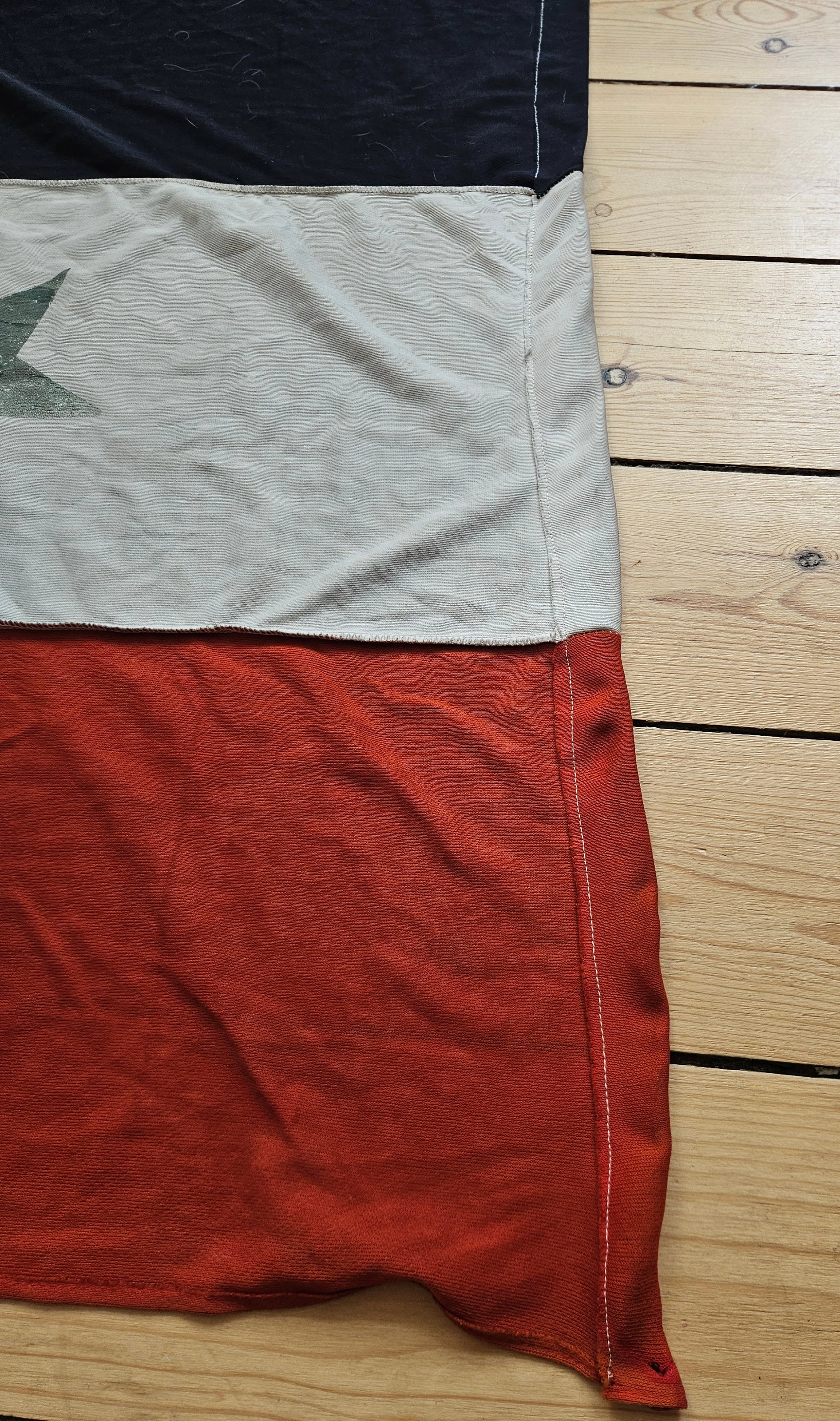
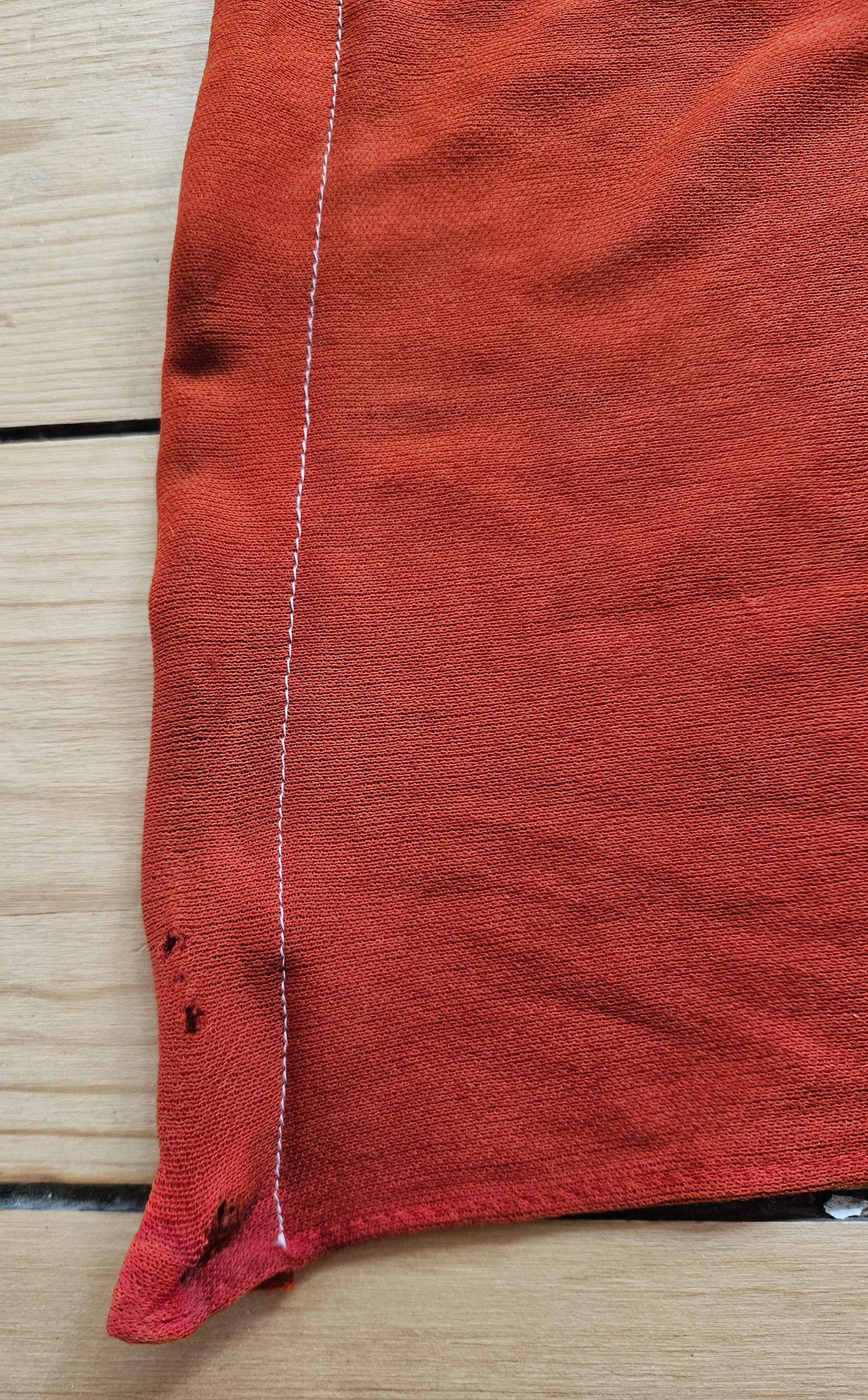
Condition indicates real-world use: visible dirt, wear, and small punctures suggest the flag was exposed to the elements, possibly outdoors. Stitching in corners has started to break down, and the hoist tunnel shows compression, likely from tight mounting.
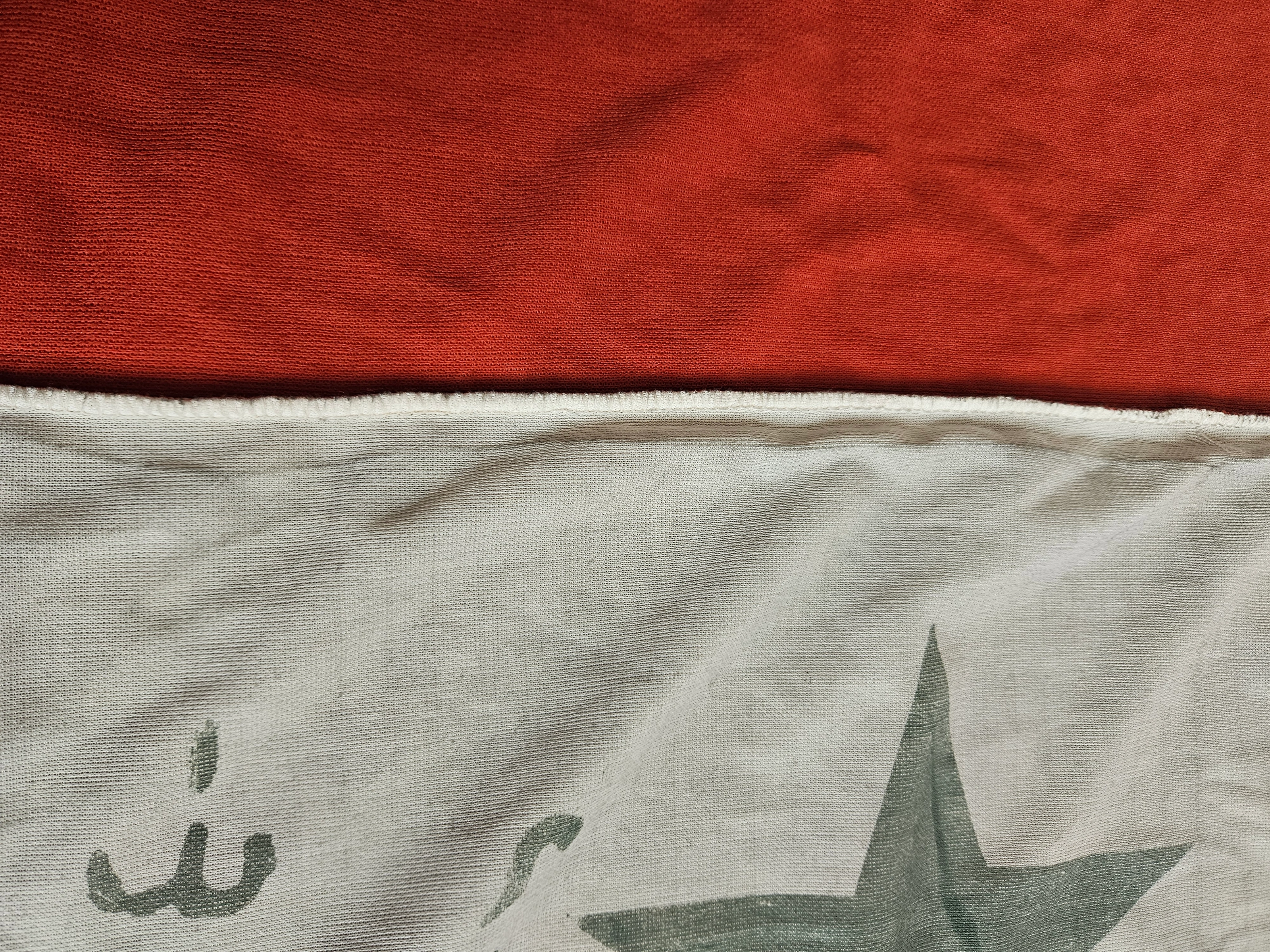
This flag design was introduced in 1991 by Saddam Hussein's Ba'ath regime following the Gulf War. The modification consisted of adding the words Allahu Akbar (الله أكبر) between the three stars of the pre-existing Ba'ath tricolor. The change had strategic motivations:
Crucially, Saddam ordered that the script be rendered in his own handwriting, giving rise to a wave of flags with manually varied or loosely copied script. This flag shows a handwritten inscription, but it does not match Saddam's original calligraphy, suggesting local or decentralized production.
This divergence, along with the non-standard fabric and dimensions, hints that the flag was manufactured under constraint — perhaps in a war economy setting with limited access to centralized production. It may be a field-made or low-batch flag for practical display in regime-controlled zones.
All physical indicators point to practical wartime use, not ceremonial or souvenir intent. Plausible functions include:
The sewn hoist tunnel indicates permanent mounting rather than temporary display. The fabric, while light, appears selected for airflow and visibility rather than durability — a pragmatic choice in a resource-constrained context.
Unlike modern commercial flags, this one shows no evidence of export origin, Western ink standards, or tag branding. It was likely produced in Iraq for use in Iraq.
This flag is reported to originate from Baghdad during wartime, but no direct documentation exists. The lack of markings or standardized features adds credibility to the idea of field use, but weakens provenance in the academic sense.
These traits strongly suggest in-theatre use, possibly even in frontline or urban government areas. While exact production cannot be verified, all signs point to authentic wartime origin — rather than postwar reproduction.
The flag’s wear and grime reinforce this conclusion, especially given the distinctive aging patterns seen on the hoist side and star panels.
In conclusion, FG-033 stands as a rare surviving specimen of functional wartime flag use under Saddam’s regime, with traits that bridge standardized iconography and pragmatic field adaptation.
© 2025 FlagGeek / Kenny Ytrup – Licensed under CC BY-NC 4.0 .
Non-commercial sharing with attribution permitted. Commercial use requires permission.
External photographs remain under the rights of their respective holders and are reproduced here solely for scholarly research and documentation under quotation/fair use provisions.
Original FlagGeek publication · Source status: LIVE. Research text and evidence retained from the Blogger export.
FlagGeek · https://flaggeek-v2.pages.dev/archive/iraqi-baathist-flag-gulf-war-ca-19912003/