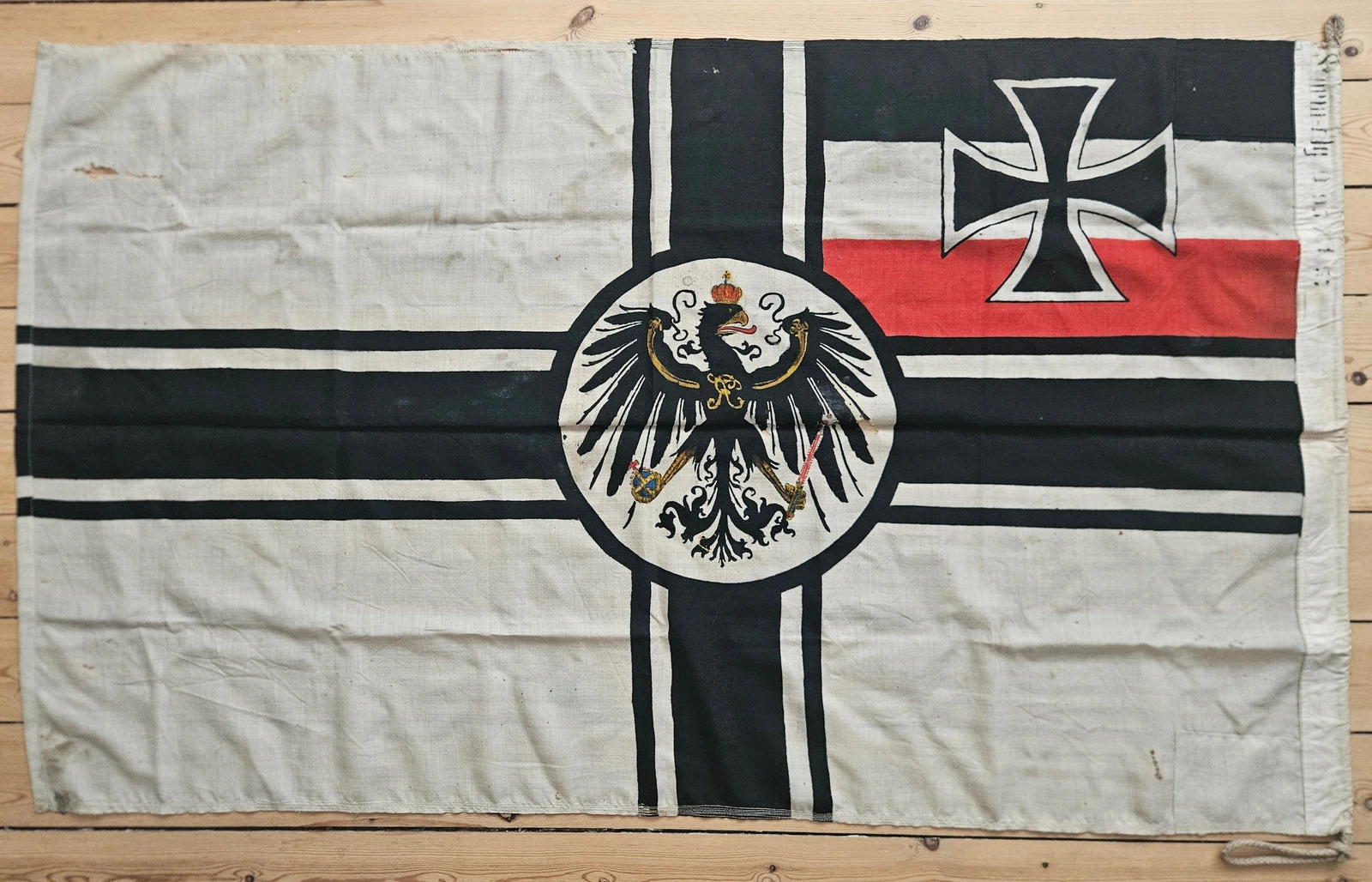
FG-001
Imperial German Sturm Flag (Kaiserliche Sturm Flagge)
Germany · Imperial Period (1903–1918)
95 × 150 cm
Markings: "Sturm-Flg. 95x157cm", Imperial Crown 1
–
Germany / Imperial War Ensign
Imperial German Sturm Flag (Kaiserliche Sturm Flagge)
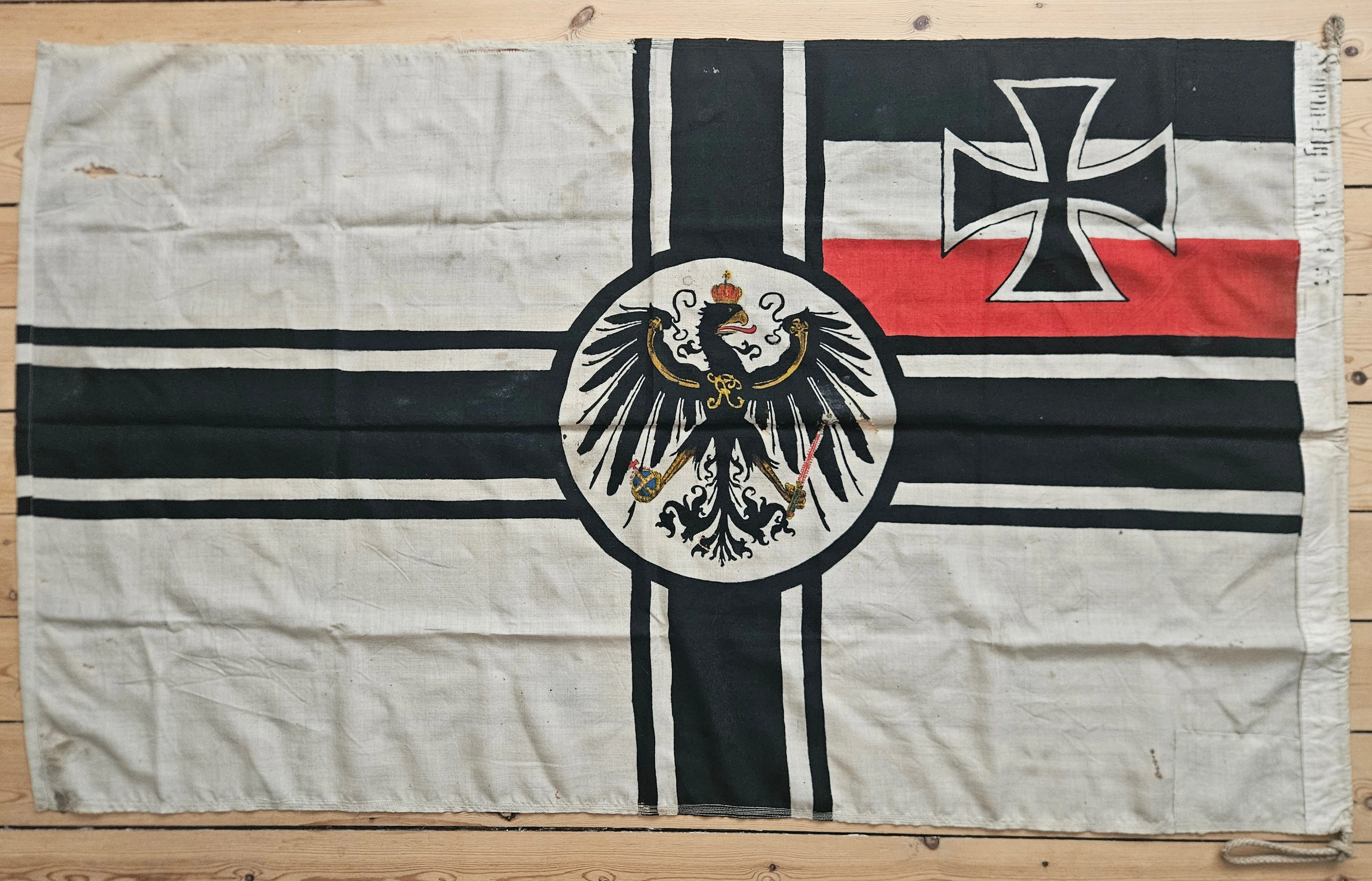
FG-001
Germany · Imperial Period (1903–1918)
95 × 150 cm
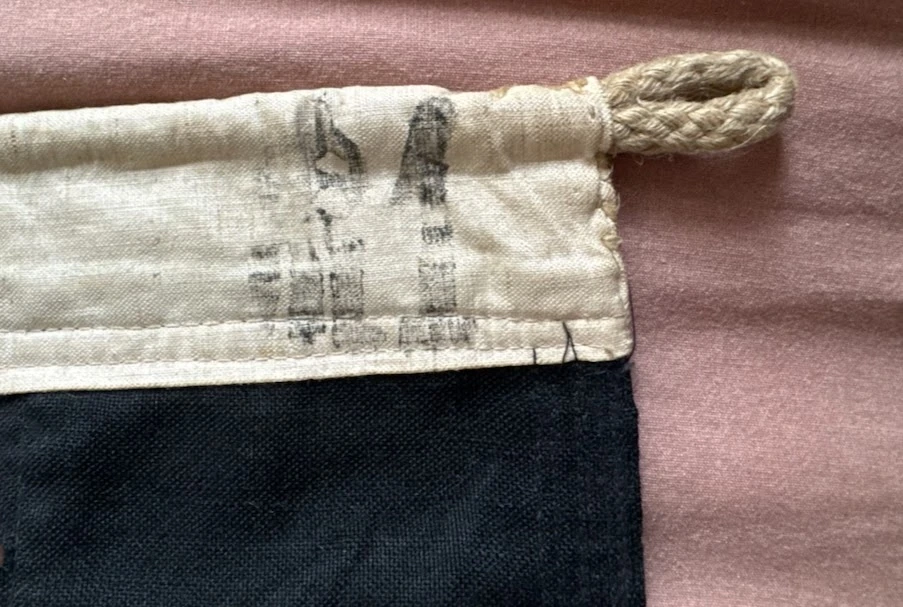
Markings: "Sturm-Flg. 95x157cm", Imperial Crown 1
–
Flag ID: FG-001
Type: Reichskriegsflagge, marked “Sturmflagge”
Period: 1903–1918
Origin: German Empire, Kaiserliche Marine
Dimensions: 95 × 157 cm
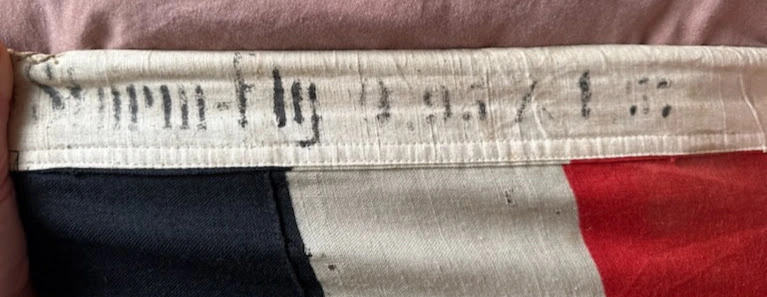
Hoist marking: “Sturm-flg. 95 x 1.57”
This is an original Reichskriegsflagge of the Imperial German Navy. Its design belongs to the version used from approximately 1903 until the end of the German Empire in 1918.
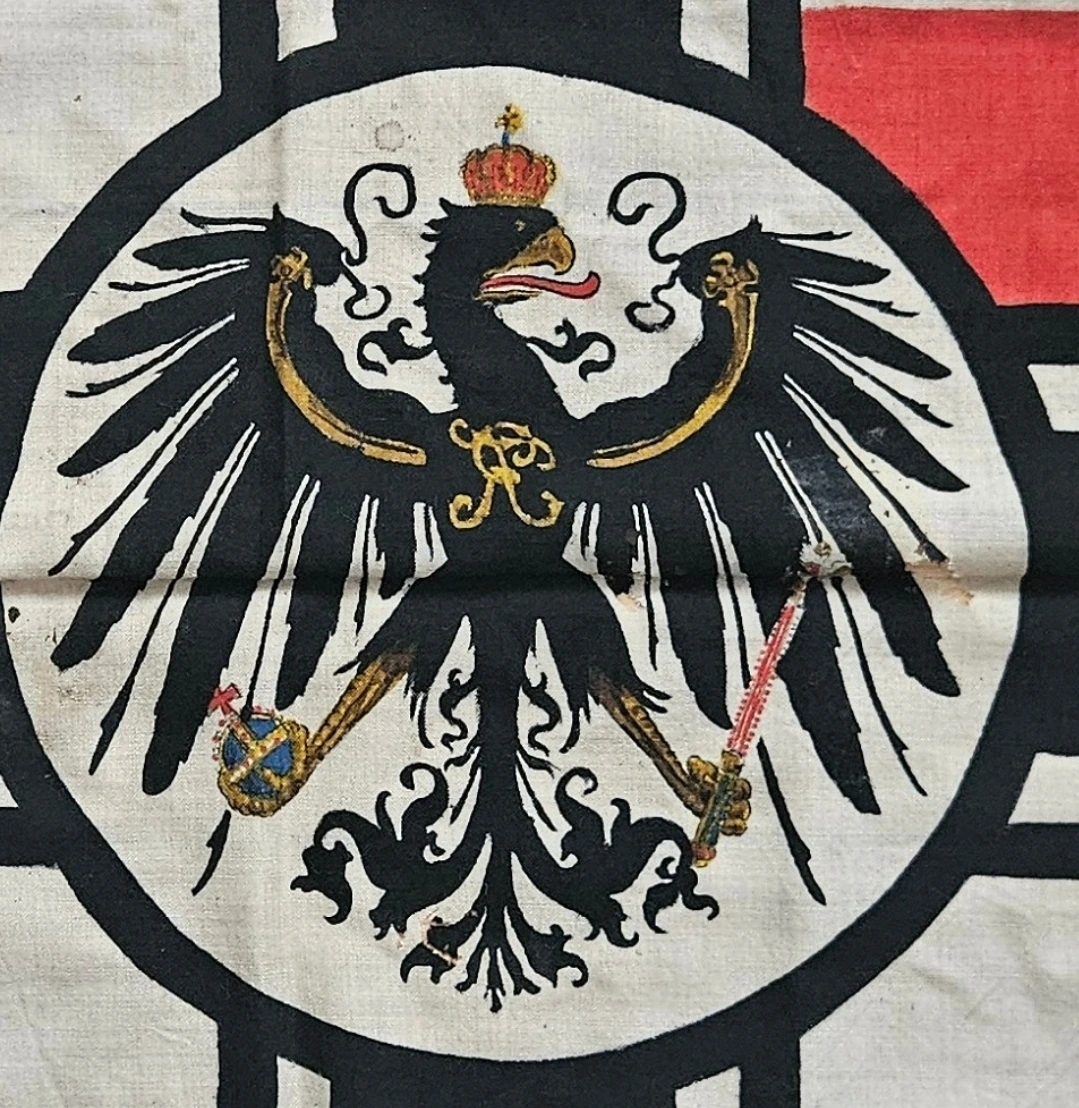
The flag displays the black-white-red national colours, a black Iron Cross in the upper hoist, and the crowned Prussian eagle placed within the white central field. The flag is constructed from separate fabric panels with sewn design elements and a reinforced hoist.
The hoist is stamped “Sturm-flg. 95 x 1.57”. The abbreviation is understood as Sturmflagge, followed by the dimensions of the flag in metres.
Comparable Imperial German naval flags are known with markings such as “Sturm Fl.” and “1. Sturm Fl.” and with dimensions close to 90–95 × 152–160 cm. The repeated terminology and closely corresponding dimensions indicate that “Sturmflagge” was a standardised naval material or usage designation rather than an informal description added by an individual owner.
Historical references also use the term Sturmflagge for flags associated with named Imperial German ships and torpedo boats. In these references, the term appears alongside material descriptions such as Gaffelflagge, supporting its interpretation as a type or usage category within a ship’s flag inventory.
The precise official definition of a Sturmflagge has not yet been located in a contemporary Imperial German regulation.
The strongest current interpretation is that the term identified a reduced Reichskriegsflagge intended for use by a ship under particular operating or weather conditions, most likely during strong winds or heavy weather.
This interpretation remains provisional until an original Imperial naval equipment list, inventory schedule or dimensional table is found that defines the category directly.
Research status: The 1878 Allerhöchst genehmigtes Flaggen- und Salut-Reglement and the 1895 Flaggen- und Salut-Ordnung für die Kaiserliche Marine have both been examined. Neither publication contains the terms “Sturmflagge”, “Gaffelflagge” or “Bootsflagge”, nor do they provide equipment dimensions for these categories. These publications regulate flag designs, command signs, display practices and salutes rather than the material inventory carried aboard individual ships.Imperial German Reichskriegsflaggen are also known with hoist markings identifying them as Gaffelflaggen and Bootsflaggen.
A Gaffelflagge was associated with the ship’s principal flag position at the gaff. A Bootsflagge was intended for a boat or smaller craft. Sturmflagge appears to have represented another functional inventory category of the same basic Reichskriegsflagge design.
The dimensions alone do not determine the category. Known Sturmflaggen and Bootsflaggen can occur in approximately the same dimensions, including around 95 × 157 cm. The wording stamped on the hoist therefore appears to describe intended use rather than simply flag size.
An earlier interpretation connected the marking “Sturm-flg.” with German assault troops or Sturmabteilungen formed during the First World War.
This interpretation is no longer supported. The term appears on officially marked naval Reichskriegsflaggen and is historically used as a material description for flags belonging to named ships. No evidence has been found linking these hoist markings to Army storm battalions, naval assault companies or land-based combat units.
The flag should therefore not be dated to approximately 1917 on the basis of the development of German stormtrooper units. Its present dating is based only on the 1903–1918 form of the Reichskriegsflagge.
The flag remains in generally good condition. Its colours and principal design elements remain clearly visible. It shows wear consistent with age and practical use, including minor staining, fading and wear around the hoist and fly.
Original Imperial German Reichskriegsflagge of the 1903–1918 design, marked as a “Sturmflagge”. The exact official definition and prescribed use of this inventory category remain under investigation.
Allerhöchst genehmigtes Flaggen- und Salut-Reglement. Berlin, 1878.
Flaggen- und Salut-Ordnung für die Kaiserliche Marine. Berlin, 1895.
Surviving Imperial German Reichskriegsflaggen marked “Sturm Fl.” or “1. Sturm Fl.” have been used as comparative physical evidence. A contemporary regulation defining Sturmflagge dimensions and issue conditions has not yet been located.
© 2025–2026 FlagGeek / Kenny Ytrup – Licensed under CC BY-NC 4.0 .
Non-commercial sharing with attribution permitted. Commercial use requires permission.
External photographs remain under the rights of their respective holders and are reproduced here solely for scholarly research and documentation under quotation or fair-use provisions.
Originally published .
Last revised .
Original FlagGeek publication · Source status: LIVE. Research text and evidence retained from the Blogger export.
FlagGeek · https://flaggeek-v2.pages.dev/archive/imperial-german-sturm-flag/