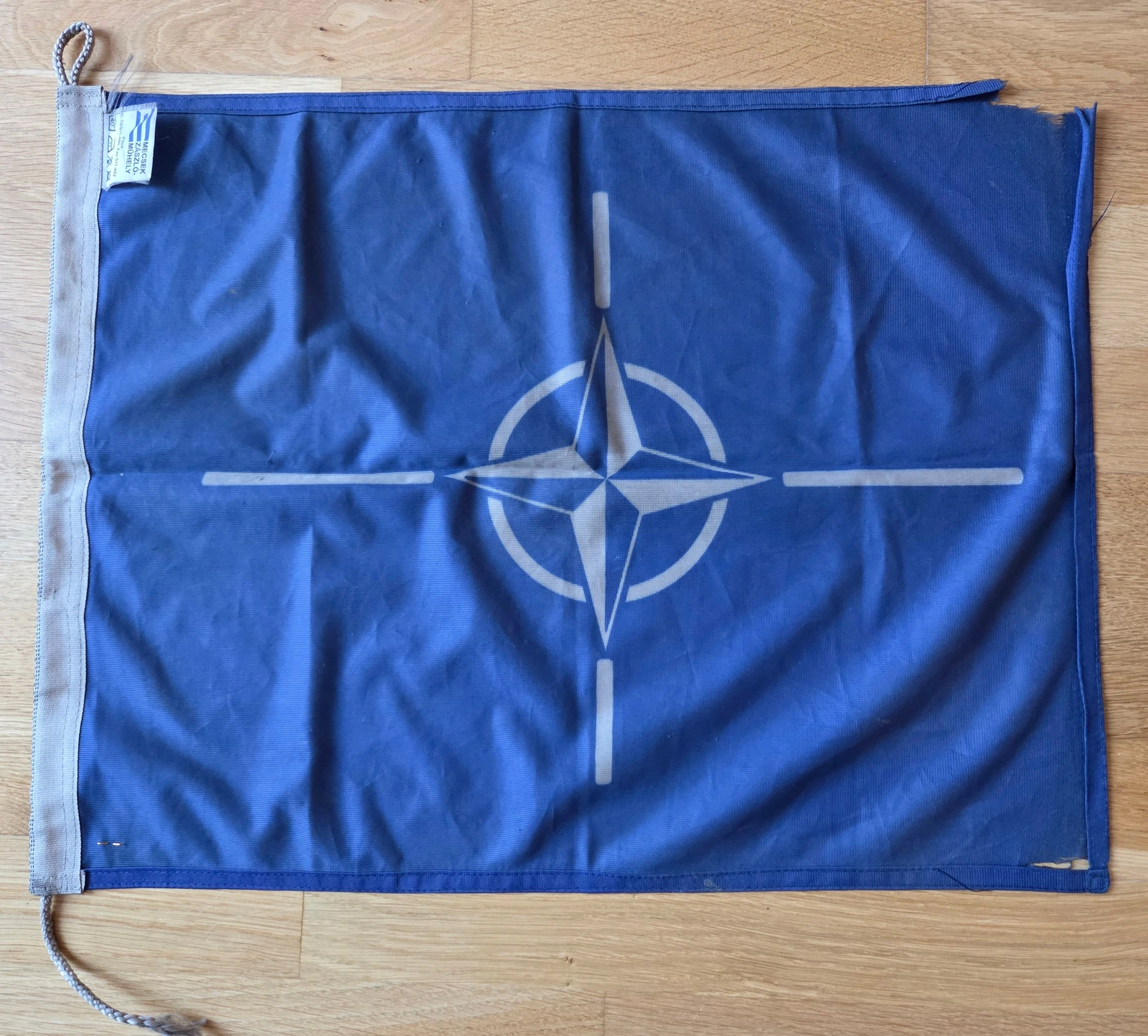
FG-056
NATO IFOR/SFOR Armored Vehicle Flag
Miscellaneous / International Flags ·
40 × 50 cm
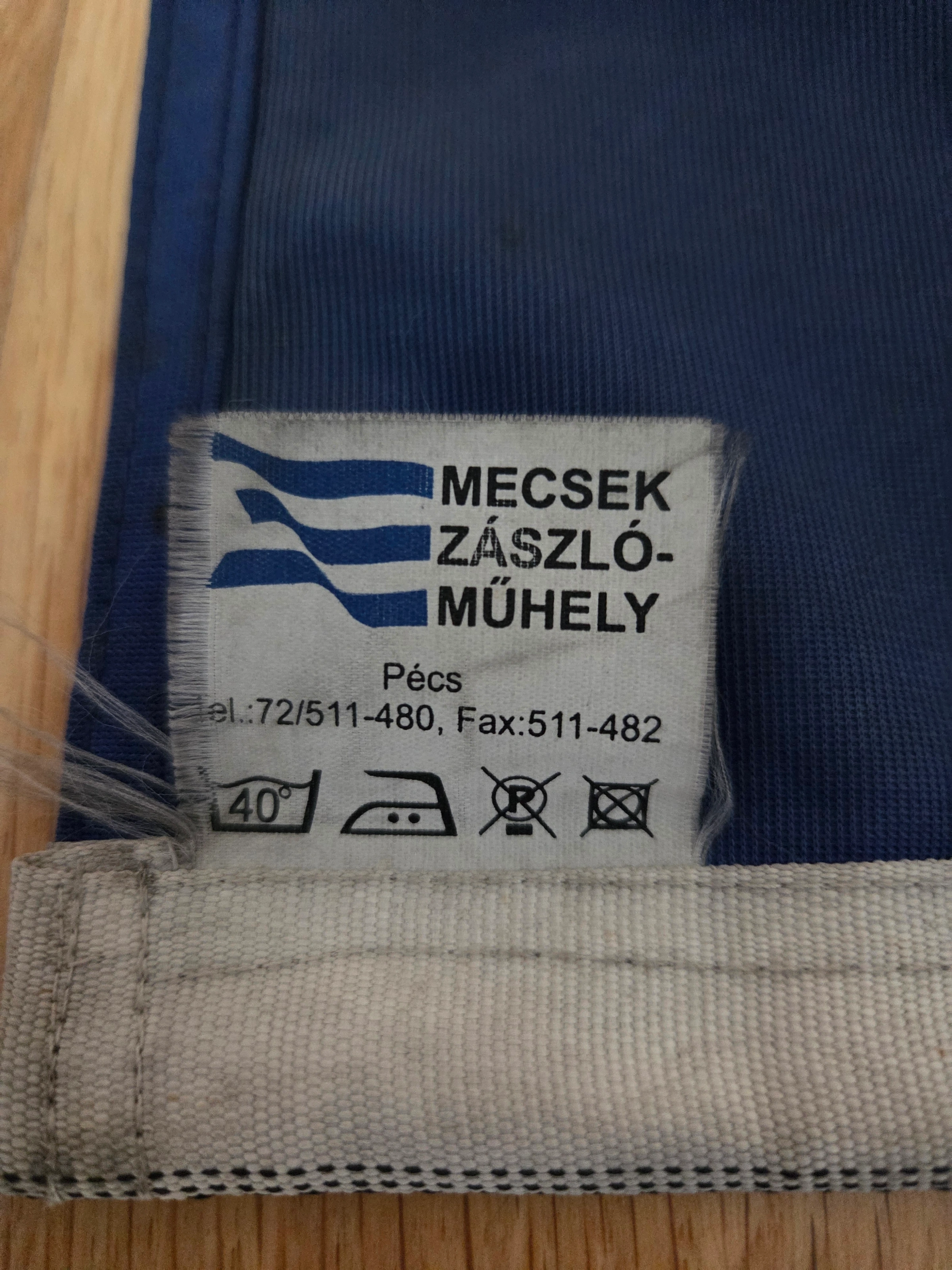
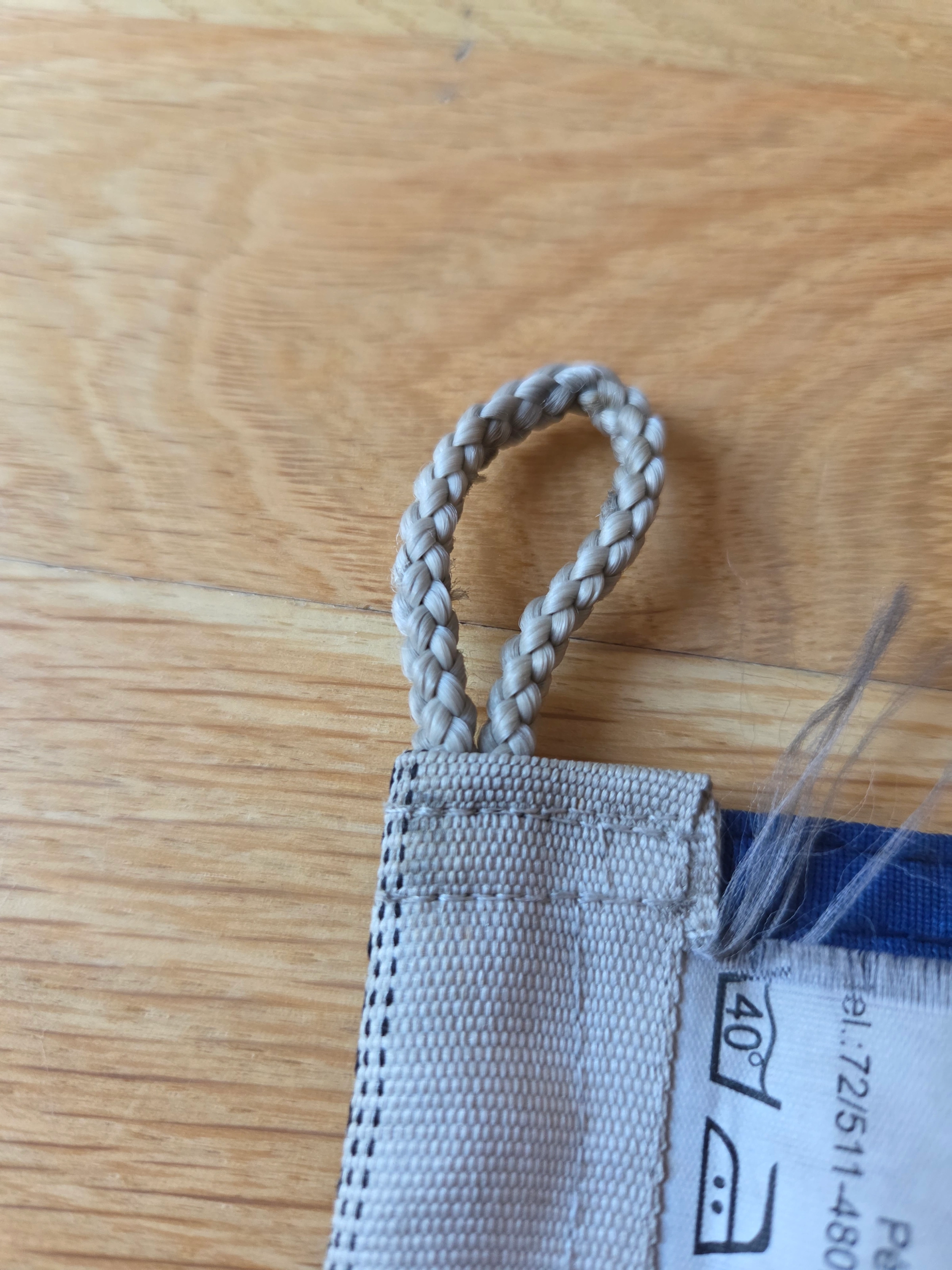
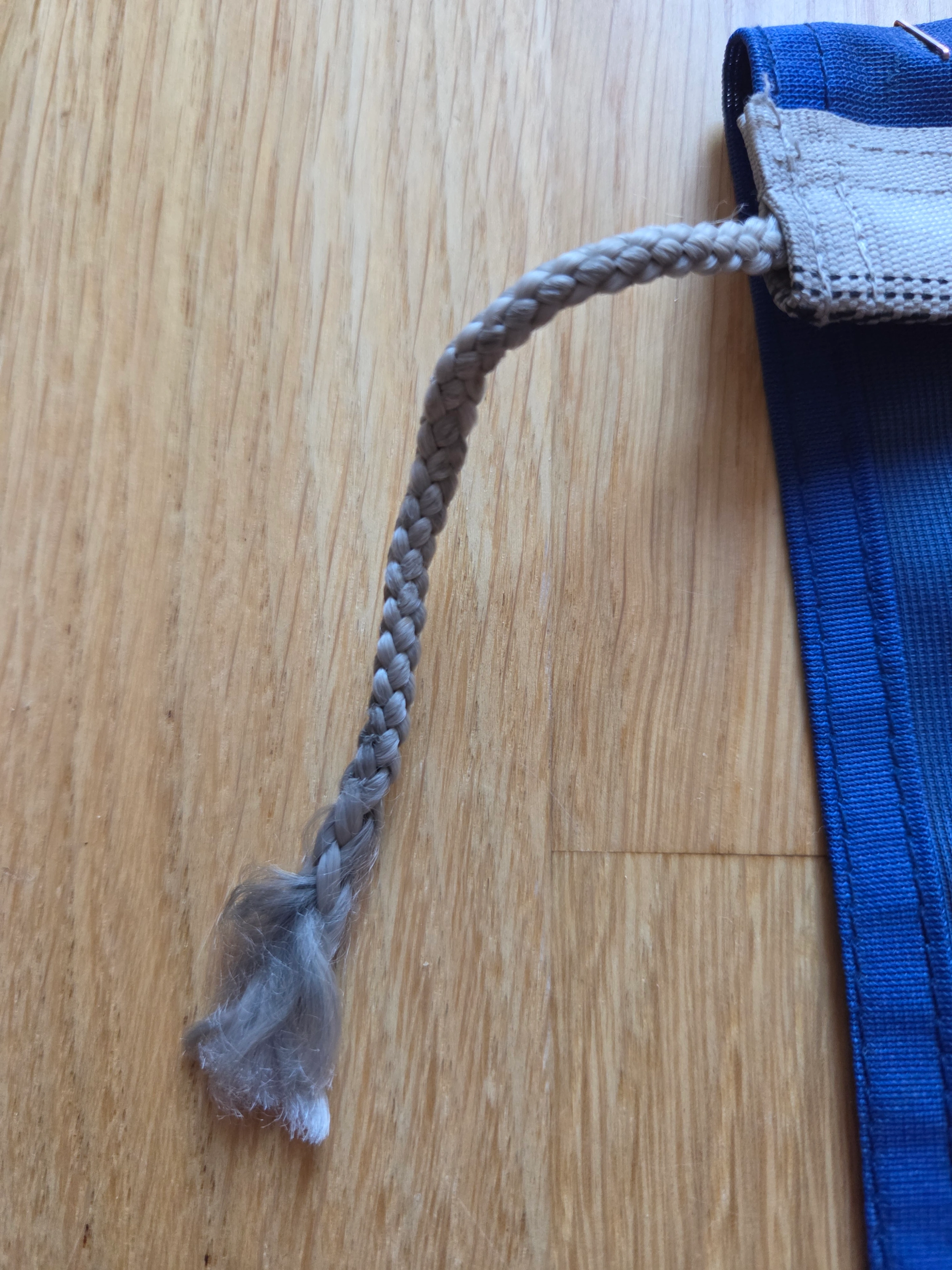
Markings: Mecsek Zászlóműhely label, grey braided hoist rope
Danish military auction, Balkan mission veteran
Miscellaneous / International Flags / NATO (IFOR/SFOR, Northern Brigade)
NATO IFOR/SFOR Armored Vehicle Flag
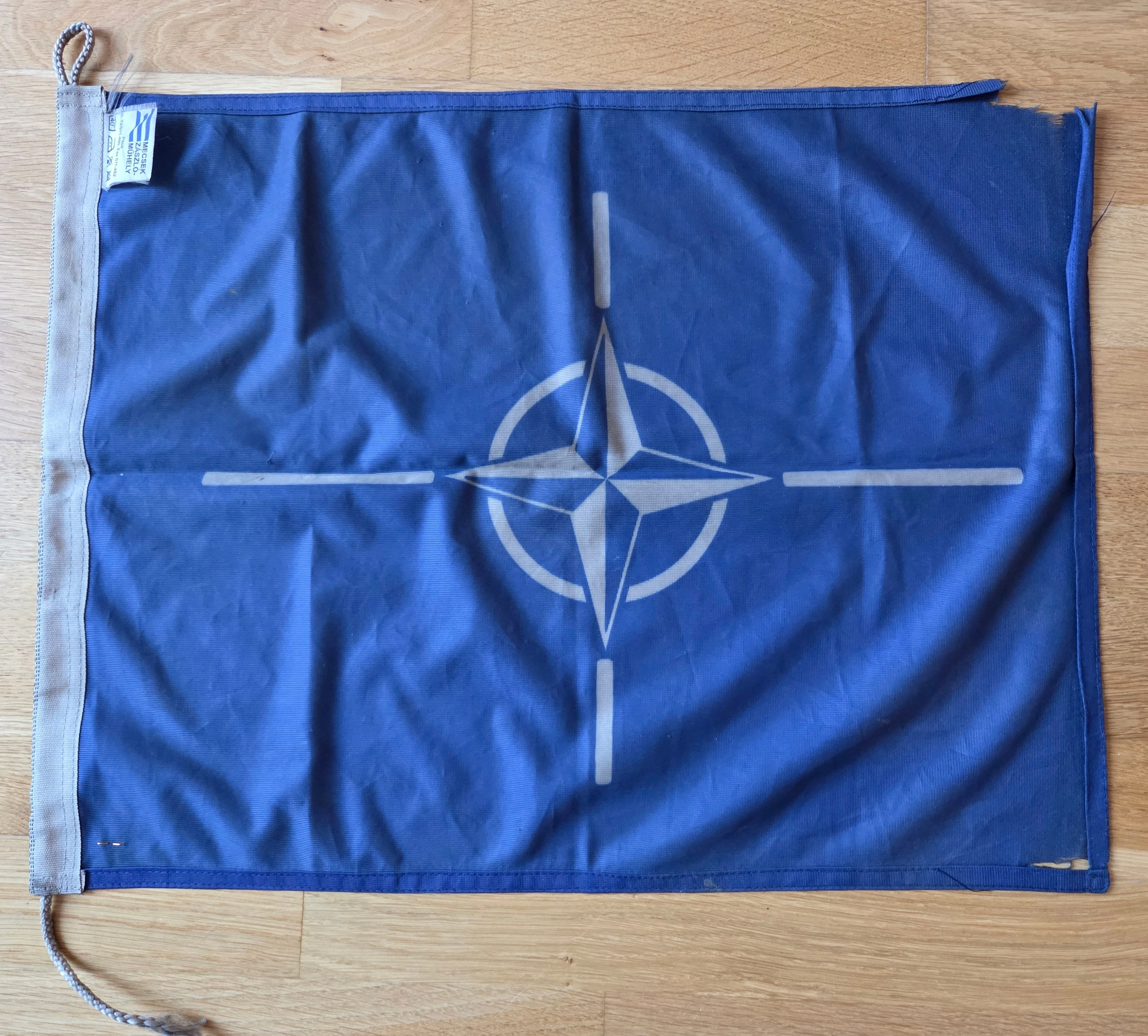
FG-056
Miscellaneous / International Flags ·
40 × 50 cm
Markings: Mecsek Zászlóműhely label, grey braided hoist rope
Danish military auction, Balkan mission veteran
Flag ID: FG-056
This flag type was produced for NATO’s Implementation Force (IFOR) and subsequently Stabilisation Force (SFOR) during the South Slavic conflict. Mecsek Zászlóműhely, located in Pécs, supplied flags directly to the Northern Brigade, comprising Swedish, Danish, Norwegian, Finnish and Polish units.
The brigade established a logistical base in Pécs, Hungary, and required compact NATO flags for armored vehicles, APCs, engineering assets, and logistics vehicles operating across Bosnia-Herzegovina. The flag’s 40 × 50 cm dimensions are non-standard for NATO headquarters or ceremonial use, but entirely typical for vehicle identification flags used on armored columns, checkpoints, and movement-control assets.
A final provenance detail is that this specific flag was obtained on a Danish military auction and brought home by a Balkan mission veteran, which aligns well with the known distribution of Northern Brigade equipment returning through Nordic channels after SFOR drawdown.
The flag originates from the NATO peacekeeping presence established during the South Slavic conflicts of the 1990s. The war in Bosnia-Herzegovina (1992–1995) was marked by rapid territorial fragmentation, ethnic cleansing, and large-scale displacement, leading to the worst humanitarian crisis in Europe since 1945.
Following the Dayton Peace Agreement in late 1995, NATO deployed the Implementation Force (IFOR) to secure the ceasefire, enforce separation of forces, and stabilise transport corridors and demarcation lines. IFOR was the largest NATO land operation executed up to that point.
In December 1996, IFOR transitioned into the Stabilisation Force (SFOR), whose responsibilities included:
The operational footprint covered the entirety of Bosnia-Herzegovina, divided into multinational sectors controlled by NATO brigades. The Northern Brigade, the unit directly linked to this flag’s manufacturer, was responsible for a broad zone centred on Tuzla, including:
Pécs, Hungary — where this flag was produced — served as a regional logistical staging point for the Northern Brigade. Units from Sweden, Denmark, Norway, Finland, and Poland passed through this hub before entering Bosnia-Herzegovina and drew their operational flags directly from the Pécs manufacturer.
The small 40 × 50 cm format aligns precisely with vehicle and armour identification requirements in these multinational sectors, where compact, durable flags were mounted on:
This places the flag firmly within the active NATO peacekeeping infrastructure during the region’s transition from armed conflict to stabilisation under IFOR/SFOR mandate.
Dating is unusually precise in this case due to direct confirmation from the manufacturer’s CEO. The production window is 1995–November 2000, after which this format ceased.
“In 1995, at the end of the South Slavic war, NATO sent peacekeeping forces to the region. This force was originally called IFOR and later carried out similar activities under the name SFFOR. This force included the Northern Brigade, i.e. the Swedish, Danish, Norwegian, Finnish and Polish unit, which established a logistics base in Pécs. These units ordered their flags from us. We sewed 50×40 cm NATO flags exclusively for them and the last time we produced them was in November 2000.
This is almost certainly where this flag comes from.
— CEO, Mecsek Zászlóműhely (email to collector, 19 January 2023)
This testimony provides direct provenance: the flag belongs to a NATO vehicle flag batch made specifically for IFOR/SFOR units operating in the Balkans.
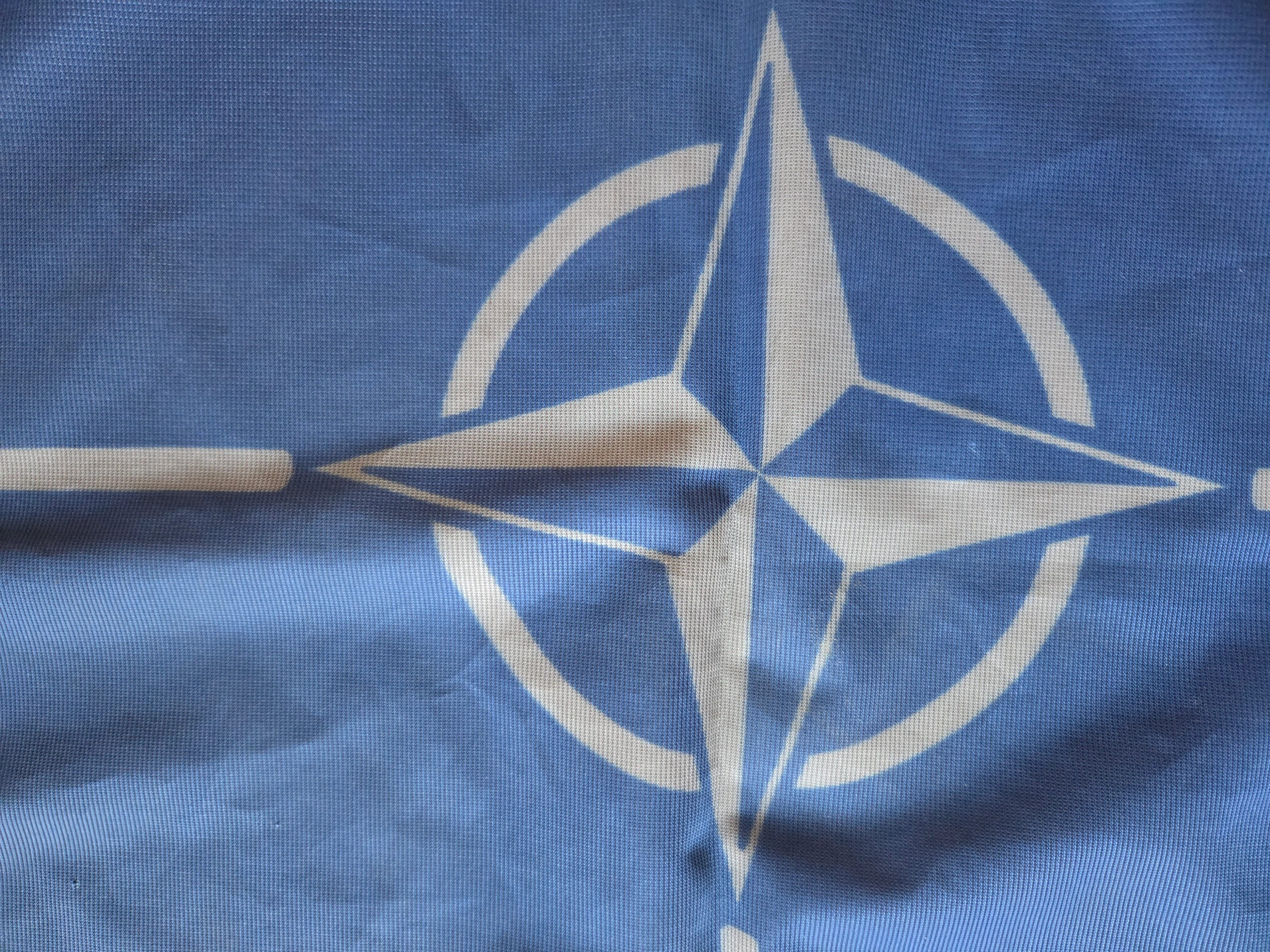
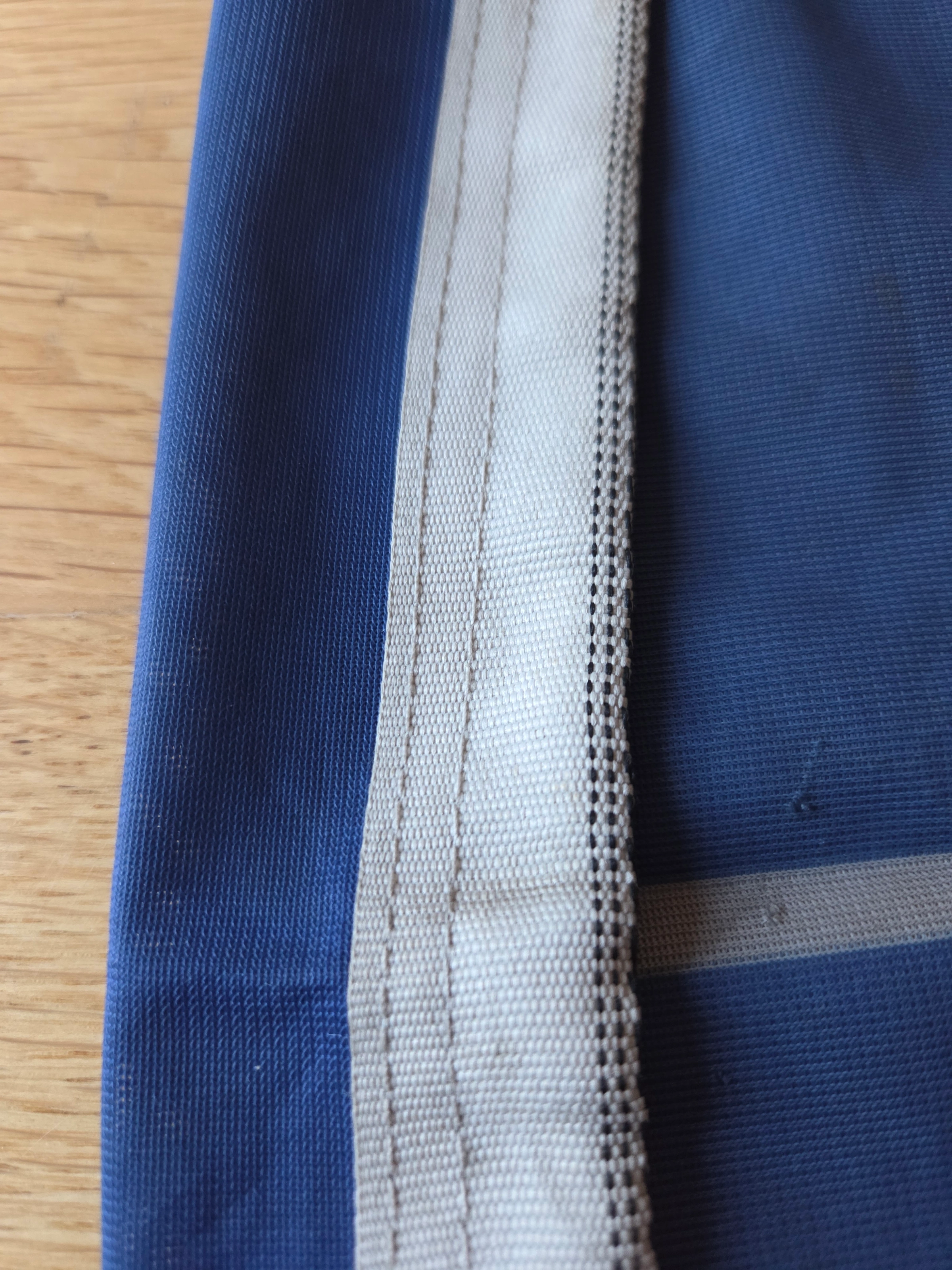
The satin-weave, high-sheen polyester matches Hungarian production of the mid/late 1990s. The NATO emblem is applied through fine serigraphic pigment printing, not vinyl, which is consistent with field-use flags rather than ceremonial manufacture.
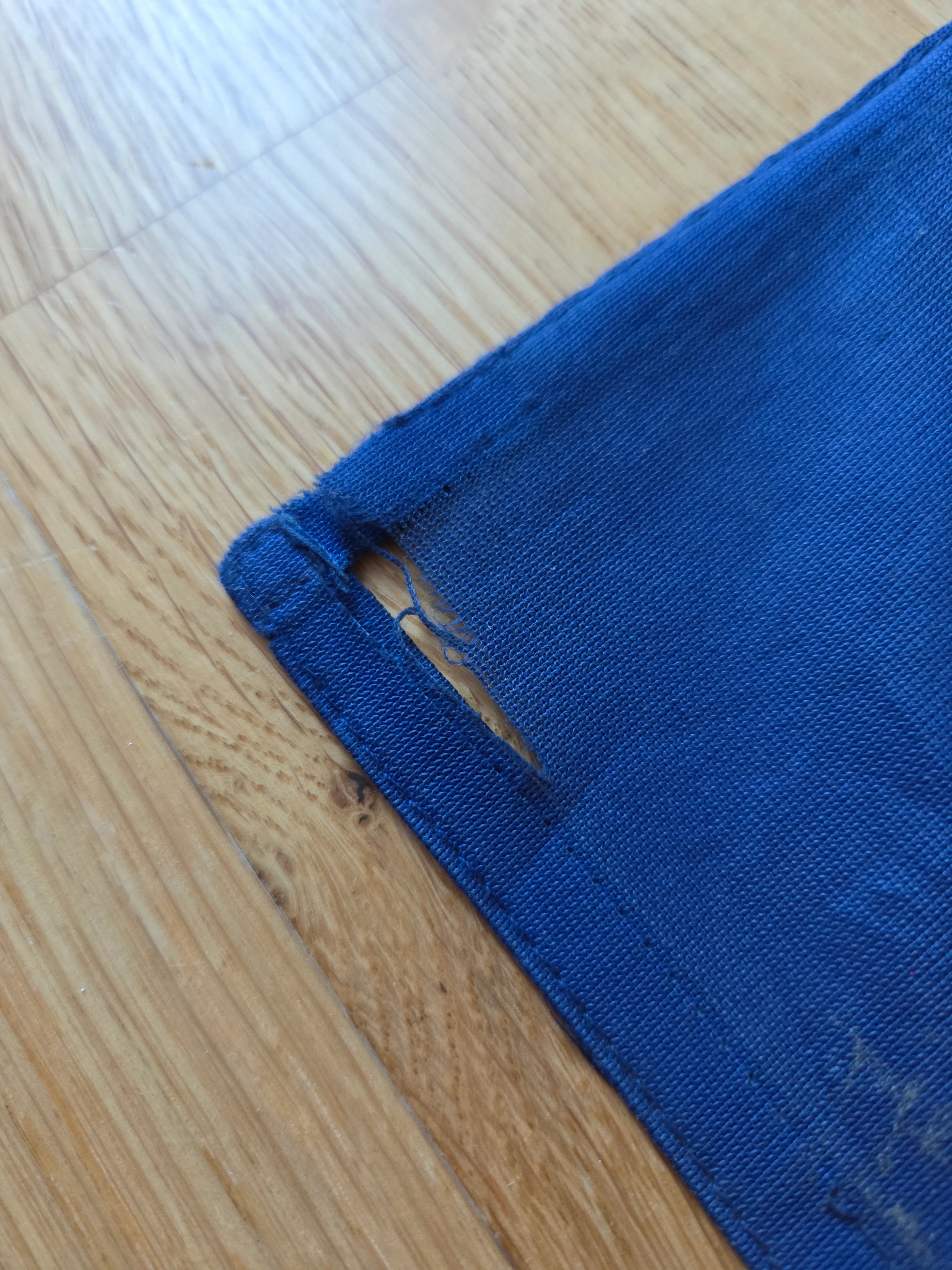
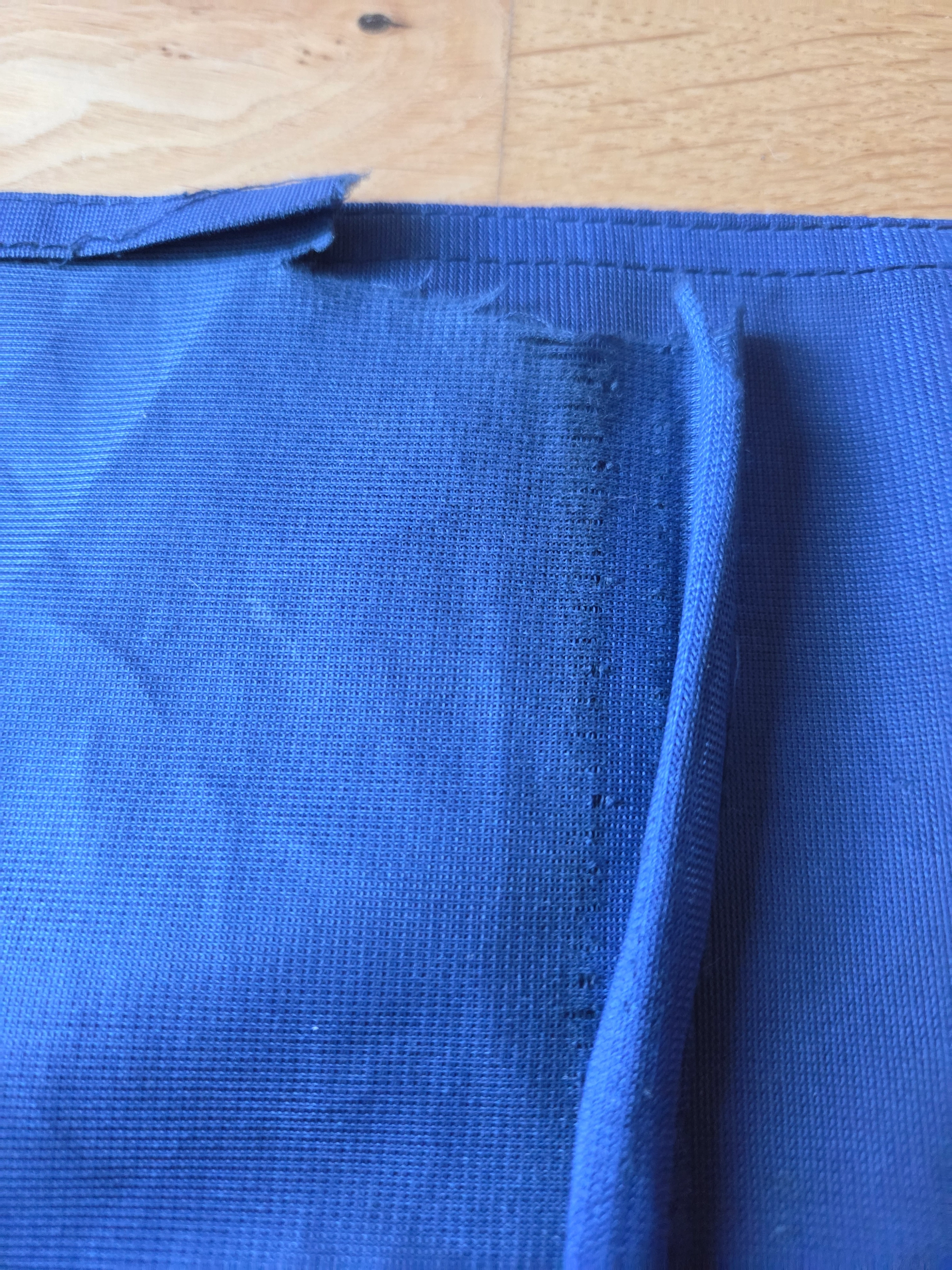
The hoist uses a grey braided rope, common on Eastern European operational flags of the era. The corners show pronounced fibre separation and fraying typical of flags mounted on armoured vehicles. Hoist compression and diesel trace indicate direct exposure to engine exhaust and movement airflow.
Overall, the wear pattern and odour profile are entirely consistent with armored vehicle deployment, not storage or parade use.

© 2025 FlagGeek / Kenny Ytrup – Licensed under CC BY-NC 4.0.
Non-commercial sharing with attribution permitted. Commercial use requires permission.
Original FlagGeek publication · Source status: LIVE. Research text and evidence retained from the Blogger export.
FlagGeek · https://flaggeek-v2.pages.dev/archive/fg-056-nato-iforsfor-armored-vehicle/