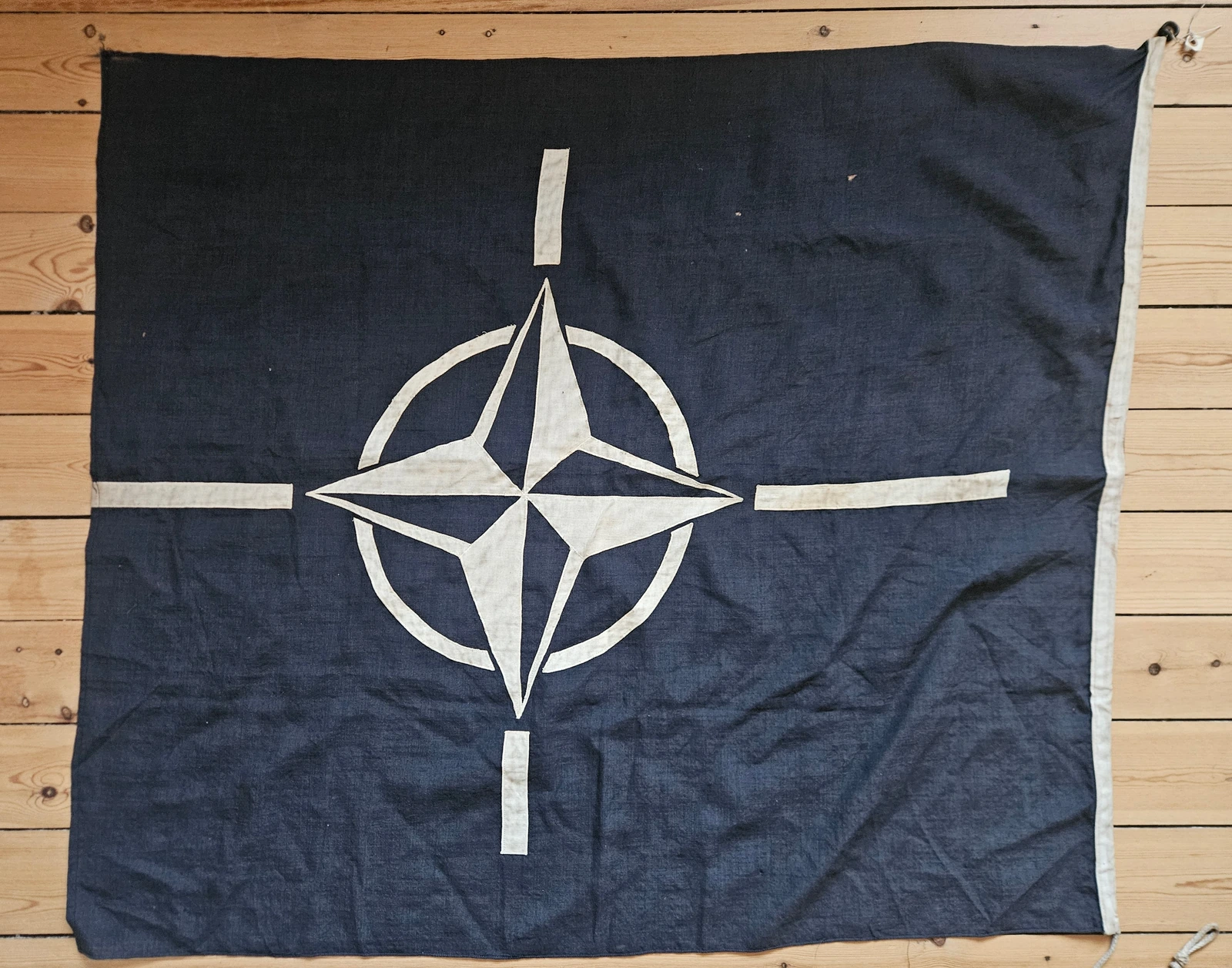
FG-025
Early NATO Flag – German Production (ca. 1949–1953)
Miscellaneous / International Flags ·
111 × 138 cm (111 x 166,5cm original/uncut)
Markings: Unmarked, German brass hook
Likely postwar German military use
Miscellaneous / International Flags / NATO (early non-standard)
Early NATO Flag – German Production (ca. 1949–1953)
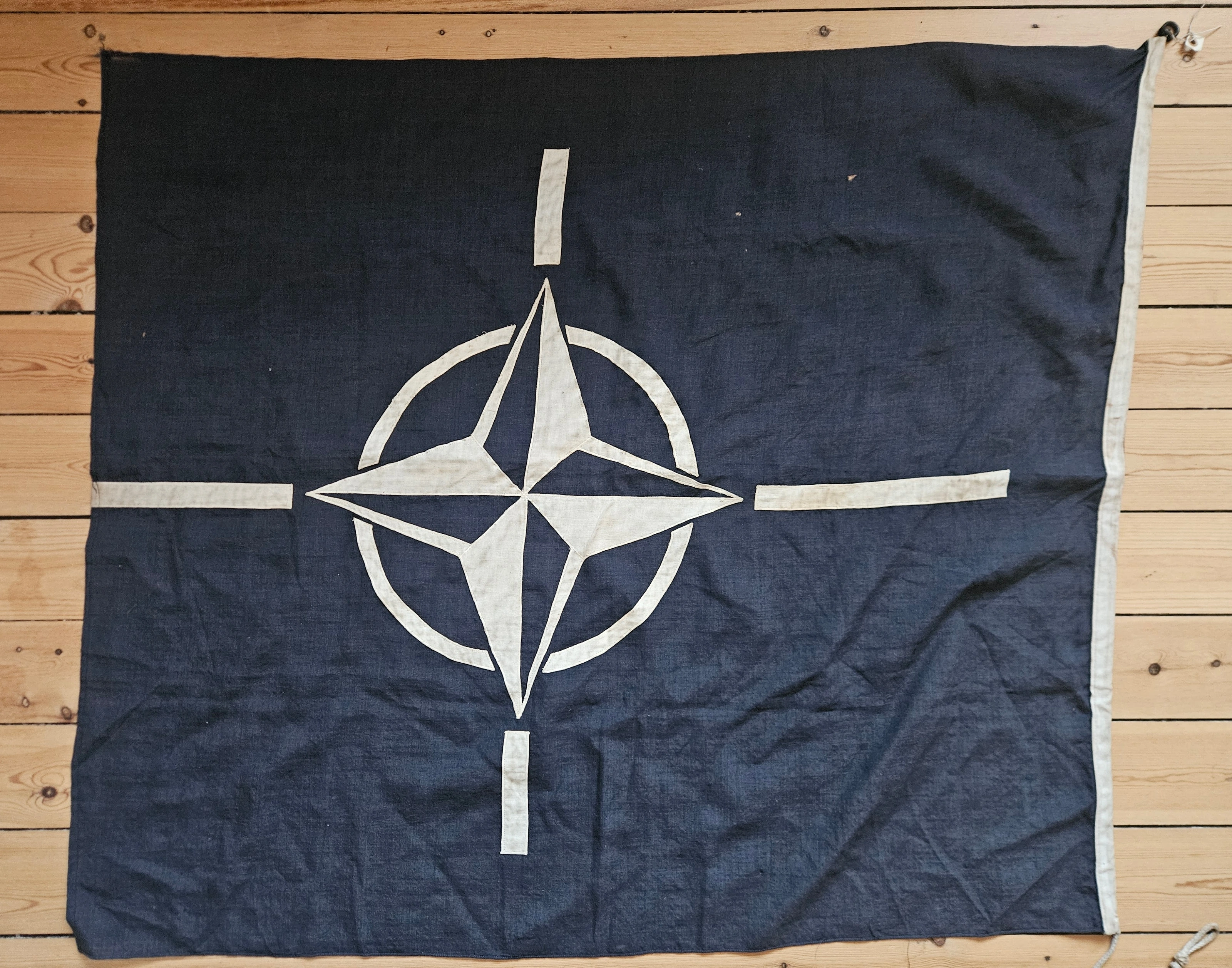
FG-025
Miscellaneous / International Flags ·
111 × 138 cm (111 x 166,5cm original/uncut)
Markings: Unmarked, German brass hook
Likely postwar German military use
Flag ID: FG-025
This flag is constructed from a dark blue wool-blend base with an appliquéd white compass rose. The stitching is machine-applied using a dense zigzag seam — a technique introduced commercially in the 1930s and widely adopted in German flag production from around 1936 onward. Zigzag stitching was commonly used for attaching appliqué elements on military and naval flags, and remained standard practice into the early postwar years.
The hoist edge is reinforced with a thick white cotton header and red zigzag stitching. A brass swivel D-ring is attached — identical to those used in German naval flags from the 1930s and 1940s. No markings or stamps are visible.
The flag measures 111 x 138cm. Its proportions are near-square and the current proportions deviate from the standard 2:3 NATO flag ratio. Based on the height, the original length would have been 166.5 cm. This suggests that approximately 28.5 cm have been trimmed or lost from the fly end. The fly end has been clearly cut and shortened — not from wear, but by deliberate modification. This strongly suggests field adaptation, possibly for limited space, wall display, or reuse.
Based on the materials, sewing methods, and fittings, this flag was likely manufactured between 1949 and 1953, most probably in West Germany. The use of a wool blend, appliquéd compass rose, and WWII-era fittings points to early, decentralized production — likely before NATO established standardized procurement channels. The absence of printed elements and markings supports this early dating.
The North Atlantic Treaty Organization (NATO) was founded on 4 April 1949 as a collective defense alliance between North American and European nations. Its purpose was to ensure mutual defense in response to potential aggression, particularly from the Soviet bloc.
The NATO flag was officially adopted on 14 October 1953. The flag consists of a dark blue field (symbolizing the Atlantic Ocean) with a white compass rose at the center, encircled by four white lines symbolizing unity and direction.
During the early 1950s, various unofficial or pre-standardized versions of the NATO flag were in use. These early flags, like the one shown here, often differed in proportions, materials, and construction methods.



© 2025 FlagGeek / Kenny Ytrup – Licensed under CC BY-NC 4.0 .
Non-commercial sharing with attribution permitted. Commercial use requires permission.
External photographs remain under the rights of their respective holders and are reproduced here solely for scholarly research and documentation under quotation/fair use provisions.
Original FlagGeek publication · Source status: LIVE. Research text and evidence retained from the Blogger export.
FlagGeek · https://flaggeek-v2.pages.dev/archive/early-nato-flag-german-production-ca/