FlagGeek Resources
FlagGeek Resources brings together the core materials used for research and verification within the project — including manufacturer labels, official naval manuals, and selected Flags of the World (FOTW) references. These sources provide the backbone for dating, authentication, and structural analysis of historical flags.
The label archives are based on verified examples from identified flags — often linked to documented historical events or naval service. The Flaggenbuch editions represent official specifications issued to military and maritime authorities, while FOTW serves as an open comparative database for modern and historic patterns.
Together, these materials allow cross-referencing between textile evidence, manufacturer data, and published standards — forming the foundation of the FlagGeek documentation framework.
Flag Identification Tools
FlagGeek FOTW Image Search
The FlagGeek FOTW Image Search is a beta visual-search tool for flag identification and comparison. It allows an uploaded flag image to be compared against more than 222,000 indexed flag images connected to the Flags of the World (FOTW) reference material.
The tool is intended as a research aid, not as an automatic identification authority. Results can be uneven, especially if the uploaded image is poorly cropped, photographed at an angle, faded, dominated by background, or contains only a partial flag. If the first result set looks wrong, try cropping tightly around the flag or symbol and run the search again.
Fast mode is recommended as the first search option for clean or simple images. Deep mode searches more broadly and may help with difficult, partial, or unusual examples.
Credit: The searchable reference material is based on images and page links from Flags of the World (FOTW). FOTW remains the source reference for the linked material.
Manufacturer Labels
Bonner Fahnenfabrik
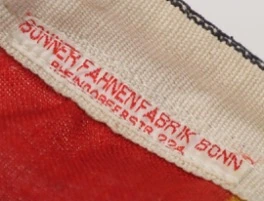
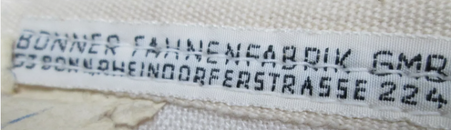
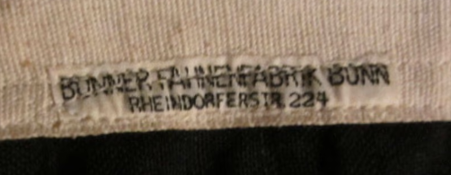
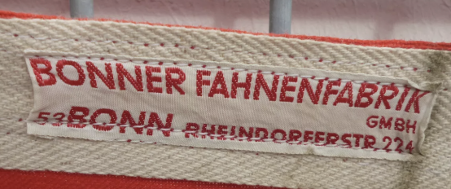
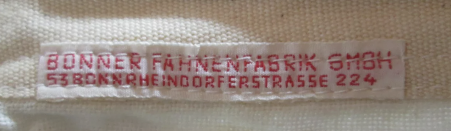
Bonner Fahnenfabrik was officially registered as a GmbH (Gesellschaft mit beschränkter Haftung) on 6 December 1944, although the term “GmbH” only began appearing on labels around 1946. The list below outlines the main label variants and address formats used by the company, helping to date production periods from the pre-war era to the present day.
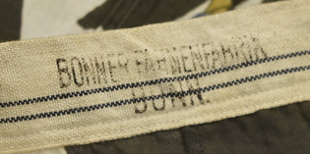
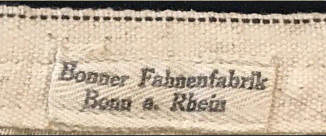
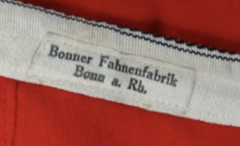
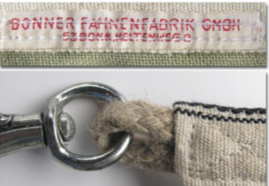
- 1930s–1945: “Bonner Fahnenfabrik, Reindorfer Str. 224, Bonn a/Rh.” – pre-war and wartime woven labels.
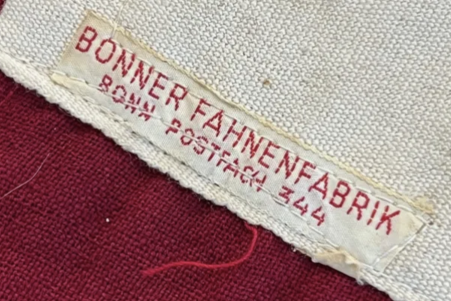
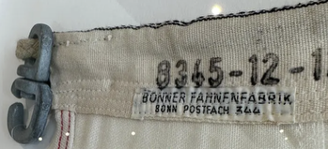
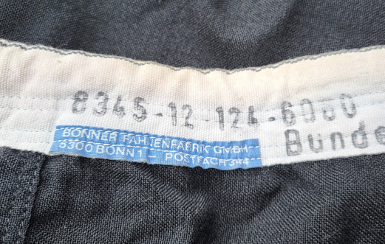
- 1946–1968: “Bonner Fahnenfabrik GmbH, Postfach 334, Bonn” – early post-war cotton or linen labels.
- 1962–1971: Transitional phase using both “Postfach 334” and “5300 Bonn 1”.
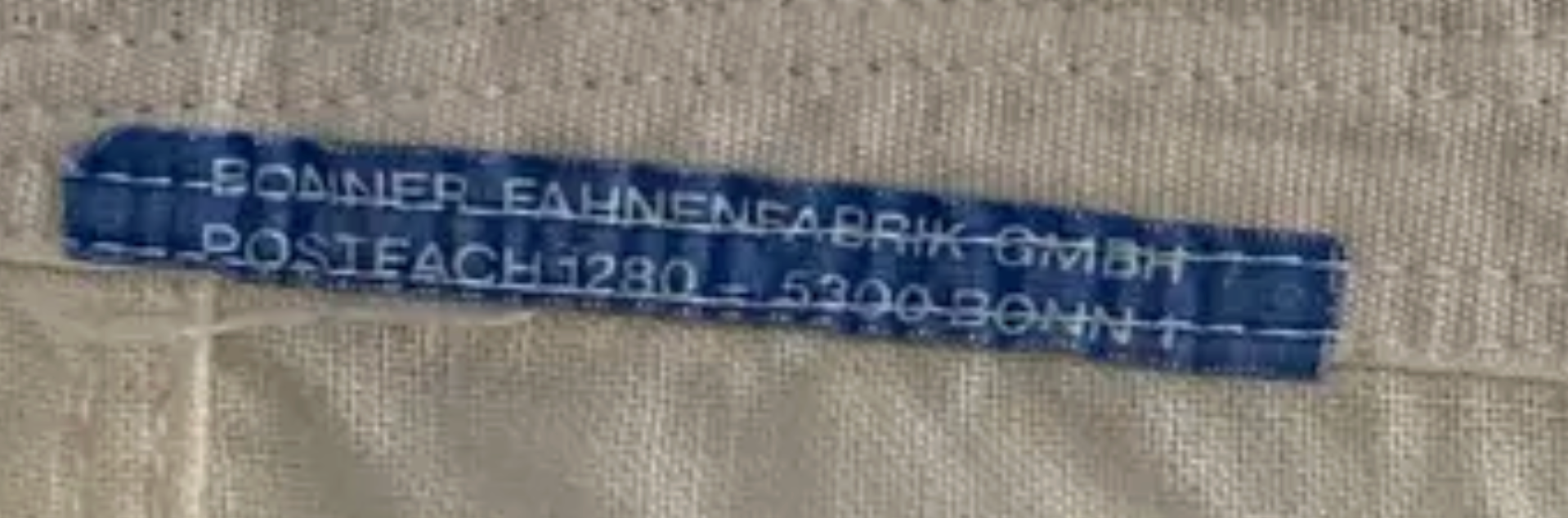
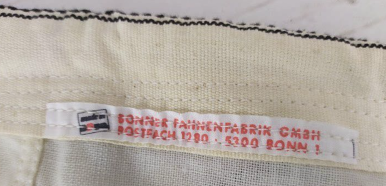
- 1970s–1980s: “BOFA – Bonner Fahnenfabrik GmbH, Postfach 1280, 5300 Bonn 1” – printed nylon/polyester era.
- 1990s–2011: “BOFA GmbH, Reindorfer Str. 224, D-53111 Bonn” – modern woven labels with 5-digit postal code.
- 2012–2018: “BOFA-Doublet GmbH, Reindorfer Str. 224, Bonn” – after merger with Doublet Group.
- 2019–present: “BOFA-Doublet GmbH, Meysstr. 22–24, 53773 Hennef (Sieg)” – current label style.
German Postal Codes (PLZ) and Flag Dating:
German flag manufacturers frequently include their postal address on sewn labels or hoist markings, often including a postal code when applicable. As a result, postal codes can be taken into consideration when establishing a chronological framework for flag production. This practice is well documented among manufacturers such as Bonner Fahnenfabrik.
In Germany, postal codes (PLZ) were introduced relatively late and can therefore serve as a useful dating indicator when examining flags, labels, stamps, or printed manufacturer markings. However, postal codes must not be confused with Postfach (post office box) numbers, which are not postal codes and carry no inherent chronological meaning by themselves.
Postal code timeline:
• Before 1962: No numeric postal codes in West Germany; addresses typically list city name and, optionally, a Postfach number.
• 1962: Introduction of four-digit postal codes in West Germany.
• 1965: East Germany introduces its own, incompatible four-digit system.
• 1990–1993: Temporary use of W- (West) and O- (East) prefixes after reunification.
• 1 July 1993: Introduction of the unified five-digit postal code system used today.
Practical application for flag dating:
When a flag or manufacturer label includes a four- or five-digit postal code, this information can be used as a terminus post quem for production or documented use. Conversely, an address listing only a city name and Postfach (with no PLZ) remains fully consistent with pre-1962 West German manufacturing and export practice, and should not be misinterpreted as evidence of a later production date.
Production Date Codes:
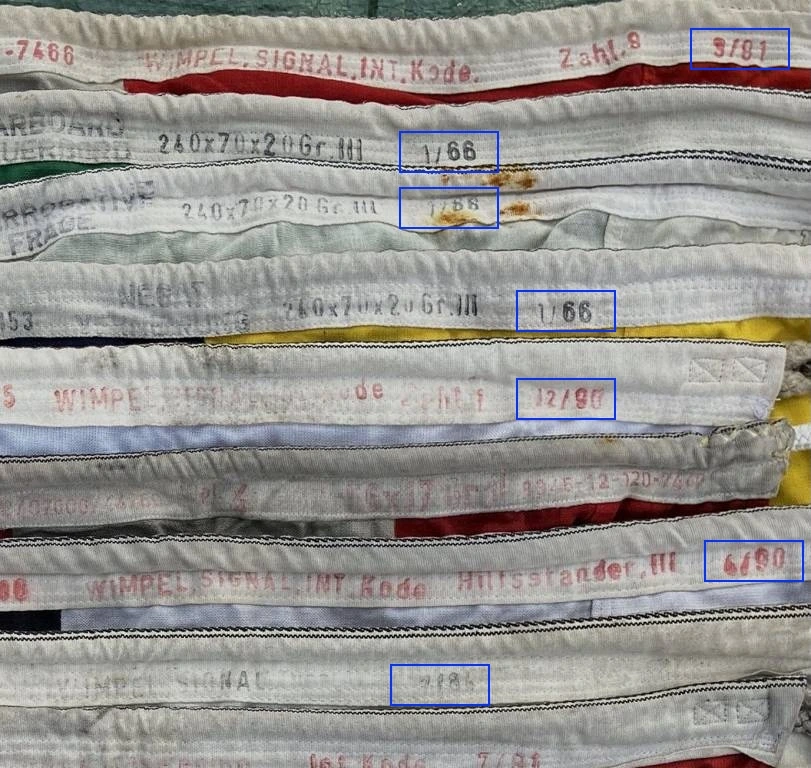
From approximately 1961 onward, Bonner Fahnenfabrik began adding production batch markings on the hoist edge of flags. These consist of two digits separated by a slash, indicating the month and year of manufacture (for example, 4/66 = April 1966).
The marking is usually printed or stamped near the size and type line on cotton or early synthetic flags. This system continued through the 1970s and provides an excellent way to date Bonner-made signal flags and naval ensigns. The example below (highlighted in blue boxes) illustrates this pattern clearly.
Reference: multi-board.com forum, page 46
Bonner Label Gallery
The year ranges shown are based on verified examples found on documented flags and cross-checked with historical company data. They indicate observed usage periods, not guaranteed start or end years. Individual labels may have remained in use for shorter or longer spans depending on production batches and material availability. This archive is continuously updated as new verified evidence becomes available.
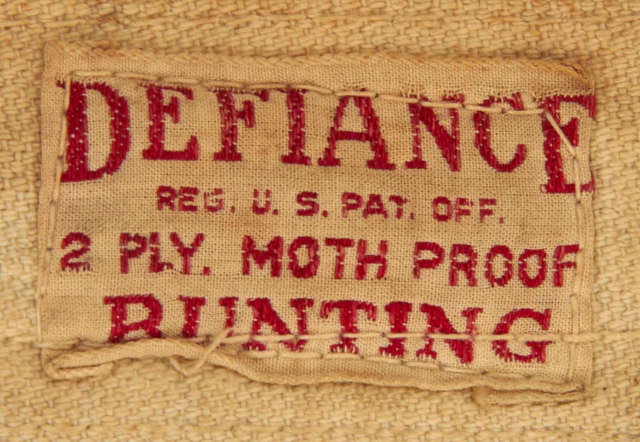
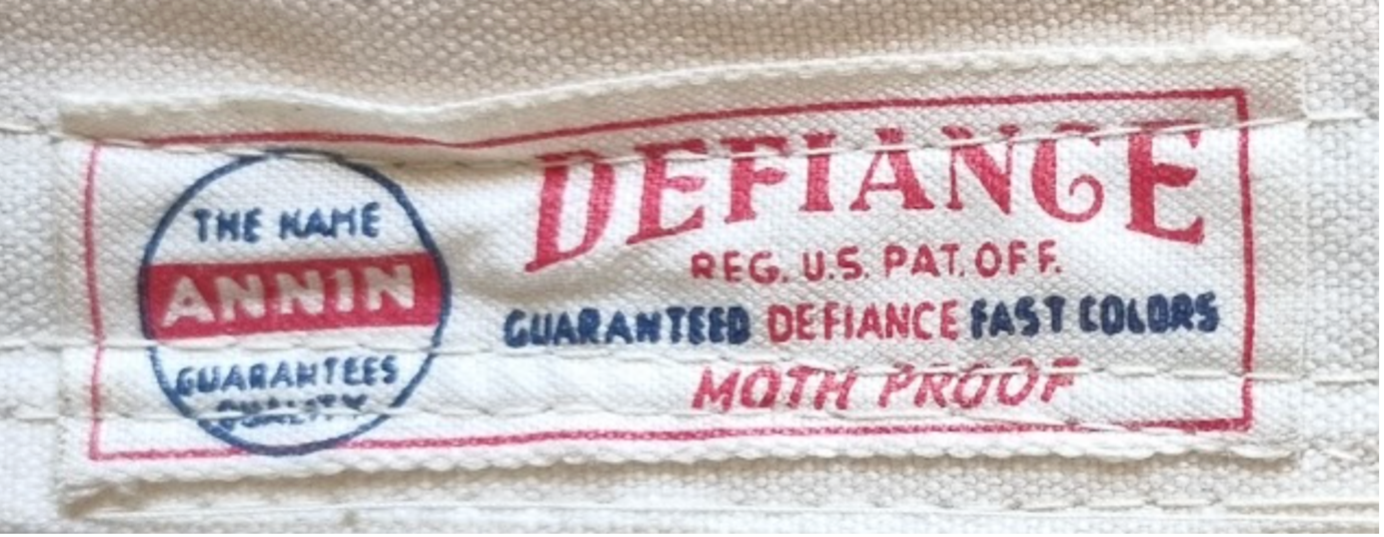
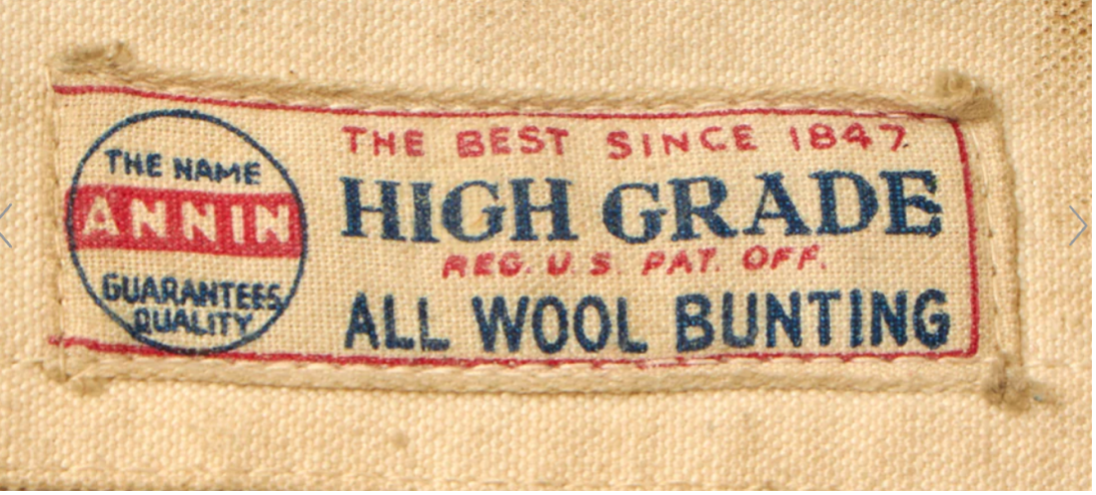
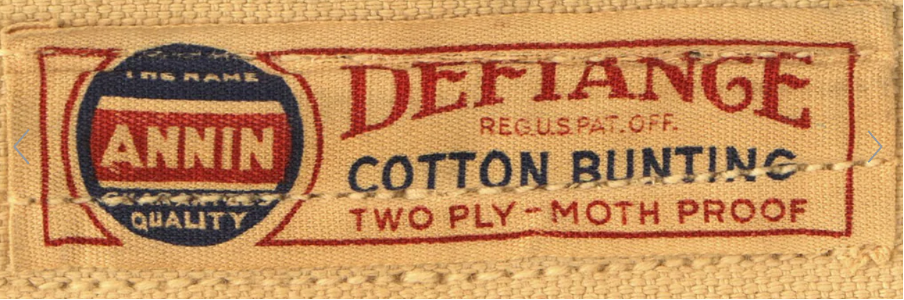
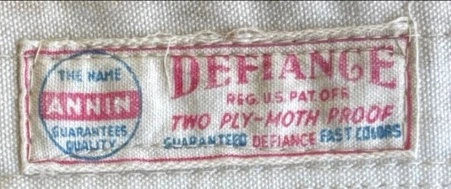
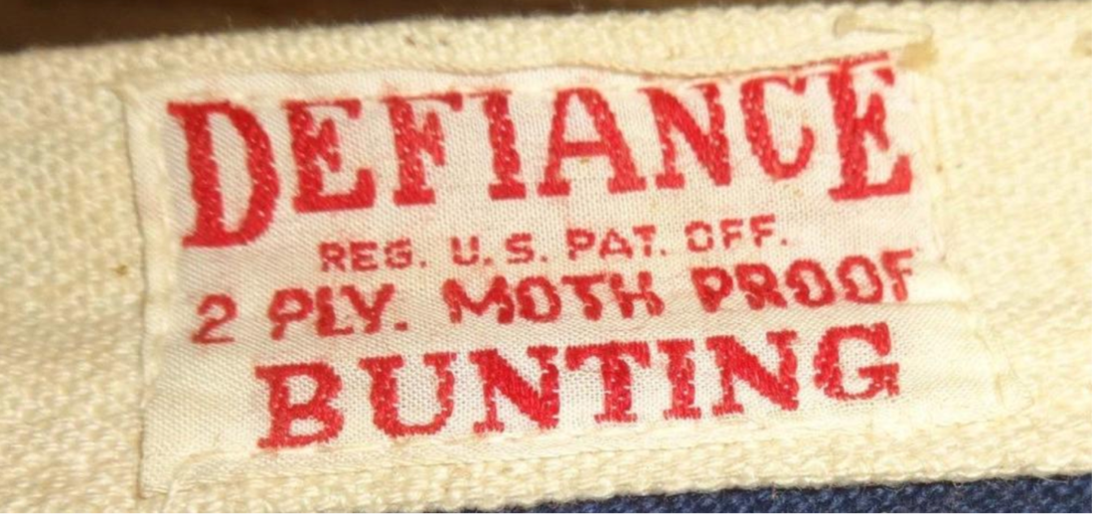
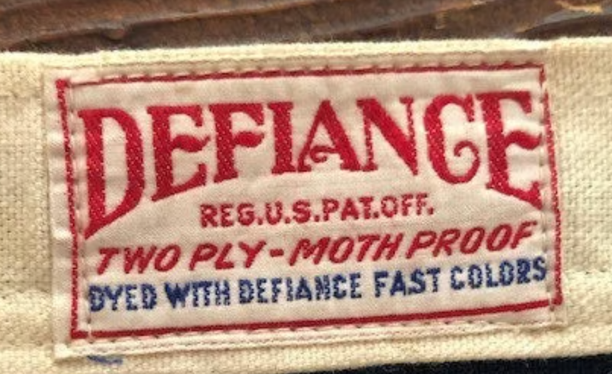
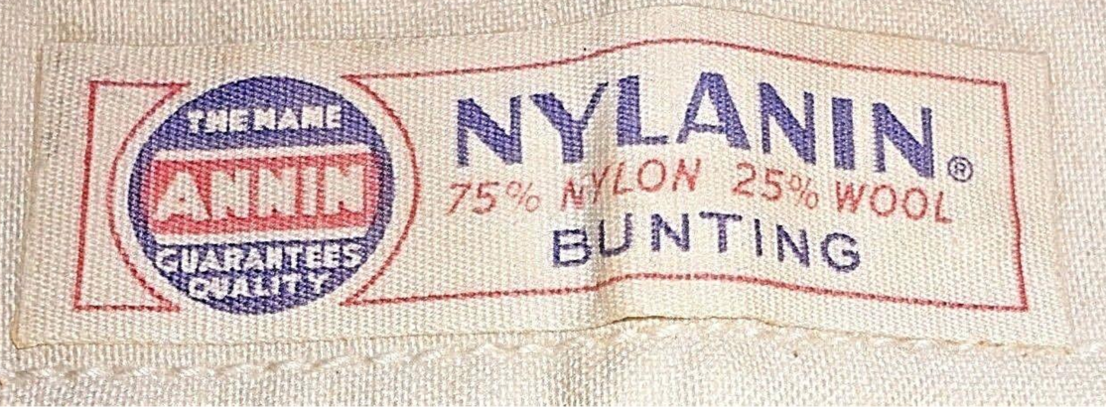
Annin & Defiance Label Gallery
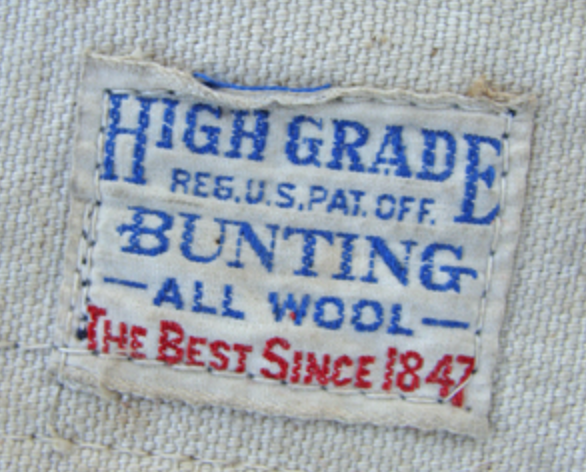
Documented examples of Annin & Defiance manufacturer labels observed on U.S. flags between the early 1930s and the 1970s. Year references below indicate the dates of the flags on which these labels were found and verified; they do not necessarily represent the full production range of each label style.
Between mid-1942 and early-1943, U.S. flag manufacturers temporarily replaced the traditional brass grommets with steel or zinc types due to wartime brass shortages. This short-lived material change provides a valuable dating clue for mid-war label variants. The gallery is continuously updated as new verified examples are discovered.
Reference Library & Catalogues
Flag Catalog Archives
A dedicated archive of original flag catalogues from historic manufacturers such as Bonner, Annin, and others is being compiled and presented here in scanned PDF format. These catalogues provide valuable reference for historical flag sizes, fabric types, pricing, and production ranges. This archive will expand continuously as more verified materials are digitized and cross-referenced.
Vaterländische Fahnenfabrik Köln (1904)
Imperial-era catalogue from Köln featuring early Kaiserflagge, Kaiserstandarte, naval ensigns and national symbols — a rare pre-WWI German flag reference.
View PDFFahnenfabrik Bernhard Richter (1927)
Early interwar Köln am Rhein catalogue featuring association, company, and national flags — one of the oldest known German commercial flag references.
View PDFVaterländische Fahnenfabrik (1928)
Partial 1928 catalogue from Vaterländische Fahnenfabrik, Cöln, illustrating organizational and patriotic flag production during the late Weimar period.
View PDFBonner Fahnenfabrik (ca. 1960)
West German flag catalogue dated to ca. 1960, useful as a post-war reference for standardized flag sizes, materials, and construction — including former Imperial German Navy flags in woolen naval flag cloth.
View PDFOfficial Manuals & Flag Compendiums
- Flaggenbuch 1893 — Imperial naval swallowtails with open wedges. collections.thulb.uni-jena.de
- Franz Reinecke – Deutsches Flaggenhandbuch (1900) — Contemporary German flag manual covering national, naval and maritime flags, including practical guidance on Imperial German naval flag sizes and their relationship to vessel size. staatsbibliothek.ewigerbund.org
- Flaggenbuch 1905 der Kaiserlichen Marine (Jörg M. Karaschewski, ISBN 978-3-7460-3216-0) — Imperial Navy manual covering national and naval ensigns of all major powers. Updated through three supplements (1909, 1912, 1913), reflecting the complete wartime state during WWI.
- Flaggenbuch 1926 (Reichswehrministerium Marineleitung) — wide swallowtail depictions. digi-hub.de (fullscreen) | digi-hub.de (image)
- Flaggenbuch 1939 — Kriegsmarine edition, 1 Dec 1939, swallowtail references. sbc.org.pl
- National Geographic Magazine – “Our Flag Number” (October 1917) — A major illustrated flag compendium published during World War I, covering U.S. naval call flags, international signal flags, national flags, ensigns, and maritime references from many countries. The issue is especially rich in material on the history, development, and official use of American flags, making it a particularly valuable period source for U.S. naval and maritime flag identification. archive.org
External References
For comparative flag data, historical references, and archival source material, visit:
FOTW – Flags of the World
Loeser.us – Historical Flags Archive
Wehrmacht-Awards – Who Made the Flags?
Zaricor Flag Collection
Bundesarchiv invenio – Marineverordnungsblatt holdings
German Docs in Russia – Digitised German military records
© 2025 FlagGeek / Kenny Ytrup – Licensed under CC BY-NC 4.0.
Published · Updated
Non-commercial sharing with attribution permitted. Commercial use requires permission.
Original FlagGeek publication · Source status: LIVE. Research text and evidence retained from the Blogger export.
FlagGeek · https://flaggeek-v2.pages.dev/resources/manufacturer-reference/