Begin with the object
A flag offers more than a design. Its fabric, seams, attachment points and condition can all become part of a record. A useful description begins with what can be observed, before attempting to identify a date, maker or purpose.
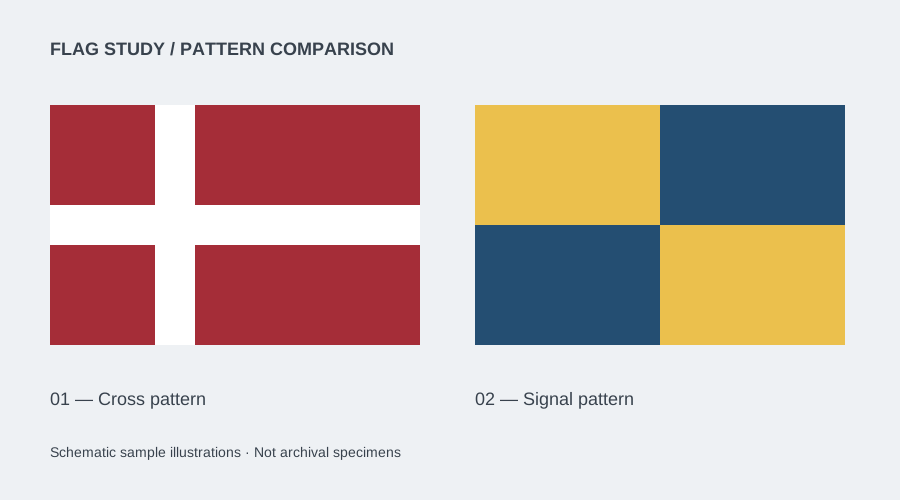
This sample essay sets out an editorial approach for the future archive. It contains no new historical findings. The accompanying plate is an original schematic illustration, not a reproduction of an archival document.
Observation and attribution
An observation describes the object in front of the researcher: a printed mark, a stitched seam, a measurement. An attribution proposes an explanation: a manufacturer, a period, an intended use. Keeping those two kinds of statement distinct makes a record easier to review and revise.
For example, a label can be transcribed exactly while the maker’s trading dates remain unresolved. A familiar design can be described without assuming that every surviving example was made to an official specification.
A good archive record should let the reader see where the evidence ends and interpretation begins.
Build a traceable record
A research note is most useful when another reader can return to its evidence. Record the holding institution, collection, item reference and page or folio where available. For an online document, preserve the title and stable address as well as the date consulted.
A working sequence
- Photograph the entire object and relevant details.
- Record dimensions, material and visible marks.
- Transcribe labels without silently correcting them.
- Compare the object with dated documentary sources.
- State the remaining uncertainties explicitly.
Compare without flattening differences
Two flags with the same general pattern need not share the same history. Proportions, colour, construction and context may vary. A comparison should explain which features are being compared and whether the evidence supports a common origin or only a visual resemblance.
The archive’s structured fields provide a starting point for these comparisons. The article body remains the place to explain exceptions, conflicting evidence and the reasoning behind a conclusion.
Make room for revision
Research records should be able to change as better evidence becomes available. A source list, a clear documentation status and a record of substantive revisions help readers understand how an account developed.
The aim is a connected archive: individual objects documented carefully, wider questions explored in research articles, and reference material available for the next investigation.
Sources & references
- Source register awaiting archival references
No historical findings are claimed in this sample essay.
FlagGeek · https://flaggeek-v2.pages.dev/research/reading-a-flag/